
Airport (1970 film)
Airport (1970) is an American disaster-drama adapted from Arthur Hailey's novel. An ensemble cast struggles with a snowbound airport and a planted bomb aboard a passenger jet; the film launched a 1970s disaster cycle.
Airport is a 1970 American motion picture adapted from Arthur Hailey's novel. Combining elements of procedural drama and large-scale suspense, the film follows the staff and passengers of a major air hub as extreme winter weather and a criminal plot converge into a crisis. It is often cited as a formative example of the 1970s disaster genre.
Image gallery
1 Image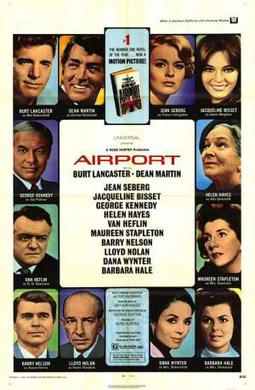
Plot and structure
The narrative interweaves several storylines: airport management coping with a snowstorm that threatens to close the field, the human dramas of passengers and crew, and the mounting tension of a bomber intent on destroying an airliner in flight. Rather than a single protagonist, the film relies on an ensemble cast and overlapping perspectives to create suspense and operational detail.
Production and cast
Adapted from Arthur Hailey's bestselling novel, the movie assembles a large ensemble of recognizable performers. Its approach emphasizes procedural realism—control towers, maintenance crews, and emergency procedures—alongside personal subplots. The film mixes star turns with supporting roles to build both character interest and spectacle.
- Key performers included major screen names of the era such as Burt Lancaster and Dean Martin; other supporting actors added depth to the ensemble.
- The movie balances studio-scale production with location work and set pieces centered on an active airport.
Reception and legacy
On release the picture attracted broad popular attention and helped establish the template for later disaster films: an event-driven storyline, an ensemble of stars, and interlocking personal dramas. It received multiple Academy Award nominations and earned recognition in acting categories. Critics were divided, but its commercial impact led studios to produce more high-concept spectacle pictures through the decade.
Notable aspects and influence
The film is frequently discussed for its role in popularizing the disaster format and for its use of procedural detail to heighten tension. Themes include crisis management, the vulnerability of large systems, and moral choices under pressure. The central antagonistic threat—a would-be suicide bomber aboard a passenger jet—added a modern, psychological edge to the more material dangers posed by weather and mechanical failure. As a cultural artifact it remains referenced in discussions of ensemble filmmaking and Hollywood spectacle, and it spawned several sequels and imitations during the 1970s.
For further context on the film's classification and style see discussions of cinematic genre and the historical place of the film within studio-era blockbusters.
Tags
Related articles
Author
AlegsaOnline.com Airport (1970 film) Leandro Alegsa
URL: https://en.alegsaonline.com/art/1705