
Big Fish (2003 film)
A 2003 fantasy-adventure comedy-drama directed by Tim Burton, adapting Daniel Wallace's novel. The film follows a son's attempt to separate truth from tall tales told by his ailing father, exploring storytelling and memory.
Overview
Big Fish is a 2003 American fantasy-adventure comedy-drama film adapted from Daniel Wallace's 1998 novel of the same name. Directed by Tim Burton, the film blends tall tales, magical-realist sequences and family drama to examine how stories shape identity. It is often noted as one of Burton's warmer, less gothic works.
Image gallery
6 Images

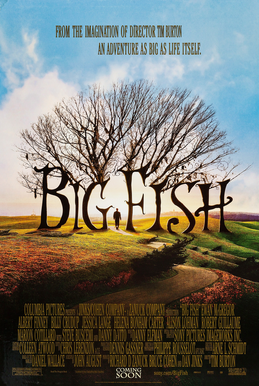



Cast and principal crew
The central performances are by Albert Finney as the older Edward Bloom and Ewan McGregor as his younger self, with Billy Crudup portraying Edward's son, Will. Jessica Lange appears in a key supporting role. The production was led by producer Richard D. Zanuck and features a cinematic score and carefully staged set pieces that support the film's storytelling approach.
Plot in brief
The narrative alternates between a son's present-day attempts to understand his father's life and the vivid, larger-than-life episodes that make up Edward Bloom's tales: encounters with giants, witches, circus performers and other improbable figures. As Edward nears the end of his life, Will searches for the factual core behind decades of stories, seeking reconciliation and emotional truth.
Themes and style
Big Fish explores themes of storytelling, memory, mythmaking and the gap between objective fact and felt truth. Visually, the film uses heightened color and production design during anecdotal episodes, then returns to a more muted, realistic palette for family scenes. This contrast underlines whether stories function as escape, embellishment or means of connecting generations.
Production, reception and legacy
Produced in the early 2000s, the film was praised for its imagination, performances, and emotional core. Critics highlighted its humane tone and visual inventiveness, and audiences responded to the father-son reconciliation at its center. Over time Big Fish has been regarded as an accessible example of cinematic magical realism and as a distinctive entry in Burton's filmography.
Notable aspects
- Adaptation: the film condenses and reshapes elements of the novel to foreground familial reconciliation.
- Genre blend: mixes comedy, drama and fantasy without committing exclusively to any single mode.
- Enduring appeal: cited in discussions about narrative reliability and the role of myth in everyday life.
Tags
Related articles
Author
AlegsaOnline.com Big Fish (2003 film) Leandro Alegsa
URL: https://en.alegsaonline.com/art/11345