
Dermestidae: skin, carpet, and hide beetles — overview and significance
Dermestidae are a family of small scavenging beetles (skin, carpet, larder beetles) known for feeding on dry animal and plant material; they matter in museums, agriculture, households, and forensic science.
Overview
Dermestidae is a cosmopolitan family of beetles commonly called skin beetles, hide beetles, larder beetles, carpet beetles, or khapra beetles. There are roughly 500–700 described species distributed worldwide. Adults are generally small — many species range from about 1 to 12 mm in length — with compact, oval bodies often covered in scales or dense hairs (setae). The family includes both harmless scavengers and species regarded as serious pests of stored products, textiles, and museum collections.
Image gallery
10 Images


Characteristics and life cycle
Adult dermestids typically have a rounded profile and may display varied color patterns created by colored scales or setae. Larvae are often elongate and tapered, frequently bearing tufts of hairs or spines that can be diagnostic. Dermestid development follows complete metamorphosis (egg, larva, pupa, adult), and the duration of each stage depends on temperature and food quality. Many larvae feed more intensively than adults and are responsible for the majority of material damage.
Ecology and feeding habits
Most members of Dermestidae are saprophagous or detritivorous: they consume dry animal-derived materials such as skin, fur, feathers, dried insect remains, and carcass remnants, as well as plant products like pollen and certain stored grains. Some species specialize in particular microhabitats, for example nests of birds, mammals, bees, or wasps. A few genera have even evolved narrow associations — for example, some species are known to inhabit mantid egg cases. Several species in the genus Trogoderma are notable pests of stored grain and processed foods.
Importance to humans
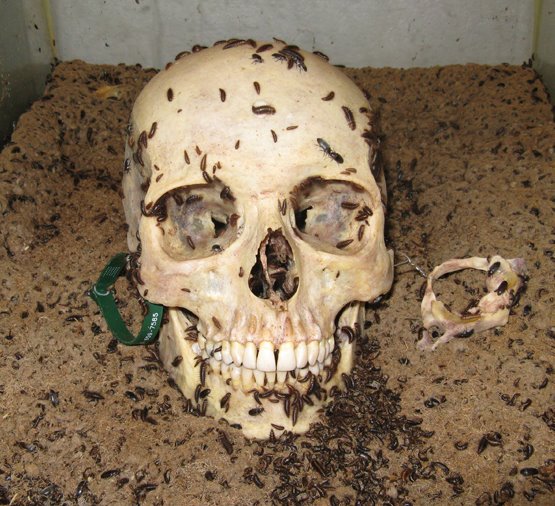
Dermestids have a mixed relationship with people. On the positive side, museum preparators and taxidermists commonly use live dermestid colonies to remove soft tissues from bones gently and efficiently, producing clean skeletal specimens for study and display. In forensic entomology, the presence and developmental stage of dermestid larvae can provide information about the later stages of carcass decomposition. Conversely, many species damage natural fibers, carpets, clothing, taxidermy mounts, dried museum specimens, and foodstuffs, making them significant household and commercial pests.
Management, identification and notable species
Control approaches emphasize sanitation, exclusion, and environment management: remove infested materials, store susceptible items in sealed containers, reduce humidity, and use regular inspection for early detection. Chemical control and pheromone traps are additional options in some settings, typically applied by professionals for serious infestations. Identification to species often requires careful examination of adult morphology or larval characters and sometimes consultation of specialists or authoritative keys. For more on taxonomy and identification consult classification resources, identification guides, and larval descriptions.
Further resources and notable facts
- For pest management and quarantine information see control guidelines.
- Museum preparation techniques and ethical considerations are discussed at collection care pages.
- Guidance for forensic applications and case studies are available via forensic entomology resources.
- Species lists and distribution data can be checked through regional catalogs and global checklists.
- Practical advice for household prevention is summarized at home pest help, while more technical research literature can be found at academic resources.
Because the family includes both beneficial and destructive species, dermestids occupy an important ecological and economic niche: they are key decomposers in ecosystems, indispensable tools for biological curation, and, at the same time, frequent targets of pest control in homes, museums, and food-storage facilities.
Questions and answers
Q: What is Dermestidae?
A: Dermestidae is a family of Coleoptera, also known as skin beetles, larder beetles, hide beetles, leather beetles, carpet beetles, and khapra beetles, with 500 to 700 species.
Q: How big are Dermestids?
A: Dermestids can be up to 1-12 mm in length.
Q: What do Dermestids eat?
A: Most dermestids are scavengers that feed on dry animal or plant material. This includes skin or pollen, animal hair, feathers, dead insects, and natural fibers.
Q: Where can Dermestids be found living?
A: Dermestids can be found living in dead animals and feeding on them. Others can be found living in mammal, bird, bee, or wasp nests. Thaumaglossa only lives in the egg cases of mantids.
Q: Can Dermestids be pests?
A: Yes, many Trogoderma species are pests that eat grain. Many species are also pests which can damage natural fibers in homes and businesses.
Q: What is the use of Dermestids in forensic investigations?
A: The beetles found living in dead animals are studied in criminal investigations (forensic entomology).
Q: How are Dermestids used by natural history museums?
A: Dermestids are sometimes used by natural history museums to clean animal skeletons.
Related articles
Author
AlegsaOnline.com Dermestidae: skin, carpet, and hide beetles — overview and significance Leandro Alegsa
URL: https://en.alegsaonline.com/art/26788
Sources
- books.google.com : Forensic Entomology: The Utility of Arthropods in Legal Investigations