
Deductive reasoning
Deductive reasoning: definition, structure, main forms, historical development, examples, uses, and how it differs from induction and other reasoning types.
Overview
Deductive reasoning is a mode of logical thought in which conclusions are drawn from general principles or premises. In a deductive argument the relation between premises and conclusion is such that, if the premises are true and the argument is valid, the conclusion must be true. Deduction is commonly contrasted with other methods of reasoning, such as induction and abduction; together these approaches form broad categories of rational inference and explanation types of reasoning.
Image gallery
2 Images
Structure and key concepts
A deductive argument typically contains premises and a conclusion. Premises are the starting statements taken to be true for the sake of the argument; the conclusion is the claim that purportedly follows. Two central technical notions are:
- Validity — an argument is valid when the conclusion follows necessarily from the premises: it is impossible for the premises to be true and the conclusion false at the same time validity.
- Soundness — an argument is sound when it is both valid and its premises are actually true; only sound deductive arguments guarantee true conclusions.
In more informal contexts people distinguish between premises and hypotheses or assumptions (hypotheses is sometimes used interchangeably in practice), but the logical role—what is asserted as given—remains the same.
Common forms
Deduction appears in several formal shapes. The classical example, dating to ancient philosophy, is the categorical syllogism:
- All men are mortal. (major premise)
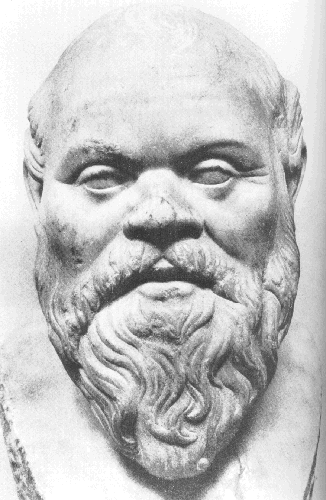
- Socrates is a man. (minor premise)
- Therefore, Socrates is mortal. (conclusion)
Modern formal logic provides additional systems: propositional (sentential) logic treats connectives such as "and", "or", "if...then"; predicate (first-order) logic adds quantifiers and relations; and specialized calculi support modal, temporal, or higher-order reasoning. These systems make the form of inference explicit so validity can be checked mechanically or by proof.
History and development
The study of deduction has deep roots in ancient thought. Figures like Aristotle gave early systematic treatments of syllogistic reasoning. Later traditions—Hellenistic, medieval scholastic, and Islamic philosophers—expanded and critiqued these ideas. In the 19th and 20th centuries, symbolic logic (Boole, Frege, Russell, and others) transformed deductive theory into a formal discipline with applications across mathematics and the philosophy of language.
Uses and examples
Deductive methods are central to mathematics, formal sciences, and many areas of applied reasoning. In mathematics proofs establish theorems by deducing conclusions from axioms and previously proved results. In law and everyday argumentation, deduction helps derive specific consequences from statutes or general policies. Computer science uses deduction in program verification and automated theorem proving.
Distinctions and cautions
Deduction differs from induction in direction and guarantee: deduction is "top-down" (general to particular) and, when valid and sound, produces certainty; induction is "bottom-up" (particular to general) and produces probabilistic or contingent support. Another related form, abduction, proposes explanatory hypotheses. Common mistakes include invalid inferences and informal fallacies (e.g., denying the antecedent, affirming the consequent) that preserve no necessary link between premises and conclusion. Awareness of validity versus truth helps avoid such errors.
For further reading on classifications of reasoning and logical terms see types of reasoning and introductory resources on premises and hypotheses. Practical overviews of formal systems and their history are available through general logic texts and scholarly summaries validity and historical introductions by or about Aristotle.
Related articles
Author
AlegsaOnline.com Deductive reasoning Leandro Alegsa
URL: https://en.alegsaonline.com/art/26205