
Inductive reasoning
Inductive reasoning is the process of drawing general conclusions from specific observations. It underpins empirical science, everyday inference, and many forms of hypothesis generation, but it faces philosophical limits.
Overview
Inductive reasoning is a mode of logical inference that moves from particular instances to broader generalizations. Where deduction derives specific consequences from general premises, induction seeks patterns and regularities in observed cases and uses them to formulate probable general rules. Ordinary examples include expecting that water will flow downhill after seeing it do so repeatedly, or predicting that the sun will rise tomorrow based on a long history of sunrises.
Image gallery
1 Image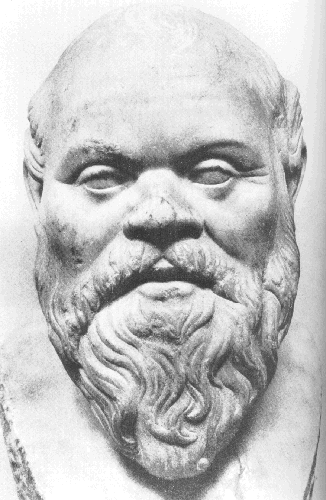
Core features and common forms
At its heart, induction depends on observation, sampling, and the idea that the unobserved resembles the observed. Typical forms include simple enumeration (generalizing from many similar cases), analogical reasoning (inferring that because two things share several properties they share others), and causal induction (inferring causes from patterns of correlation). These forms are often combined in scientific practice when researchers collect data and propose explanatory rules.
- Enumeration: collecting instances and inferring a general law.
- Analogy: transferring attributes from a known case to an unknown case.
- Causal inference: identifying regular covariation and proposing mechanisms.
History, philosophical challenge, and development
Induction has long been recognized as central to human thought and to early forms of natural philosophy. Ancient and medieval observers recorded repeated phenomena, including astronomical cycles noted by the Babylonians. Modern debates over induction intensified from the 18th and 19th centuries: David Hume famously highlighted the problem that past regularities do not logically guarantee future occurrences, expressing skepticism about the rational basis of inductive inference. Later thinkers, such as John Stuart Mill, analyzed methods of induction and raised questions about when particular examples suffice to support a general claim; Mill's discussion remains influential in clarifying different techniques of generalization. References to the contrast between induction and deduction appear in many introductions to reasoning and logic, where deduction is treated as the complementary mode of deriving necessary conclusions from given premises (deduction).
Induction and the scientific method
While induction—collecting observations and noting patterns—provides raw material for science, modern scientific method emphasizes hypothesis formation and testing rather than simple enumeration. Observations of celestial motion led early astronomers to infer geocentric models; later scientists like Copernicus and Galileo proposed alternative theories that better explained the data (Copernicus and heliocentrism). Natural historians such as Darwin amassed extensive empirical facts (natural history observations) and then advanced explanatory frameworks. A well-formed hypothesis (hypothesis) can be tested, refined, or rejected, and this iterative process is central to the philosophy of science and to distinguish reliable inductive inferences from mere accumulation of facts (method of science).
Uses, limits, and evaluation
Inductive reasoning is indispensable in everyday life, policymaking, statistics, machine learning, and experimental science. It supports probabilistic prediction and decision making under uncertainty. Yet its conclusions are never deductively certain: even many confirming instances leave room for error. Philosophers and scientists therefore evaluate inductive inferences by considering sample size, representativeness, the possibility of confounders, and alternative hypotheses. John Stuart Mill's question about when a single instance suffices versus when many are needed captures this practical concern (Mill).
Practical examples and important distinctions
Examples of inductive judgment range from everyday beliefs (expecting traffic at rush hour after repeated experience) to scientific generalizations (inferring gravity’s effects from repeated experiments) and to computational learning (training models on data). Important distinctions include the difference between inductive and deductive support, between correlation and causation (which requires careful causal reasoning), and between ad hoc generalizations and those grounded in broader theoretical frameworks such as the theory of evolution by natural selection (evolutionary theory), which unifies many observed biological regularities.
Assessing inductive claims
To judge an inductive claim consider these practical criteria: scope (how broad is the claim?), quality of evidence (accuracy and representativeness of observations), explanatory power (does a proposed theory make sense of disparate facts?), and testability (can the claim be subjected to further observation or experiment?). Good scientific practice treats induction as the starting point for generating hypotheses and designs tests that can confirm, refine, or falsify proposed generalizations, a process that has driven major advances in our understanding of nature and society.
Formulating hypotheses, contrasting deduction, and reflecting on the philosophy of science remain useful ways to improve the reliability of inductive reasoning across disciplines.
Scientific methods, historical cases like Copernicus and figures such as Darwin illustrate how induction and hypothesis testing together advance knowledge, while discussions by ancient observers and analysts like Mill and natural historians show the long intellectual effort to understand when induction is trustworthy. The ongoing work connecting data, theory, and experiment continues to shape how induction contributes to reasoned belief and scientific progress (evolutionary examples).
Questions and answers
Q: What is induction?
A: Induction is one of the main forms of logical reasoning, where a general rule is found by using a large number of particular cases.
Q: What are two examples of how induction has been used in science?
A: Two examples of how induction has been used in science include early civilisations observing the regularity that the sun, moon and stars appear to move across the sky, which led to heliocentrism being proposed as an alternative theory or hypothesis; and Darwin's work collecting facts about animals and plants which eventually led to his theory of evolution by natural selection.
Q: What did Hume say about induction?
A: Hume said that induction meant “instances of which we have had no experience resemble those of which we have had experience”.
Q: Who was John Stuart Mill and what did he ask regarding inductions?
A: John Stuart Mill was a philosopher who raised the question “Why is a single instance, in some cases, sufficient for a complete induction, while in others [many examples] go such a little way towards establishing a universal proposition?”
Q: How can we distinguish good from bad inductions?
A: We can distinguish good from bad inductions by asking "If all known As are B, then probably all As whatever are B".
Related articles
Author
AlegsaOnline.com Inductive reasoning Leandro Alegsa
URL: https://en.alegsaonline.com/art/47221