
DDT (dichlorodiphenyltrichloroethane): history, properties, and impacts
DDT is a persistent organochlorine insecticide developed in the 20th century; effective against disease vectors but linked to environmental harm and human-health concerns, now largely restricted to targeted public-health use.
DDT (dichlorodiphenyltrichloroethane) is a synthetic organochlorine insecticide first brought into widespread use in the 1940s. It proved highly effective at killing a variety of insect pests and disease vectors, notably mosquitoes, and played an important role in reducing malaria and typhus in many regions. For general background information see overview of DDT.
Image gallery
10 Images


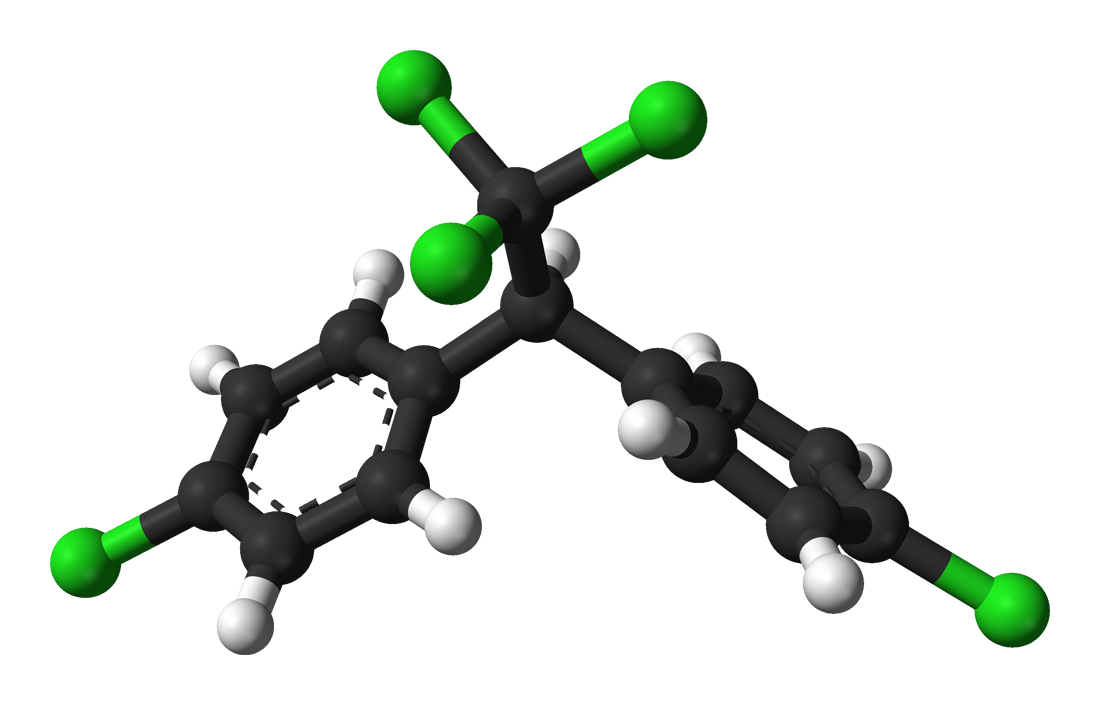
Chemical nature and mode of action
DDT is chemically stable and fat-soluble. It acts as a neurotoxin in insects, interfering with sodium channels in nerve cells and causing repeated nerve firing, paralysis, and death. Because of its persistence and lipophilicity, DDT and its metabolites (such as DDE) tend to accumulate in fatty tissues and remain in soils, sediments and biota for long periods.
Discovery and historical use
The insecticidal properties of DDT were discovered and developed in the early 20th century, with widespread agricultural and public-health use beginning in the 1940s. The work of Swiss chemist Paul Hermann Müller was recognized with the Nobel Prize in Physiology or Medicine in 1948; biographical materials are available here. During and after World War II DDT was used extensively to control mosquitoes and reduce vector-borne disease.
Environmental impacts
Beginning in the 1960s, research and public concern focused on unintended ecological effects. DDT bioaccumulates and biomagnifies through food chains, concentrating in predators and long-lived organisms. Adverse effects documented in wildlife include eggshell thinning and population declines in some bird species; readers can consult material on effects on birds at avian impacts and broader ecological consequences at ecosystem impacts. Persistence in soils and sediments has produced long-term contamination in some regions.
Human health considerations
Studies have examined associations between DDT exposure and various human health outcomes. Some epidemiological and experimental work has suggested links to cancers and endocrine disruption, though interpretation varies with exposure level, timing, and study design. Summaries and reviews of health research are discussed at health studies. DDT and related compounds can be transferred through breast milk and accumulate in human tissues, which has informed risk assessments and guidance.
Regulation and policy
Mounting environmental evidence and public concern led many countries to restrict or ban agricultural uses of DDT beginning in the 1960s and 1970s. Internationally, the Stockholm Convention (effective 2004) listed DDT as a persistent organic pollutant to be eliminated, while permitting limited exemptions for public-health uses such as indoor residual spraying where no safe, affordable alternatives exist.
Contemporary use and alternatives
DDT is now rarely used for agriculture in most countries but remains authorized in some public-health programs to control disease vectors. Production and use have continued in a limited number of countries; India is a notable producer and user (India), and use has been reported in other places such as North Korea. Vector-control strategies increasingly emphasize integrated approaches—such as insecticide-treated bed nets, environmental management, and newer chemical classes—both to reduce reliance on persistent pesticides and to address insect resistance.
Legacy and lessons
- Persistence: DDT residues can remain in the environment for decades.
- Bioaccumulation: The compound concentrates in fatty tissues and magnifies up food chains.
- Trade-offs: DDT reduced disease burden in many settings but also produced long-term ecological and potential human-health risks.
- Policy impact: Experience with DDT influenced modern chemical regulation, monitoring programs, and the development of safer vector-control methods.
The history of DDT illustrates the complex balance between public-health benefits and environmental protection. Contemporary decisions about its use weigh effectiveness against vectors, availability of alternatives, resistance patterns, and long-term ecological and health considerations. For further reading and primary sources consult the links cited above, which provide scientific, historical and policy perspectives on DDT and its legacy.
Related articles
Author
AlegsaOnline.com DDT (dichlorodiphenyltrichloroethane): history, properties, and impacts Leandro Alegsa
URL: https://en.alegsaonline.com/art/25920
Sources
- nobelprize.org : NobelPrize.org: The Nobel Prize in Physiology or Medicine 1948
- kanglaonline.com : "Concern over excessive DDT use in Jiribam fields"
- pops.int : "Global status of DDT and its alternatives for use in vector control to prevent disease"