
Dassault Mirage III
A French single‑engine, delta‑wing supersonic fighter‑interceptor developed by Dassault in the 1950s; widely exported and notable for its role in the 1967 Six‑Day War.
The Dassault Mirage III is a landmark French fighter‑interceptor developed by Dassault Aviation in the 1950s. It combined a simple, highly swept delta wing with a single powerful turbojet to produce a compact, high‑speed aircraft. The type first flew in 1956 and entered operational service in 1961, establishing Dassault as a leading exporter of combat aircraft. For a general overview see Mirage III and information on the manufacturer at Dassault Aviation.
Image gallery
10 Images


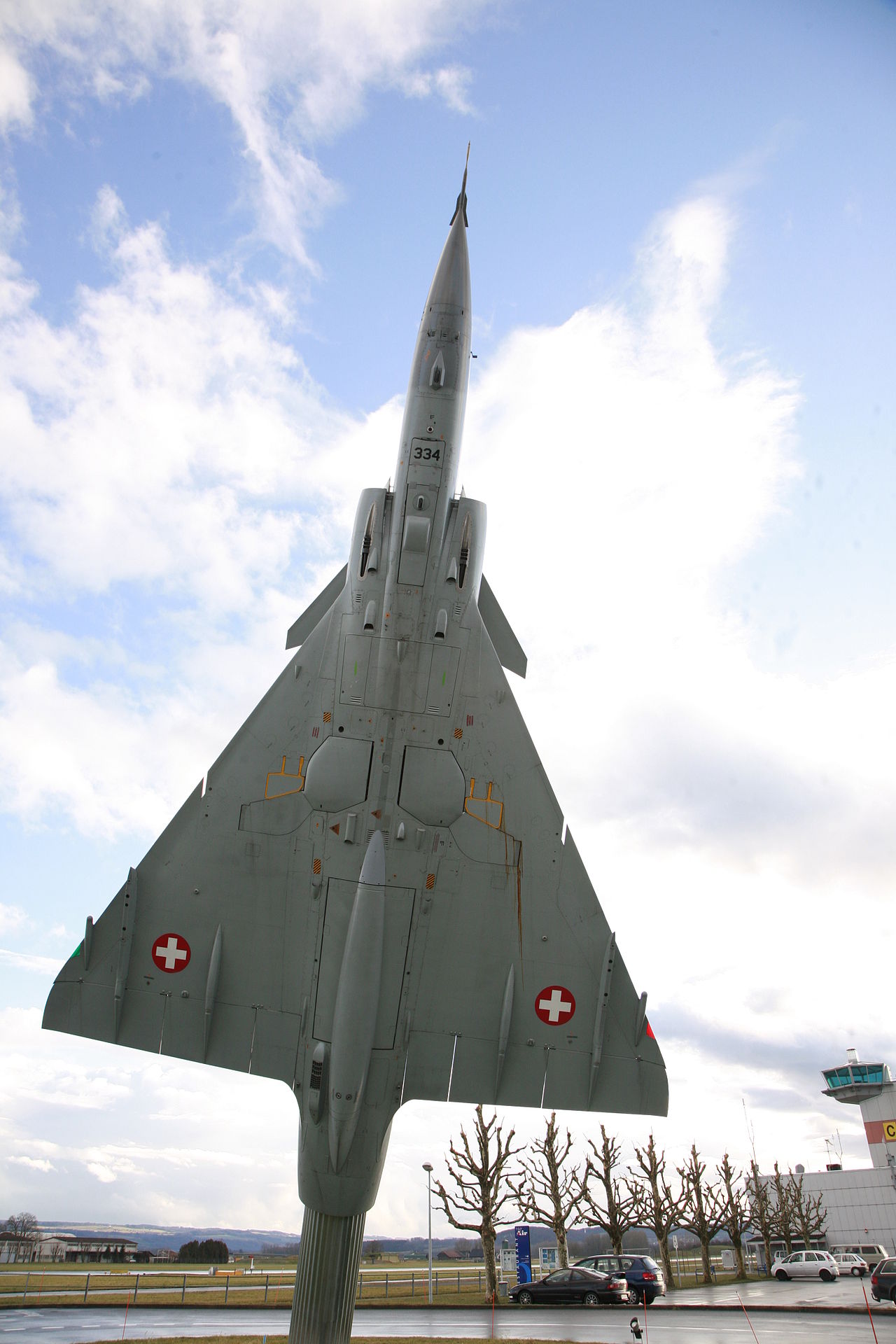


Design and characteristics
The Mirage III is distinguished by its delta wing — a triangular planform that offers a large wing area and structural simplicity at the cost of some low‑speed handling compromises. Power came from a single axial‑flow turbojet (the Atar family in production models), which enabled sustained supersonic flight and high climb rates. Typical armament included two internal cannons and provision for short‑range air‑to‑air missiles and bombs, so the aircraft could perform interception, air superiority and ground‑attack missions.
- First flight: 1956 (first flight details)
- Introduction: 1961 (entry into service)
- Wing: delta (no horizontal tailplane)
- Role: interceptor and multirole fighter
Development, variants and exports
Dassault developed several versions of the basic Mirage III to meet different operational needs: single‑seat interceptors, two‑seat trainers, and export variants with altered avionics or provisions for ground attack. The basic design also inspired derivative types such as the Mirage 5. The Mirage III was sold to many air forces worldwide and became one of France's most successful Cold War exports.
Operational history and notable use
The Mirage III saw active combat with a number of operators. Its speed and climb performance made it an effective interceptor during the 1960s. One of the aircraft's most famous combat appearances was with the Israeli Air Force, which used Mirages extensively during the 1967 Six‑Day War and in later conflicts; see more on Israel's use of the type at Israel and the 1967 campaign at Six‑Day War. Several operators adapted the Mirage into strike or reconnaissance roles as well.
More than a thousand examples were produced over the type's production run, and the Mirage III influenced fighter design in several countries. Its straightforward structure, strong performance for the era, and broad export footprint make it a notable subject in post‑war military aviation history. For additional technical data and service records consult detailed references and manufacturer archives via the links above.
Related articles
Author
AlegsaOnline.com Dassault Mirage III Leandro Alegsa
URL: https://en.alegsaonline.com/art/25621