
Dassault Falcon 20: French twin‑engine business jet
Overview of the Dassault Falcon 20, a pioneering French twin‑jet business aircraft: design, development in the 1960s, roles, variants, and its continued legacy in civil and government service.
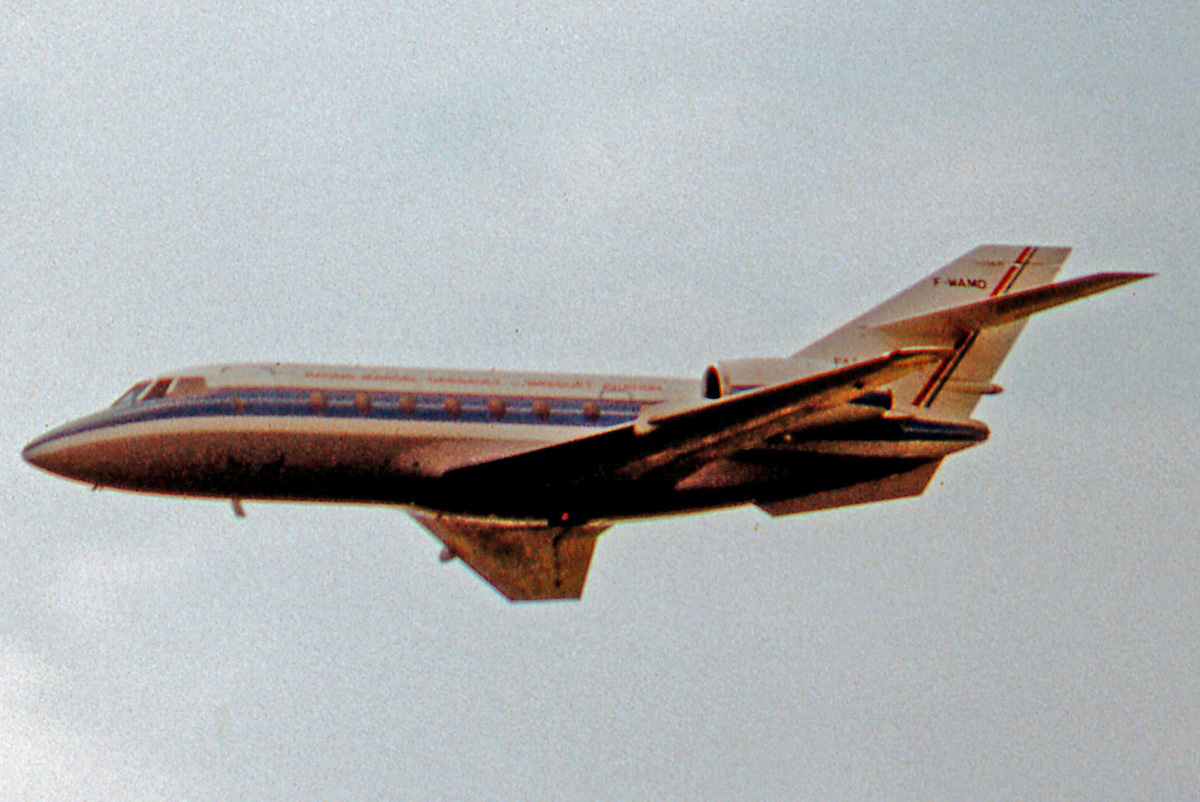
The Dassault Falcon 20 is a twin‑engine jet developed by Dassault Aviation that established France as a producer of purpose‑built business aircraft. Introduced in the 1960s, it was the first business jet produced in France and combined a compact fuselage with rear‑mounted engines to serve corporate and special‑mission roles. It normally seats two pilots and between eight and twelve passengers, making it competitive in the light to midsize executive market.
Image gallery
10 Images


Design and characteristics
The Falcon 20 features a clean, low‑wing design with twin engines mounted at the rear of the fuselage, a pressurized cabin, and a configuration optimized for speed and comfort on short to medium routes. Over its production life the airframe proved adaptable: owners fitted different interiors, avionics suites, and equipment for roles beyond executive transport. For further technical summaries see manufacturer overview and retrospective analyses at industry reviews.
Typical cabins accommodate a mix of club seating, divans and a forward galley. Performance and range made it popular with corporations, charter operators and governments. The aircraft’s structure also allowed economical conversions for freight and special missions.
History and development
Designed in the early 1960s, the Falcon 20 emerged as Dassault’s first purpose‑built business jet after earlier experimental and military work. Production and incremental improvements through the 1960s and 1970s kept it competitive, while aftermarket modifications and upgraded systems extended service life. Contemporary coverage and timeline material can be found at civil aviation archives.
Operators worldwide adopted the type for corporate transport, medevac, and government duties. Notable uses included conversion to freighter configuration for express cargo service and adaptation as airborne testbeds. Many military and government agencies used modified Falcons, and several nations procured examples for VIP and logistics roles; see operator lists at operator reference.
- Common roles: executive transport, air ambulance, cargo conversion, maritime surveillance.
- Strengths: adaptability, comfortable cabin for its class, durable airframe.
- Distinctions: first French business jet and a successful export product for Dassault.
Although production ceased decades ago, the Falcon 20's adaptability has kept many airframes active in specialized roles. Historical summaries, technical lineage and variant comparisons are available through aviation historians and registries at historical records and variant guides.
Related articles
Author
AlegsaOnline.com Dassault Falcon 20: French twin‑engine business jet Leandro Alegsa
URL: https://en.alegsaonline.com/art/25618