
Dashain (Vijaya Dashami): Nepal's major Hindu festival
Dashain is Nepal's longest and most significant Hindu festival, lasting 15 days in September–October. It celebrates the victory of good over evil and includes family gatherings, blessings (tika), and traditional rites.
Overview
Dashain, often called Vijaya Dashami, is the largest and most widely observed Hindu festival in Nepal. It is celebrated primarily by Hindus but also observed by Nepali communities abroad, including Nepali-origin populations in Sikkim, Assam, and the Darjeeling district of India, as well as by Lhotshampa people in Bhutan and Gurkha communities in Myanmar. The festival spans fifteen days in the lunar calendar and is regarded as a time for family reunions, religious observance, and public celebration.
Image gallery
10 Images


Calendar and important days
Dashain falls in the bright half (waxing moon) of the lunar month corresponding to Ashwin or Kartik in the Bikram Sambat and Nepal Sambat systems. It is considered the longest festival in these calendars (Bikram Sambat and Nepal Sambat). Although the whole period is observed, several days are especially significant:
- Day 1 – the festival opening and initial puja (worship).
- Day 7 (Phulpati) – offerings and symbolic plant-based tributes are made.
- Day 8 (Maha Ashtami) – major worship of the goddess and fasting by some devotees.
- Day 9 (Maha Navami) – continued worship and preparations for the main day.
- Day 10 (Vijaya Dashami) – the principal day, marking victory of good over evil.
- Day 15 (Purnima) – festival conclusion on the full moon.
Rituals and customs
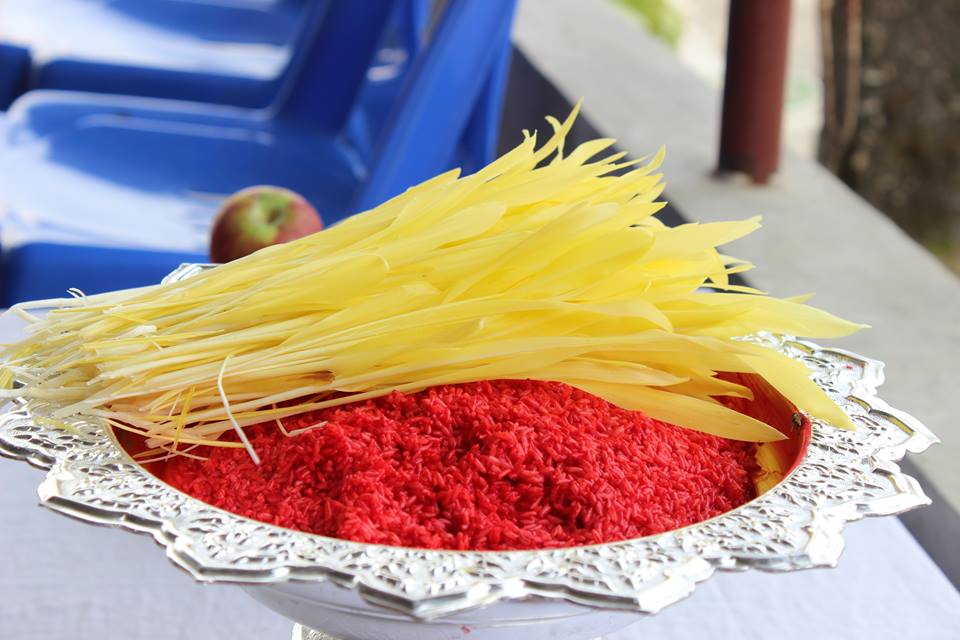
Common Dashain practices include visiting temples, offering prayers to the goddess Durga, and performing family rites. A central custom is receiving tika — a paste of red vermilion, rice, and yogurt placed on the forehead by elders as a blessing — often accompanied by jamara (yellow barley shoots). Households are cleaned and decorated, new clothes are worn, and food is shared. In many communities, animal sacrifice is performed as part of the worship of the goddess; in others, symbolic offerings are used instead. Public amusements such as swings, fairs, and kite flying accompany home-centered observances.
History and meaning
Dashain is traditionally associated with myths that celebrate the triumph of the divine feminine over demon forces, most commonly the goddess Durga’s victory over the buffalo demon Mahishasura. For many participants the festival embodies the broader idea of the victory of good over evil and renewal of social bonds. Over centuries it has evolved regional variations in rites and emphasis, but its core themes of blessing, protection, and family unity remain central.
Cultural importance and diaspora practices
In Nepal, Dashain is a major public holiday period; many people travel home to be with family, schools and offices close, and communities hold collective ceremonies. Nepali diaspora communities often retain the festival’s principal rituals while adapting local practices. The festival also functions as an occasion for social reconciliation, redistribution of food and gifts, and the reaffirmation of family hierarchy through the exchange of blessings and presents.
Distinctions and contemporary issues
While Dashain shares themes with other South Asian autumn festivals such as Navaratri and Durga Puja, it has distinctive Nepali customs — notably the particular use of jamara and extended family-centered observances. Contemporary debates touch on animal welfare, urban adaptation of traditions, and how modern work patterns affect long-standing practices. Nonetheless, Dashain remains a defining cultural and religious observance that symbolizes communal renewal and the triumph of virtue (symbolic victory).
For further context on regional observance and calendar naming, consult resources linked to Nepali culture and calendars (Bikram Sambat, Nepal) and descriptions of Nepali communities abroad (Sikkim, Assam, Darjeeling, Bhutan, Myanmar).
Related articles
Author
AlegsaOnline.com Dashain (Vijaya Dashami): Nepal's major Hindu festival Leandro Alegsa
URL: https://en.alegsaonline.com/art/25609
Sources
- nepalhomepage.com : "Festivals of Nepal: Dashain" · web.archive.org
- bbs.bt : "King of Bhutan Celebrated Dashain with Bhutanese people in Loggchina"
- rove.me : "Dashain Festival"