
Cyrus West Field — organizer of the first transatlantic telegraph cable
Cyrus W. Field (1819–1892) was an American businessman and financier who led the effort to create the Atlantic Telegraph Company and lay the first transatlantic telegraph cable in 1858.
Overview
Cyrus West Field (November 30, 1819 – July 12, 1892) was an American businessman and financier best known for organizing and financing the enterprise that produced the first telegraph connection across the Atlantic Ocean in 1858. He combined commercial experience, persuasive fundraising, and persistent advocacy to bring together private capital and technical resources on both sides of the Atlantic.
Image gallery
4 Images


Early life and business career
Field was born in Stockbridge, Massachusetts. As a teenager he moved to New York City, where he served an apprenticeship in one of the city's leading dry goods houses and later entered the paper trade. He joined the paper wholesaler E. Root and Company; when that firm ran into difficulties, Field acquired its inventory and accounts and reorganized the concern as Cyrus W. Field and Company. His early success made him one of New York's prosperous entrepreneurs and allowed him to retire from daily business in his mid-thirties with a substantial personal fortune.
The Atlantic Telegraph Company and the 1858 cable
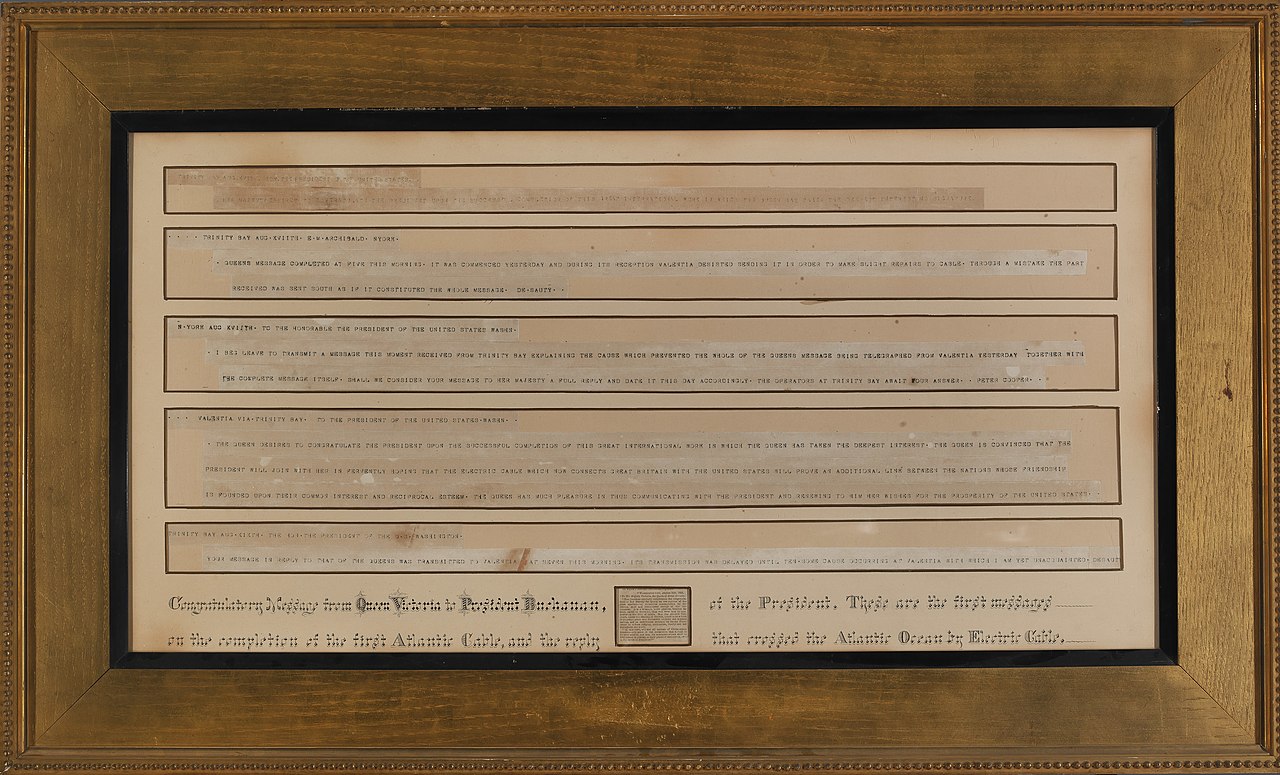
Field's most celebrated achievement was the creation of the Atlantic Telegraph Company, an international venture that aimed to link Europe and North America by submarine telegraph. He solicited investors, negotiated with British partners, and coordinated engineers and shipowners to attempt an unprecedented undersea installation. The cable first laid in 1858 permitted rapid messages to be exchanged between London and New York and produced intense public interest, but the line failed after a few weeks because of the technical limitations and stresses of the ocean environment.
Technical and financial challenges
Installing a submarine telegraph cable across the vast Atlantic Ocean presented unfamiliar engineering problems: adequate electrical insulation, cable construction that could survive deep-water conditions, methods for paying out and repairing many miles of heavy cable, and the effect of long distances on signal clarity. Field worked with a consortium of entrepreneurs, engineers, and shipowners to address those difficulties. The effort required large vessels, careful surveying of the seabed, new manufacturing techniques, and repeated investment despite early setbacks.
Subsequent efforts and eventual success
Rather than abandon the project, Field and his associates organized further expeditions and improvements in cable design and laying techniques. Later work, supported by new resources and larger cable-laying ships, produced a durable transatlantic connection that proved the concept and opened a permanent telegraphic link between continents. Histories of communications often cite Field's role in sustaining the enterprise through its most critical and uncertain years.
Later life and legacy
Although his early mercantile ventures had made him wealthy—his fortune was substantial enough for early retirement—Field invested heavily in speculative and large-scale engineering projects that diminished his wealth toward the end of his life. He died in New York City on July 12, 1892. Public recognition of his efforts endured: contemporaries and later historians credited him as the chief organizer who turned a bold idea for near-instant transatlantic communication into a practical, if initially fragile, reality.
Significance and broader impact
The transatlantic telegraph transformed diplomacy, commerce, news distribution, and personal correspondence by reducing the time required for intercontinental messages from weeks to minutes. Field's persistence shows the role private initiative played in mid-19th-century infrastructure projects. His example illustrates both the promise and peril of such undertakings: innovation often required high risk, long-term financing, and coordination of diverse technical and commercial skills.
Notable facts
- Field rose from apprenticeship to business ownership by acquiring the remains of E. Root and Company and founding Cyrus W. Field and Company.
- He organized the Atlantic Telegraph Company and coordinated fundraising and operations with partners in Britain and the United States, working closely with other entrepreneurs.
- His project placed the first transatlantic telegraph cable in 1858, a milestone that proved the technical possibility of intercontinental telegraphy even though the initial cable failed after a short time.
- Field's career illustrates both commercial success and the financial risks of pioneering infrastructure: early wealth was later diminished by investments in ambitious projects that did not always pay off.
For concise biographical summaries and further reading, consult general reference works on 19th-century communications and biographies that examine the Atlantic telegraph project, its technical history, and the business arrangements behind it. Related topics include entrepreneurship in the industrializing Atlantic world, the history of submarine cables, and the social impact of near-instant global communication; resources and context for these themes may be found in materials on business history, the Atlantic Telegraph Company, and collections of 19th-century correspondence and engineering reports. Additional primary- and secondary-source collections and digital archives can provide deeper detail about Field's work and the technical teams that carried it out; see general finance and archival guides for starting points on research into Field's later finances and personal papers, as well as specialized studies on maritime survey and cable manufacture (Atlantic operations, contemporary press accounts, and technical treatises on insulation and signaling).
Field's achievements remain an important episode in the history of global communications and of private investment in infrastructure projects during the 19th century. For more focused exploration, consult detailed histories of submarine telegraphy and the biographies that situate Field within the broader networks of investors, engineers, and shipowners who made transoceanic telegraphy possible, and consider archive catalogs and specialized studies available through major research libraries and online repositories (New York business archives and regional historical societies in places such as Stockbridge may hold relevant primary material).
Related articles
Author
AlegsaOnline.com Cyrus West Field — organizer of the first transatlantic telegraph cable Leandro Alegsa
URL: https://en.alegsaonline.com/art/24948
Sources
- history.com : "1858 First transatlantic telegraph cable completed"
- pbs.org : "Cyrus Field (1819-1892)"
- biography.yourdictionary.com : "Cyrus West Field Facts"
- commons.wikimedia.org : Cyrus West Field