
Crowbar: design, history, uses and notable variants
Comprehensive overview of the crowbar — a handheld pry tool. Explains shapes, materials, historical origin, common uses, lever mechanics, safety considerations and notable types.
Overview
A crowbar is a simple handheld tool made of metal and engineered primarily to apply leverage for prying, lifting, splitting or removing fasteners. Often called a pry bar, prybar, jimmy or wrecking bar depending on region and size, it typically features one or both ends shaped to engage gaps or grip nails. The tool's effectiveness comes from basic mechanical advantage rather than moving parts, which keeps it durable and easy to maintain.
Image gallery
2 Images
Design, parts and materials
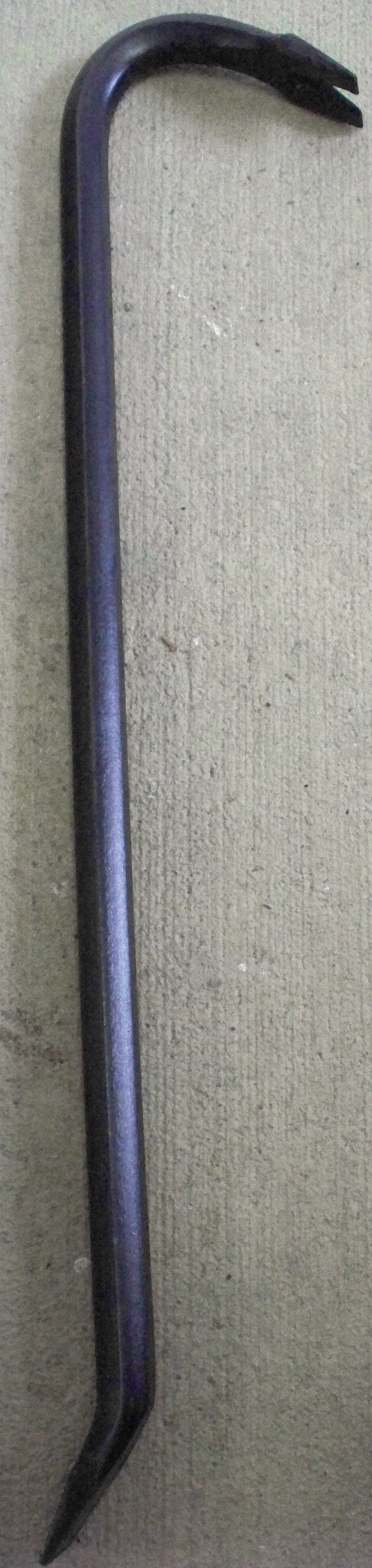
Most crowbars are forged or formed from hardened steel with a flattened end for wedging and a hooked or clawed end for pulling. Some models include a notch for extracting nails and a radius to seat on a fulcrum. Variations in length, cross-section and curvature change how force is transmitted. Manufacturers may use different alloys: common industrial examples include carbon steel for strength and economy, while lighter non-magnetic variants such as titanium exist for specialized situations. Accessories, handles or coatings can improve grip or corrosion resistance; for further details see materials overview.
History and etymology
The name "crowbar" dates back several centuries; early English usage referred to similar iron tools as "crows" in the late medieval period. Its form evolved in parallel with woodworking, shipping and mining needs: simple levers and hooks have long been used to open nailed crates, separate boards and manipulate heavy objects. Industrial forging and standardized toolmaking in the 18th–20th centuries produced the familiar hooked and flattened profiles common today.
Uses, techniques and examples
Crowbars are versatile in construction, demolition, rescue, and many trades. Typical tasks include prying apart boards, removing nails, levering materials during framing or deconstruction, and breaking apart small structures. Firefighters and emergency responders also use pry bars for forcible entry, where controlled leverage and a slim profile are valuable. In mining's early days the tool served to clear loose rock and handle blasted material, though modern heavy equipment has reduced that role.
- Common uses: leverage techniques, nail removal, demolition, crate opening.
- Lever mechanics: depending on how it is applied a crowbar can act as a first-, second- or third-class lever; the hooked end often functions as a first-class lever around a fulcrum point, while a flat wedge works as a second-class lever when lifting.
- Variants: short "pinch" bars for confined work, long wrecking bars for greater reach and pry force, and specialized notched or padded models for finish work.
Safety, limitations and notable facts
Safe use emphasizes correct fulcrum placement, controlled force, and eye and hand protection to guard against sudden slips or flying debris. Crowbars are force tools and can damage materials if used carelessly, so finish carpenters often prefer less aggressive pry tools to protect surfaces. Because they are blunt instruments of force, crowbars have also been used as improvised weapons; some jurisdictions regulate carry or use in sensitive environments. For guidance on safe techniques and personal protective equipment consult safety guidance.
For more technical comparisons of profiles and steels, and advice on selecting the right bar for a task, see curved end design notes and materials overview.
Related articles
Author
AlegsaOnline.com Crowbar: design, history, uses and notable variants Leandro Alegsa
URL: https://en.alegsaonline.com/art/24382