
Carbon steel: composition, properties, heat treatment and uses
Carbon steel (plain‑carbon steel) is an iron–carbon alloy with limited other elements; properties depend on carbon content, microstructure and heat treatment, determining formability, strength and common applications.
Carbon steel, often called plain‑carbon steel, is a class of metal alloy whose principal constituents are iron and carbon. By definition, plain‑carbon steels contain only controlled, generally small amounts of additional elements. Typical limits used in standards allow manganese, silicon and copper only up to modest maxima — for example manganese, silicon and copper in restricted proportions — so that the observed behavior is dominated by the iron–carbon system. This chemical simplicity makes carbon steel the most produced and widely used category of steel.
Image gallery
2 Images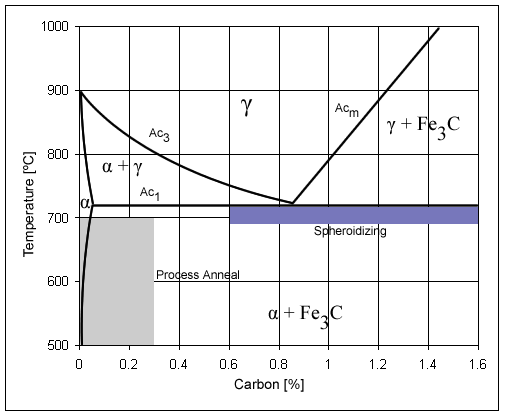
Composition and microstructure
The amount of carbon is the primary variable that determines mechanical properties. At low carbon concentrations the material behaves much like iron: soft, ductile and readily formed. As carbon increases, tensile strength and hardness rise while ductility and weldability generally decline. Microstructurally, carbon steels are composed of phases such as ferrite, pearlite and cementite. With alloying, temperature and cooling rate, additional microstructures such as martensite or bainite can form. The size, distribution and morphology of these phases control strength, toughness and wear resistance.
Classification by carbon content
Common practical classifications separate carbon steels into low‑, medium‑ and high‑carbon groups based on carbon fraction. Low‑carbon steels are highly formable and easy to join and are often used where shaping and welding are priorities; they are sometimes referenced simply as low‑carbon grades. Medium‑carbon steels provide a compromise of strength and toughness and are frequently heat treated to enhance properties. High‑carbon steels provide high hardness and wear resistance for tools and springs but are less ductile and more challenging to weld.
Heat treatment and mechanical behavior
Heat treatment is used to tailor properties. Annealing softens and refines grain structure to improve formability. Normalizing produces a uniform microstructure and can improve mechanical consistency after hot working. Quenching from the austenite region can produce hard martensite in higher‑carbon steels; subsequent tempering reduces brittleness while retaining increased strength. The ability of a steel to be hardened by heat treatment is called hardenability and depends on carbon content and other alloying constituents as well as section size.
Manufacturing, joining and surface protection
Carbon steels are produced and formed by standard metallurgical and fabrication processes: casting, hot and cold rolling, forging, drawing and machining. Welding performance depends on carbon content and thermal control; grades with higher carbon typically require preheating, controlled heat input and appropriate filler materials to avoid cracking and loss of toughness, so attention to weldability is important. Because plain‑carbon steels have limited inherent corrosion resistance, protective coatings such as galvanizing or organic paints are commonly applied for outdoor or corrosive environments.
Applications
- Low‑carbon steels: automotive body panels, structural sections, pipe and general‑purpose sheet where formability and weldability are valued.
- Medium‑carbon steels: axles, shafts, gears and railway components that need a balance of strength and toughness, often heat treated.
- High‑carbon steels: cutting tools, blades, springs and wear parts where hardness and edge retention are critical.
Standards, testing and distinctions
Plain‑carbon steels are specified and tested under national and international standards that set chemical limits, mechanical performance and permitted product forms. A key practical distinction exists between plain‑carbon steels and alloy steels: alloy steels deliberately add significant proportions of other elements (for example chromium, nickel or vanadium) to provide corrosion resistance, high‑temperature capability or special mechanical properties, whereas plain‑carbon types rely mainly on carbon content and thermal processing to achieve desired features.
Practical considerations
Selection of a carbon steel grade is a matter of balancing cost, formability, strength and service environment. Designers and fabricators consider carbon level, possible heat treatments, required corrosion protection and joining methods. Routine testing such as tensile tests, hardness measurements and microstructural examination inform quality control and help match grade to application.
For introductory overviews and material data consult general references and standards documents that summarise composition limits and recommended practices; see resources on overview, iron, carbon, manganese, silicon, copper, steel, low‑carbon grades, hardness and weldability.
Questions and answers
Q: What is carbon steel?
A: Carbon steel is a metal alloy that is made up of two elements, iron and carbon.
Q: Are there any other elements that can be present in plain-carbon steel?
A: Yes, other elements such as manganese (1.65% max), silicon (0.60% max), and copper (0.60% max) can be present in small quantities.
Q: What are the properties of plain-carbon steel with low carbon content?
A: Plain-carbon steel with low carbon content has the same properties as iron - it is soft and easily formed.
Q: How does the addition of more carbon affect the properties of carbon steel?
A: The addition of more carbon makes the metal gain hardness and strength but it becomes less ductile and more difficult to weld.
Q: Is there a limit to the amount of manganese that can be present in plain-carbon steel?
A: Yes, the maximum amount of manganese that can be present in plain-carbon steel is 1.65%.
Q: Does a higher carbon content affect steel's melting point?
A: Yes, a higher carbon content lowers steel's melting point.
Q: Does a higher carbon content affect steel's temperature resistance in general?
A: Yes, a higher carbon content also lowers steel's temperature resistance in general.
Related articles
Author
AlegsaOnline.com Carbon steel: composition, properties, heat treatment and uses Leandro Alegsa
URL: https://en.alegsaonline.com/art/16890