
COVID-19 pandemic in Spain: timeline, response, and impact
Overview of the COVID-19 pandemic in Spain, covering early spread, public-health measures, regional impact, economic and social consequences, vaccination rollout, and notable developments.
Overview
The COVID-19 pandemic reached Spain in early 2020 and quickly became one of the country's most severe public‑health emergencies in modern times. The first confirmed infection was identified in the Canary Islands in late January 2020. Within weeks the virus spread across the mainland and the archipelagos, testing Spain's health system, regional governance, and social resilience. For global context see the COVID-19 pandemic.
Image gallery
10 Images


Early spread and timeline
Spain's first reported case involved a tourist who tested positive on 31 January on La Gomera in the Canary Islands; this case was confirmed as infection with SARS-CoV-2. By early March cases had been detected in most provinces, and by 13 March infections had been reported across all 50 provinces. The rapid growth of cases in urban centres, particularly in Madrid, and outbreaks in care homes marked the initial phase of the crisis. The Community of Madrid emerged as an early focal point of transmission and mortality (Community of Madrid).
National response and public‑health measures
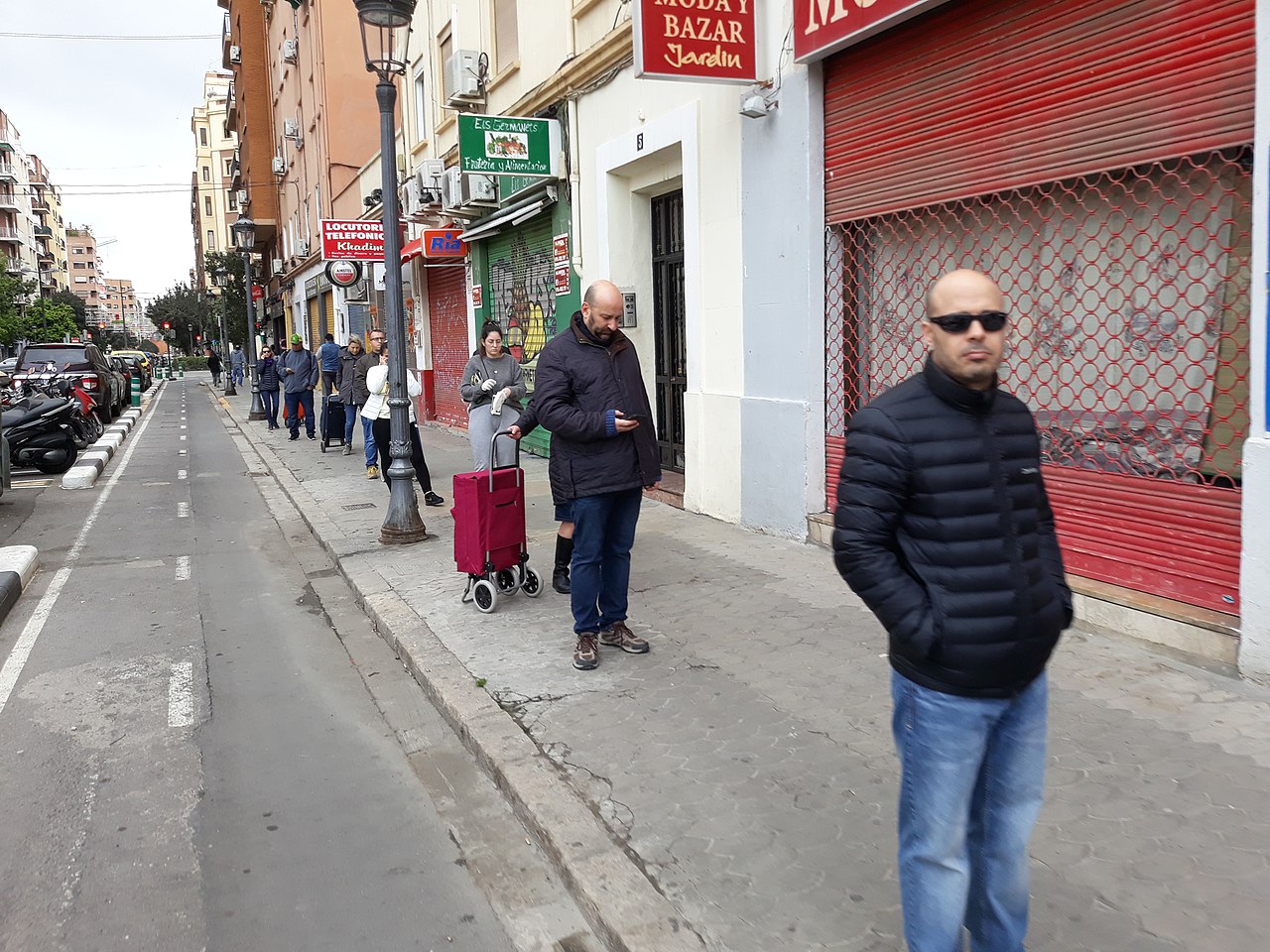
The national government declared a state of alarm in mid‑March and implemented one of the strictest lockdowns in Europe. Measures progressed quickly from event cancellations and school closures to a comprehensive stay‑at‑home order. At the end of March authorities announced that, starting the following day, many non‑essential workers would remain at home for a two‑week period to reduce mobility and transmission.
- Nationwide stay‑at‑home orders and restrictions on movement
- Closure of non‑essential businesses and schools
- Mobilization of health resources and emergency facilities
- Public‑information campaigns and testing scale‑up
Health impact and milestones
During late March and early April the epidemic in Spain produced very high case counts and a heavy mortality burden. On 25 March official totals reported more deaths than those recorded in mainland mainland China at that date, making Spain one of the worst‑affected countries outside Italy. In early April the country recorded a single‑day death toll among the highest then reported anywhere, reflecting the peak of the first wave. These developments placed intense pressure on hospitals and long‑term care facilities and highlighted issues such as excess mortality and the protection of elderly residents in care homes.
Economic, social, and regional consequences
The pandemic triggered a deep economic contraction, major job losses in tourism and hospitality, and large government support programmes to sustain businesses and households. Social effects included prolonged school disruptions, reduced mobility, and impacts on mental health. Spain's decentralized health and administrative system meant regional governments played a central role in implementing and adapting measures to local conditions; by mid‑2020 responses varied between autonomous communities.
Vaccination and later phases
Vaccination began in Spain as part of the European Union rollout in late 2020 and early 2021, with early priority groups including health‑care workers, residents of long‑term care facilities, and older people. Over subsequent months booster doses and expanded eligibility helped reduce severe illness and mortality even as new variants emerged. The long course of the pandemic involved multiple waves of infection and a transition from emergency lockdowns to targeted measures and vaccination‑based mitigation.
Notable facts and legacy
Spain's experience illustrated several broad lessons: the speed at which a respiratory pathogen can spread in a highly interconnected society; the vulnerability of care homes; the value of rapid testing, contact tracing and vaccination; and the challenges of balancing national coordination with regional autonomy. The crisis also prompted debates about public‑health preparedness, social safety nets, and resilience in the sectors most affected by restrictions. For comparative context with other early European hotspots see links referring to Italy and broader pandemic information (Italy, Spain, La Gomera).
Related resources: official health ministry reports and regional briefings continue to document the evolving situation; readers seeking historical timelines or data should consult national public‑health portals and aggregated pandemic trackers for the most recent and verified figures (global overview, national reports).
Related articles
Author
AlegsaOnline.com COVID-19 pandemic in Spain: timeline, response, and impact Leandro Alegsa
URL: https://en.alegsaonline.com/art/23817
Sources
- elpais.com : "Sanidad confirma en La Gomera el primer caso de coronavirus en España" · web.archive.org
- who.int : "Q&A on coronaviruses (COVID-19)"
- nytimes.com : "The Coronavirus: What Scientists Have Learned So Far"
- rtve.es : "El mapa del coronavirus en España: 25.428 muertos y más de 218.000 contagiados"
- administracion.gob.es : "Estado de alarma por crisis sanitaria COVID-19—Atención e informacion—Punto de Acceso General"
- msn.com : "Spain poised to tighten coronavirus lockdown after record daily toll"
- irishtimes.com : "'Top of the curve'? Spain hopes Covid-19 peak reached as deaths pass 4,000"
- scmp.com : "Coronavirus latest: Britain's Prince Charles tests positive for Covid-19"
- businessinsider.com : "Spain recorded 950 coronavirus deaths in a day, the highest single-day toll of any country"
- usnews.com : "Spain coronavirus cases surpass Italy"