
Corkscrew: design, types, history and how to open a bottle
Tool used to remove corks from wine bottles; covers parts, common styles, use technique, history, maintenance, and related developments such as screw caps and synthetic corks.
A corkscrew is a handheld tool designed to extract a cork from a bottle, most commonly a wine bottle. Simple in concept, the instrument uses a spiraled metal point that is driven into the stopper so the user can apply leverage and pull the cork free without breaking it. Corkscrews remain useful even as alternative closures—such as screw caps and synthetic stoppers—have grown in popularity.
Image gallery
10 Images



Parts and basic operation
Typical corkscrew components include the worm (the helical metal screw), a shank or body to hold the worm, a handle for turning or pulling, and sometimes a collar or lip that rests on the bottle rim. When the worm is rotated into the cork, the user then pulls or leverages the handle so the stopper slides out along the screw's axis. Some models add mechanical advantage to reduce effort.
Common types
- Waiter’s friend (sommelier knife): a compact folding device with a worm, small knife for foil and a lever arm.
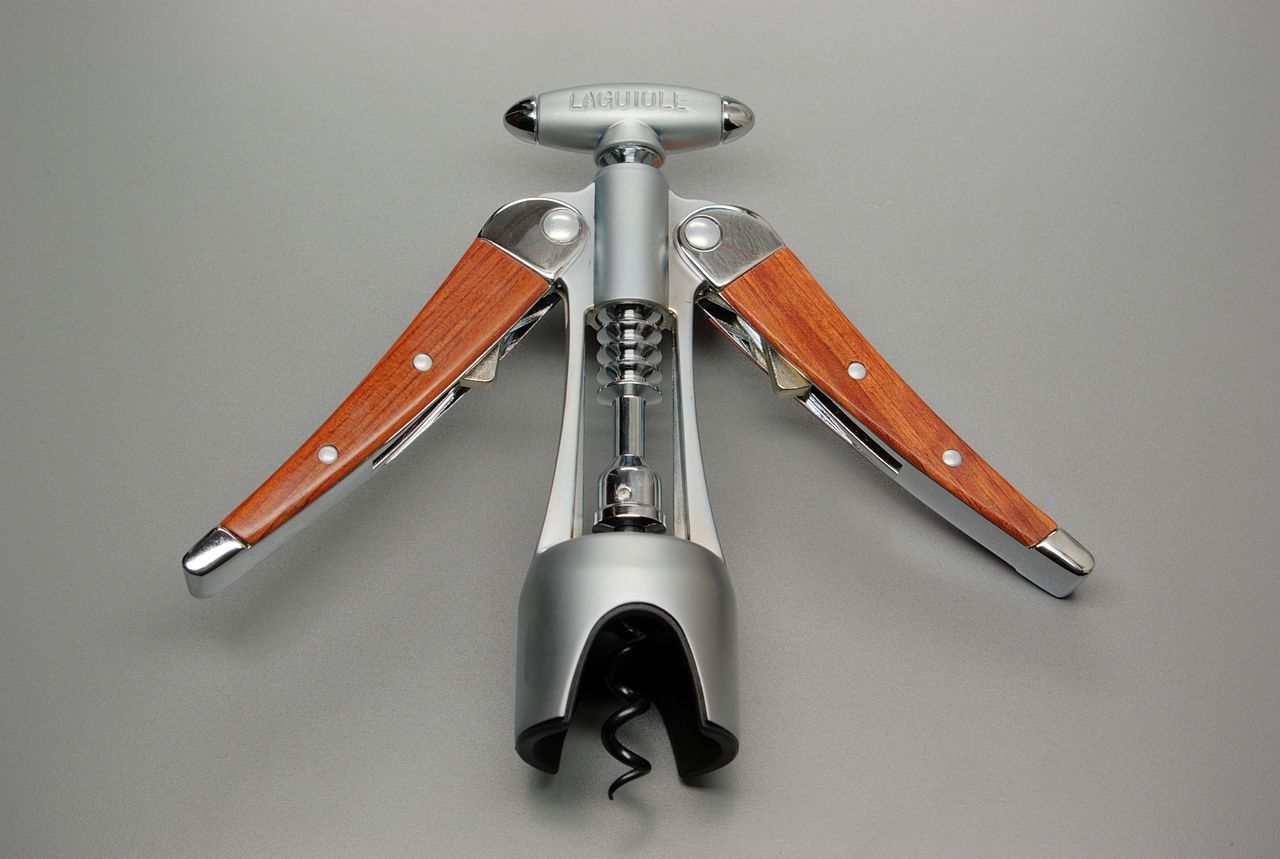
- Winged corkscrew: features two levers that rise as the worm is driven in and are pushed down to extract the cork.
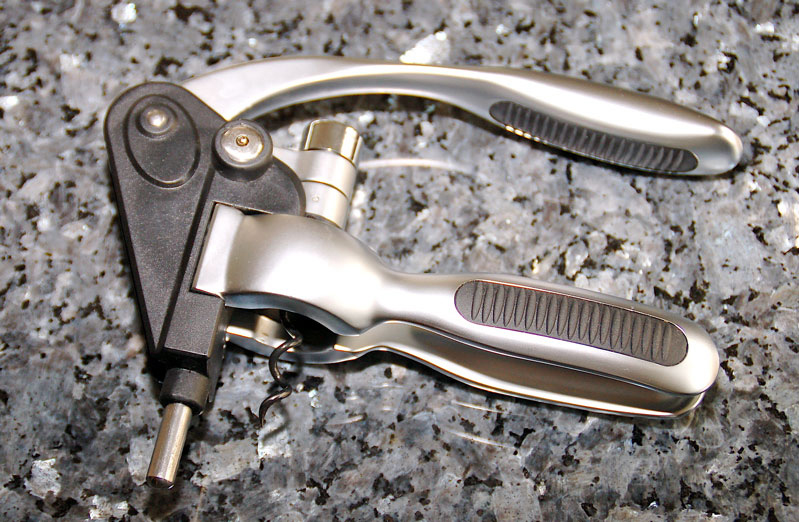
- Lever or rabbit opener: a clamping head and long lever give strong mechanical advantage for fast removal.
- T-shaped and simple screw: basic models with a straight handle; often used for soft corks or occasional use.
- Ah-So: two thin prongs slide between cork and bottle to remove fragile or older stoppers without piercing them.
These varieties trade off portability, ease of use, and gentleness on old or brittle corks.
History and context
Early corkscrews evolved from tools used to extract musket balls and were adapted for bottles as cork stoppers became standard in the 17th–18th centuries. Designs proliferated in the 19th century with patents for improved levers and mechanical systems. While cork remains traditional for many wines, the industry now uses a range of closures for practical and stylistic reasons.
How to use (basic steps)
- Cut and remove foil or capsule covering the bottle neck.
- Center the worm on the cork and twist straight down until only one turn or so remains visible.
- Use the handle or lever to pull the cork out steadily; avoid sudden jerks that can break older corks.
- If a cork crumbles, an Ah-So or two-prong tool can help extract fragments.
Maintenance is straightforward: keep moving parts clean and dry, avoid bending the worm, and replace worn or rusty tools. Corkscrews are a small but enduring specialty of kitchen and hospitality toolkits and an example of simple mechanics applied to a cultural ritual: opening and sharing a bottle.
For more on design variations and usage tips, see a general overview at corkscrew resources or guidance about bottle and cork types at wine bottle information and cork material details.
Related articles
Author
AlegsaOnline.com Corkscrew: design, types, history and how to open a bottle Leandro Alegsa
URL: https://en.alegsaonline.com/art/23097