
Crash test dummy (Anthropomorphic Test Device)
An anthropomorphic test device (ATD), commonly called a crash test dummy, is an instrumented mannequin used to evaluate human injury risk and vehicle safety in simulated impacts.
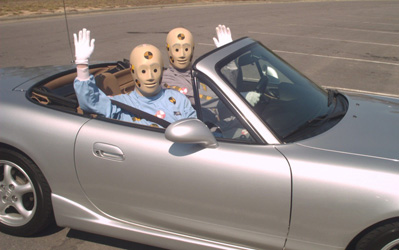
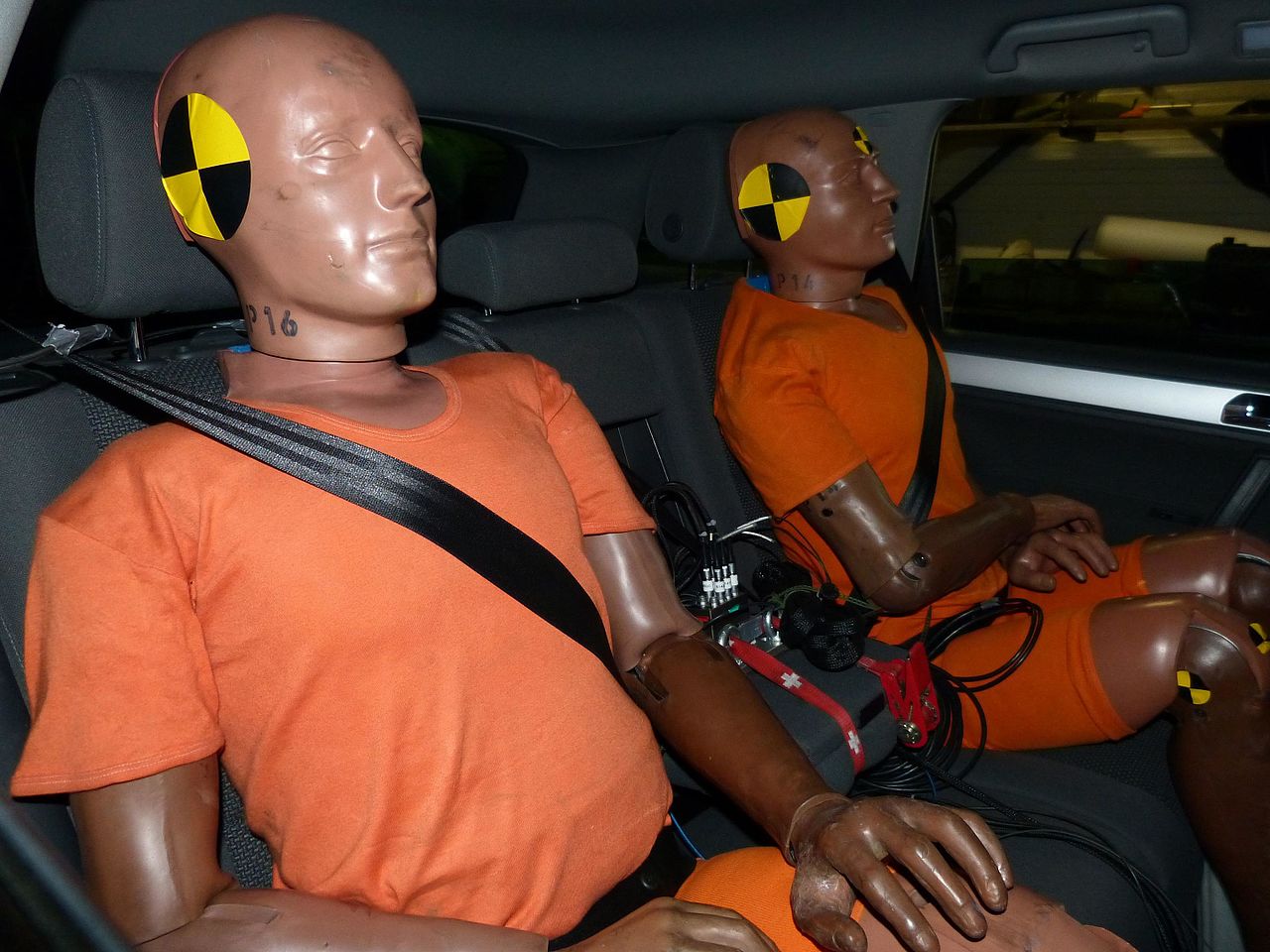
A crash test dummy, formally an anthropomorphic test device (ATD), is a human-shaped, instrumented mannequin used to reproduce the kinematics and loading of people in collisions and other impact events. ATDs are built to approximate human size, weight distribution and joint articulation so that the forces and motions recorded in tests correspond meaningfully to potential injuries in real people. Modern dummies contain internal sensors and data recorders to capture acceleration, force, deflection and rotational motion during an impact.
Image gallery
10 Images




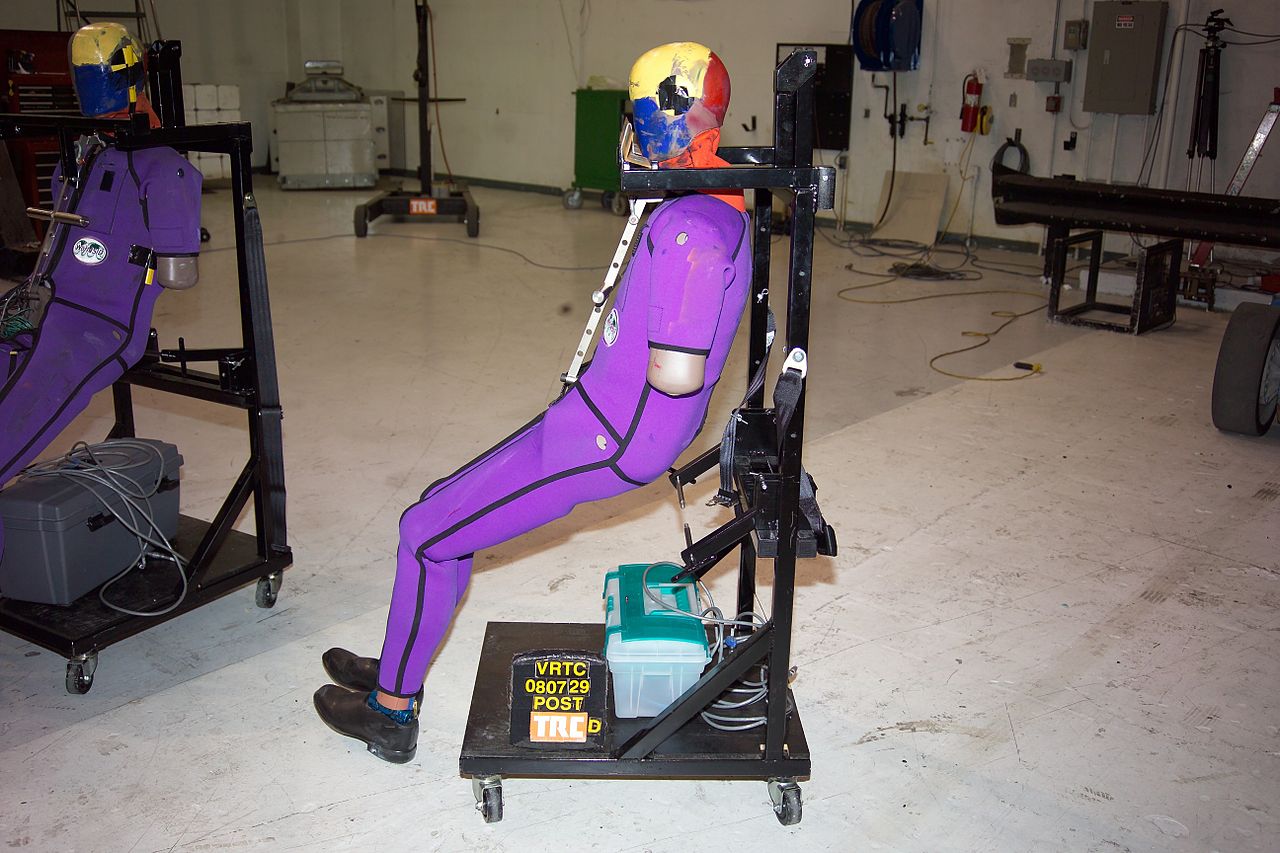
Design and instrumentation
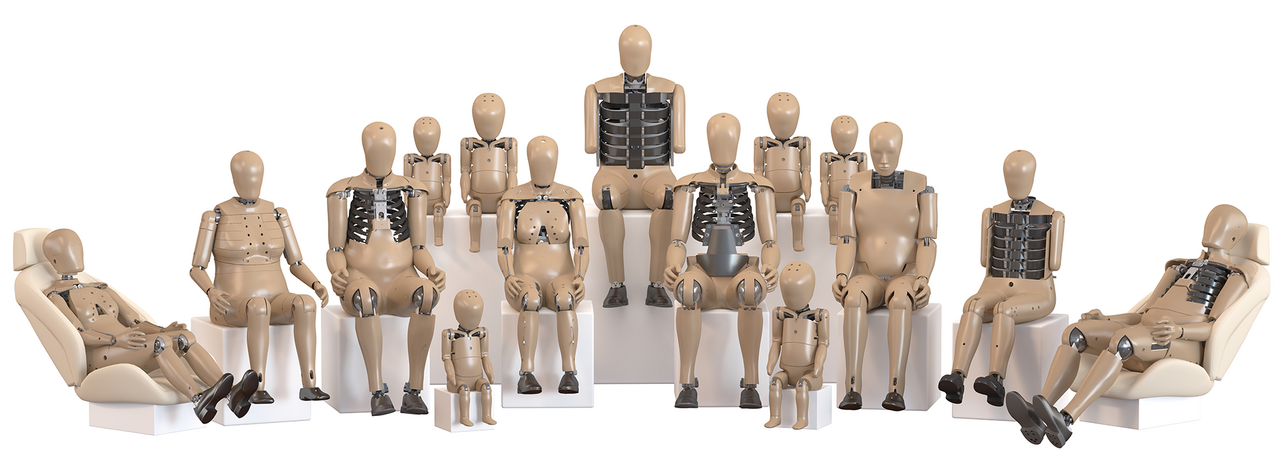
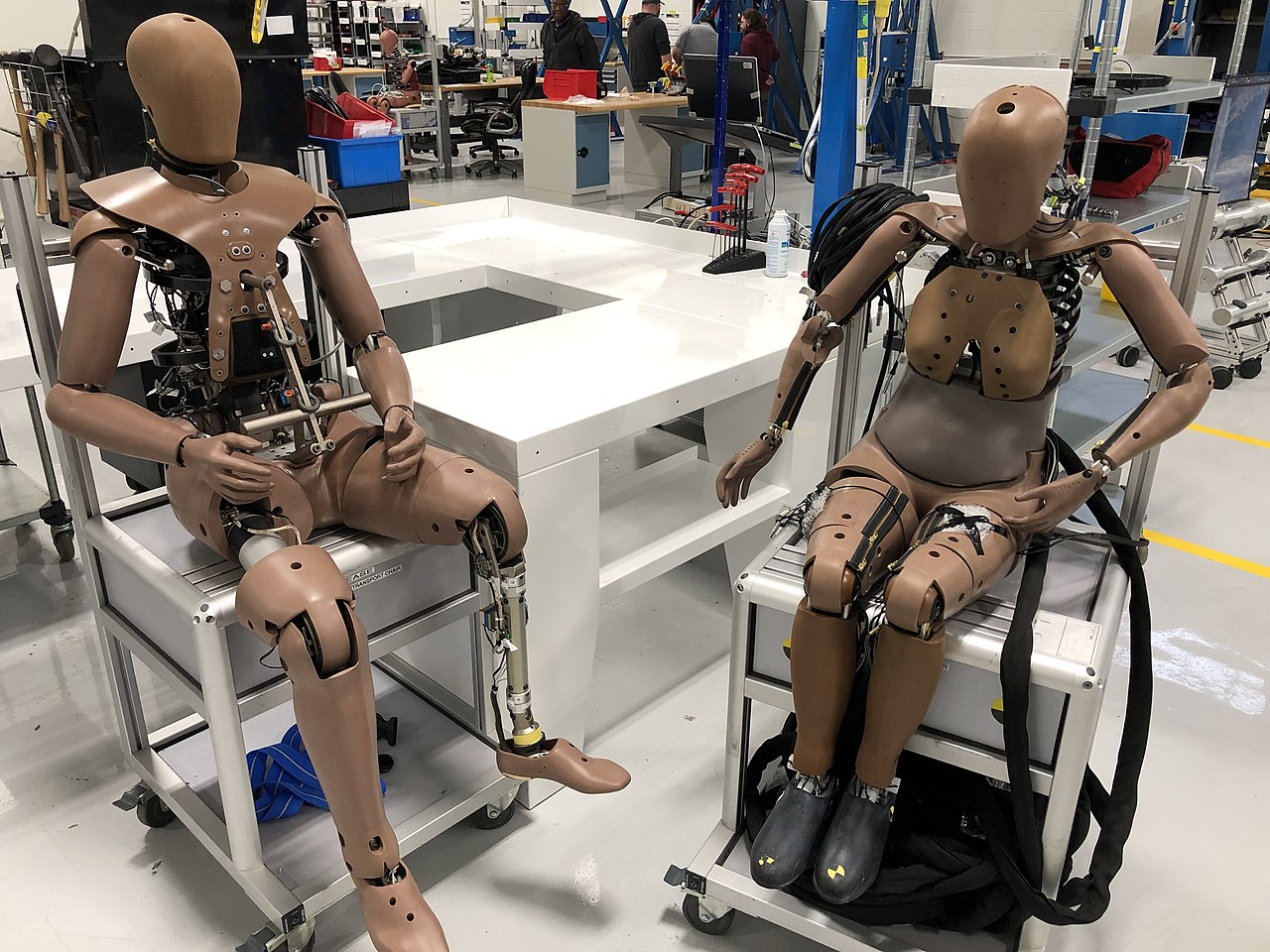
Construction often combines a rigid skeleton, compliant soft tissues and articulated joints. Common sensor types embedded in ATDs include:
- Accelerometers to measure linear acceleration of the head, chest or other segments.
- Load cells and strain gauges to record forces in the neck, spine and limbs.
- Chest deflection transducers to estimate thoracic compression and rib loading.
- Angular rate sensors for rotational kinematics linked to brain injury risk.
Manufacturers and research organizations produce ATDs in a range of sizes to represent different populations (for example, the so-called 50th-percentile adult male, smaller female forms and child-sized models). Standardized instrumentation and test procedures allow results to be compared across laboratories and to underpin regulatory crashworthiness ratings.
History and development
Early impact dummies were simple and largely qualitative; through the late 20th century they evolved into highly instrumented devices used in laboratory sled and full-vehicle crash tests. Advances in biomechanics, sensors and computational modeling have driven the development of family-specific ATDs with improved biofidelity. Researchers now also combine physical dummies with human body computer models to interpret injury mechanisms.
Applications and importance
While best known for automotive safety testing, ATDs have broader uses: evaluating child restraints, helmets and protective sports gear, testing aircraft seats and safety systems, and serving in biomedical research. Results from ATD tests guide vehicle design, restraint systems and safety regulations, and they help reduce injury and fatality rates by informing engineering changes and consumer ratings.
Notable distinctions and resources
Different ATD families emphasize particular injury metrics or body regions; for more on ATD types and performance criteria see overview resources. Technical details on sensor outputs and data interpretation are available from measurement and standards groups at data and standards references. Although indispensable for regulatory and design work, ATDs are complemented by post-test analysis, cadaver studies and computational models to build a complete picture of injury risk.
Related articles
Author
AlegsaOnline.com Crash test dummy (Anthropomorphic Test Device) Leandro Alegsa
URL: https://en.alegsaonline.com/art/23990