
Copper(I) chloride (cuprous chloride)
Copper(I) chloride, CuCl, is a low-solubility copper salt in which copper is in the +1 state. It is used as a source of Cu(I) in chemistry, has distinct reactions from Cu(II) salts, and requires careful handling.
Overview: Copper(I) chloride, commonly called cuprous chloride, is an inorganic compound with the formula CuCl. It contains copper in the +1 oxidation state paired with chloride anions. The compound is important in coordination chemistry and as a reagent in some industrial and laboratory processes. For basic reference data see CuCl reference.
Image gallery
9 Images





Physical and chemical properties
Pure copper(I) chloride is typically white but often appears greenish or gray when traces of copper(II) or metallic copper are present. It is a solid with low solubility in water and tends to oxidize slowly in moist air. In aqueous environments Cu+ is unstable and undergoes disproportionation to give copper(0) and copper(II) species; the practical behaviour in solution is discussed in many chemical resources (chemical behaviour).
Structure and bonding
Although often described simply as ionic (Cu+ and Cl−), copper(I) chloride shows substantial covalent and coordination character. In the solid state atoms can adopt polymeric arrangements and Cu+ readily forms complexes with extra chloride or with neutral ligands (amines, phosphines), which alters solubility and stability. For more on its coordination chemistry see coordination notes.
Synthesis and occurrence
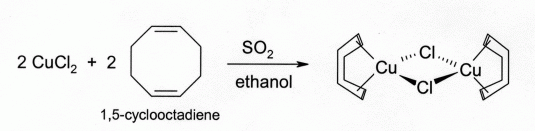
Laboratory preparations commonly produce CuCl by partial reduction of copper(II) salts or by passage of chlorine over heated copper; industrial routes vary. It can appear as an intermediate or by‑product in processes that interchange copper oxidation states. Practical synthesis and handling procedures are described in technical sources (preparation and handling).
Uses and applications
- Source of Cu(I) in organic and inorganic synthesis and in catalytic reactions where the +1 state is required.
- Used historically in pigment and pyrotechnic formulations to impart blue/green coloring, where stability and oxidation state affect color.
- As a reagent in laboratories for redox and halide-transfer reactions; complexes of CuCl are often more soluble and reactive.
Safety, distinctions and notable facts
Copper(I) chloride should be handled with standard chemical safety precautions: avoid ingestion, inhalation and release to the environment since copper salts can be toxic to aquatic organisms. It is chemically distinct from copper(II) chloride (CuCl2), which contains Cu2+ and has different solubility, color and reactivity. In practice, samples of CuCl often show green tints because of partial oxidation to CuCl2 or formation of finely divided copper metal.
Summary: CuCl is a moderately reactive copper salt valued as a convenient source of Cu(I). Its instability in water, tendency to form coordination compounds, and contrasting behaviour from Cu(II) salts make it a useful but carefully handled reagent in chemistry.
Related articles
Author
AlegsaOnline.com Copper(I) chloride (cuprous chloride) Leandro Alegsa
URL: https://en.alegsaonline.com/art/22962