
Consciousness: concepts, states, and scientific perspectives
An accessible overview of consciousness: definitions across fields, states and measurement, subconscious processes, historical debates, and why consciousness remains a scientific and philosophical challenge.
Overview
Consciousness is the quality or condition of having subjective experience: being aware of sensations, perceptions, thoughts, and the surrounding environment. Different disciplines approach the topic in distinct ways. For example, psychology studies conscious experience in relation to behaviour and cognition, neuroscience seeks the brain processes that correlate with awareness, and philosophy examines conceptual questions about what it would mean to have an inner life. Although people use the same word, the precise meaning can vary depending on the question being asked.
Image gallery
9 Images




Characteristics and states of consciousness
Rather than being an all-or-nothing property, consciousness is commonly described as ranging across multiple states. Wakefulness, focused attention, daydreaming, sleep, and coma represent different forms and levels of awareness. Clinically, practitioners evaluate impairment or recovery of awareness using standard tools from medicine. One widely used instrument is the Glasgow Coma Scale, which provides a simple score to summarise eye, verbal, and motor responses. Researchers also speak of a continuum or spectrum of conscious states to reflect gradual changes rather than a single threshold.
How scientists and philosophers frame the problem
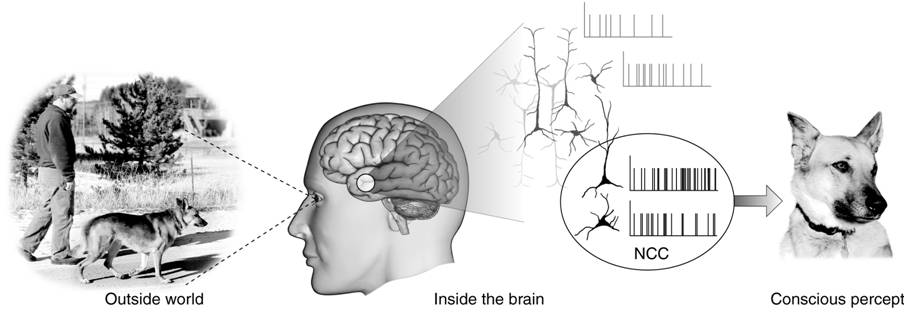
Investigations differ in method and emphasis. Experimental psychologists measure reportable experience and behaviour under controlled conditions; neuroscientists look for neural correlates of consciousness and use brain imaging to identify activity patterns associated with awareness. Philosophers raise conceptual challenges such as the so-called "problem of other minds"—how we can justify attributing conscious experience to others. Together, these approaches aim to clarify what counts as evidence for conscious experience and which mechanisms might produce it.
Subconscious processes and bodily regulation
Many mental and physiological functions occur without moment-to-moment awareness. Researchers contrast conscious decision-making with processes that operate below awareness, often termed the unconscious mind in psychology. Bodily regulation such as heart rate, digestion, and many aspects of respiration are primarily managed by the autonomic nervous system, although we can sometimes bring them into attention—for instance, noticing breathing. Modern work explores how unconscious influences and automatic systems shape choices and perception even when a person feels deliberately in control.
Assessment, evidence, and practical importance
Because subjective experience cannot be directly inspected by others, scientists rely on objective indicators: behavioural responses, clinical scales, and neural activity measured with tools such as EEG and functional imaging. Typical methods include:
- Behavioural tests and structured clinical examinations
- Standardised scoring systems (for example, the Glasgow Coma Scale)
- Electrophysiological and neuroimaging markers that correlate with reported awareness
These approaches have practical consequences for medical decision-making, the care of patients with disorders of consciousness, and ethical judgments about treatment and capacity.
History, debates, and enduring mysteries
The study of consciousness has roots in ancient philosophy and became a central topic for modern psychology and neuroscience in the 19th and 20th centuries. Debates continue about whether consciousness can be fully explained by physical processes, which brain mechanisms are essential, and how to measure subjective experience objectively. While progress in experimental methods and theory has narrowed some questions, the fundamental nature of conscious experience—how subjective feeling arises from biological systems—remains one of the most debated and intriguing problems in science and philosophy.
For further reading, consult introductory texts and reviews in psychology, neuroscience, and philosophy that survey empirical findings and conceptual discussions.
Related articles
Author
AlegsaOnline.com Consciousness: concepts, states, and scientific perspectives Leandro Alegsa
URL: https://en.alegsaonline.com/art/22590