
Coney Island — Brooklyn peninsula, seaside resort and amusement district
Coney Island is a well-known seaside neighborhood in Brooklyn, New York, famed for its beaches, boardwalk, historic rides, and role in American leisure culture since the 19th century.
Overview
Coney Island is a coastal neighborhood and entertainment district in the southwestern portion of Brooklyn. Once physically separated by waterways and described as an island, it is now a connected peninsula and urban shorefront community. Visitors and historians recognize it for its beaches, a wooden boardwalk lined with food vendors, and longstanding popular amusements.
Image gallery
10 Images



Characteristics and notable attractions
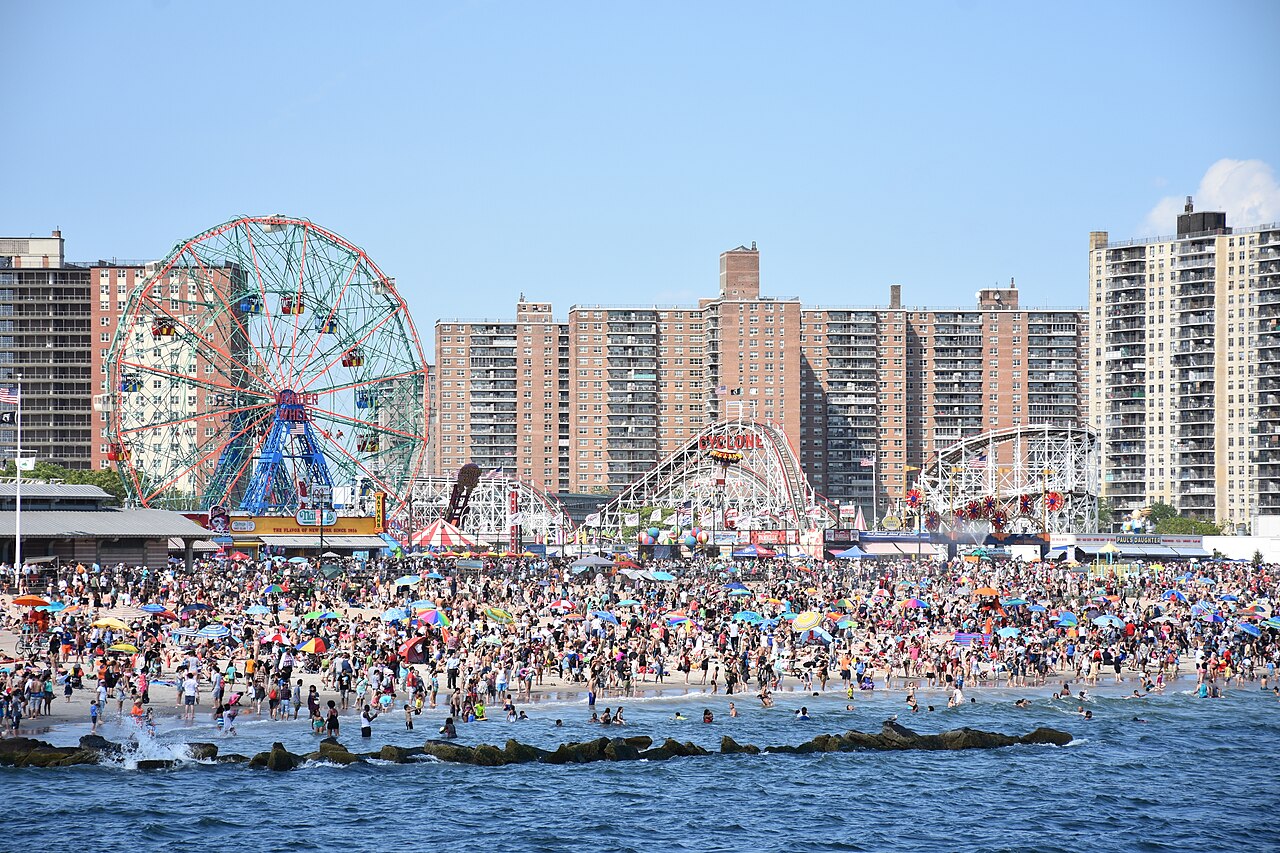
The area combines public seaside amenities, seasonal amusements and permanent landmarks. Iconic rides and structures are associated with Coney Island's identity: the steep wooden roller coaster often called the Cyclone, the large circular ferris wheel known as the Wonder Wheel, and the distinctive steel tower of the Parachute Jump. The neighborhood is also linked to a tradition of casual seaside food, especially hot dogs sold from stands and eateries.
- Historic roller coaster: the Cyclone is among the most famous wooden coasters in the United States. Cyclone
- Ferris wheel: the Wonder Wheel provides panoramic views over the Atlantic and the boardwalk. Wonder Wheel
- Parachute Jump: once a fairground ride and now a visual landmark
- Boardwalk and food culture: vendors and restaurants are noted for seaside fare such as hot dogs. Hot dogs
History and name
Coney Island developed as a seaside resort destination in the 19th century, when urban residents sought relief from city heat and congestion. Amusement parks, bathhouses and piers grew alongside lodging and promenades. The area’s name has uncertain origins and several plausible explanations exist. One long-circulating theory links the name to early Dutch settlers in the region of New Netherland, who may have used a word for rabbit — rendering the English archaic term "coney" — because rabbits were once abundant. Another explanation attributes the name to a connection with islands in County Sligo, Ireland, suggested by later visitors and local lore. The locality shifted from being described as an island to a peninsula as waterways were altered by development and land reclamation.
Importance and cultural role
Coney Island has played a prominent role in American leisure and popular culture. Its beachfront, promenades and amusement enterprises influenced the development of mass recreation, seaside tourism and early amusement park design. The neighborhood has been a site for public events, parades and seasonal celebrations, and it has inspired artists, writers and filmmakers who portray urban leisure life. Efforts to preserve historic rides and balance development with public access continue to shape its character.
Further notes and resources
For historical overviews and guides to surviving attractions and public spaces, consult dedicated accounts and local archival sources. The peninsula’s transformation from an isolated island to an urban shorefront is also documented in studies of Brooklyn’s coastal engineering and land use. Early resort origins are often summarized under the label of seaside resort development. Seaside resort histories and regional records provide additional context. Local legends and name origin stories remain popular topics for cultural historians and visitors alike; compare the Dutch rabbit theory to the maritime and Irish naming traditions connected to Sligo as part of a cautious assessment of its toponymy.
Additional practical and visitor-oriented materials, including maps and current attraction listings, are available from municipal and tourism sources. For basic geographic description see references to the site as a peninsula and historical descriptions noting it was formerly an island.
Related articles
Author
AlegsaOnline.com Coney Island — Brooklyn peninsula, seaside resort and amusement district Leandro Alegsa
URL: https://en.alegsaonline.com/art/22459