
Compulsory sterilization: history, law, and human-rights issues
Compulsory sterilization is the state-ordered prevention of reproduction. This article summarizes its methods, historical eugenic roots, contemporary occurrences, legal status, and human-rights concerns.
Overview
Compulsory sterilization refers to policies or laws that remove an individual's ability to reproduce without their free, informed consent. It can be imposed by a government, institution, or other authority and may take the form of surgical procedures or other medical interventions. Contemporary human-rights bodies treat forcible sterilization as a serious abuse and, in some contexts, as an international crime: the International Criminal Court and other institutions have identified forced sterilization as one of the acts that can amount to a crime against humanity.
Methods used in compulsory sterilization include surgical operations (such as tubal ligation or vasectomy) and long-acting hormonal or device-based methods administered under coercion. The practice differs from voluntary sterilization, where a competent adult chooses the procedure. Distinctions commonly noted in legal and ethical discussions include consent, coercion, and the capacity of the person asked to consent.
Image gallery
5 Images



Historical background
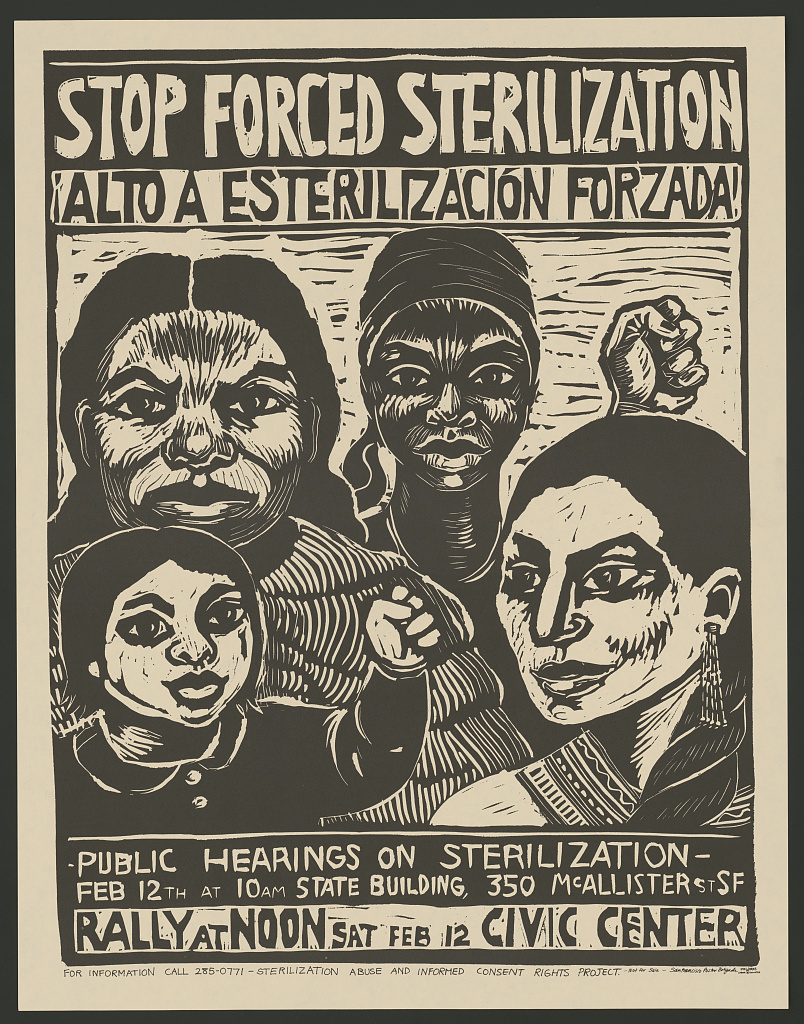
Forced sterilization became widespread in the early 20th century amid influential ideas about improving populations and preventing perceived social problems. Supporters of eugenic policies argued for selective reproduction controls; many states enacted laws authorizing sterilization of specific groups. Such programs were carried out in a range of countries and are associated with abuses in institutional settings, as well as with racially and politically motivated campaigns in authoritarian regimes.
Notable historical episodes include state-sponsored programs that targeted people labeled as 'feeble-minded' or 'insane,' as well as political and ethnic minorities. Public inquiries and historical research have also documented coercive sterilizations of indigenous and minority women in several countries. These events shaped postwar human-rights thinking and efforts to prohibit coercive medical practices.
Contemporary contexts and examples
Today, compulsory or coerced sterilization appears in several different contexts. Some governments have implemented population-control measures that involved or allow sterilization as part of family-planning efforts, including reports tied to China's policies. In institutional and medical settings, people with disabilities or psychiatric diagnoses have at times been sterilized on the grounds that they cannot manage pregnancy; such cases raise complex questions about capacity and guardianship, and are often discussed under the rubric of sterilization of the mentally ill.
Other contemporary issues include coerced sterilization linked to immigration detention, reports concerning indigenous women, and requirements that some transgender persons undergo sterilization to obtain legal recognition of their gender identity — a practice criticized by human-rights advocates and, in some interpretations, inconsistent with the Yogyakarta Principles. Where sterilization is imposed or required as a condition for civil rights or benefits it is widely regarded as coercive and discriminatory.
Legal and ethical considerations
International human-rights law emphasizes informed consent for medical procedures and prohibits discriminatory policies. Courts and international bodies have developed standards to assess when sterilization is lawful: for instance, whether the person gave valid consent, whether less intrusive alternatives were considered, and whether adequate safeguards and remedies were available. Many modern legal reforms have removed statutory grounds for compulsory sterilization, though debate and litigation continue over cases involving capacity, guardianship and reproductive autonomy.
- Common contexts: eugenic programs, institutional sterilizations, early 20th century policies, family-planning measures, and administrative requirements for civil status.
- Examples often discussed in legal reviews: sterilizations tied to pregnancy risk assessments, removals of reproductive capacity for those judged unable to consent, and administrative rules affecting transgender people.
- Documentation and advocacy are supported by research, litigation, and remedies promoted by international and national organizations; access to redress varies widely by jurisdiction.
Efforts to prevent coercive sterilization include stronger consent rules, independent oversight of medical decisions for people with impaired capacity, legal bans on sterilization as a condition for civil rights, and reparations programs where abuses have been documented. Public debate balances protecting vulnerable people from pregnancy-related harm with safeguarding bodily autonomy and reproductive rights. Where the state exercises power over reproduction, legal safeguards and human-rights scrutiny remain central to preventing abuse.
Further reading and primary sources are available through institutional reports and human-rights organizations; critical perspectives examine both historical abuses and contemporary policies to identify patterns, legal remedies, and policy reforms needed to ensure reproductive justice.
For more information, see official reports and legal analyses: basic references include national law reviews and international human-rights instruments often cited in discussions of compulsory sterilization (laws, international institutions and case law).
Additional resources: legal definitions, community perspectives, and guidance on nondiscriminatory policy in reproductive health (rights frameworks, historical analyses, archival studies, clinical ethics, medical risk, population policy).
Related articles
Author
AlegsaOnline.com Compulsory sterilization: history, law, and human-rights issues Leandro Alegsa
URL: https://en.alegsaonline.com/art/22290