
Commodore 64 Games System (C64GS)
The C64GS was a cartridge-based games console derived from the Commodore 64, launched in December 1990. It lacked a keyboard, had few cartridges, and failed commercially, becoming a retro collector's curiosity.
The Commodore 64 Games System, commonly abbreviated C64GS, was a console version of the long-lived Commodore 64 home computer platform. Built and marketed by Commodore International, it presented the C64 experience in a cartridge-based form intended for living-room gaming. The unit was sold as a dedicated games machine rather than a personal computer and was first made available in December 1990.
Image gallery
3 Images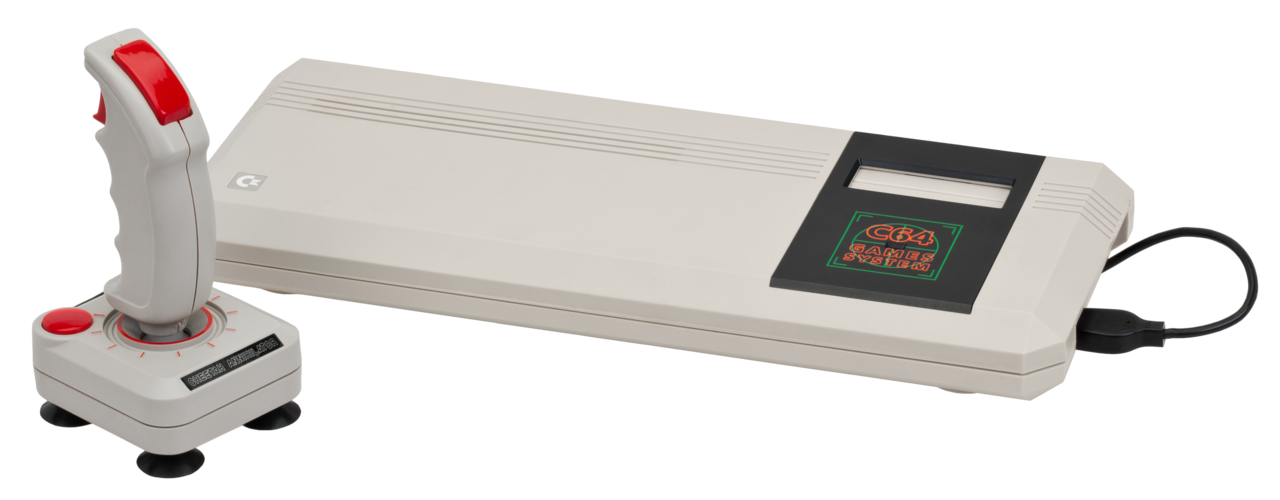


Key characteristics
The C64GS re-used much of the Commodore 64 hardware but altered the product's shape and interface to target console buyers. As a cartridge-driven system, it relied on ROM cartridges rather than floppy disks or tape for software distribution; the cartridge medium is central to its identity as a console and to many of the challenges it faced (cartridge). The device removed the computer's keyboard and repositioned input around joysticks and simple controls to mimic rival consoles.
History and development
The machine was developed late in the life cycle of 8-bit home computing. Commodore sought to exploit the vast existing library of C64 titles and the brand recognition of the C64 to enter the console market. However, the project arrived when 16-bit systems and dedicated game consoles were already dominating retail and consumer interest. Its launch was therefore poorly timed relative to industry trends.
Software and compatibility
Although internally similar to the standard C64, the C64GS did not provide the full computer experience: many popular C64 games required keyboard input, additional storage, or developer support to be reissued as cartridges. As a result, the cartridge catalogue was limited and composed largely of selected conversions, budget releases, and a small number of original titles. Compatibility with the wider C64 software library was constrained without the original computer peripherals.
Market reception and legacy
The C64GS is generally regarded as a commercial failure. Contributing factors included its late arrival in an increasingly 16-bit market, an underdeveloped library of cartridge games, and insufficient marketing focus from its maker. Today it survives as a niche item of interest to retro collectors and historians. Its story is often cited when discussing the challenges of repositioning computer platforms as consumer game consoles and the importance of software support in console success.
Notable distinctions
- Derived from a popular home computer rather than designed as a ground-up console.
- Cartridge-only distribution limited the number of available titles compared with the broader C64 format ecosystem.
- Represents Commodore's one major consumer console effort and illustrates market risks when hardware is outdated at launch.
Related articles
Author
AlegsaOnline.com Commodore 64 Games System (C64GS) Leandro Alegsa
URL: https://en.alegsaonline.com/art/21983