
Commodore International: pioneer of the home computer era
Commodore International, a U.S. electronics and computer manufacturer, created the VIC‑20, Commodore 64 and Amiga; this article summarizes its history, products, decline and lasting legacy.
Overview
Commodore International was a U.S. manufacturer known for affordable consumer computer systems and other electronics. For much of its commercial life the company was headquartered near West Chester, Pennsylvania. Under the leadership of figures such as Jack Tramiel, Commodore moved from office machines into consumer computing and played a major role in the emergence of the home computer market and the broader personal computer revolution.
Image gallery
10 Images


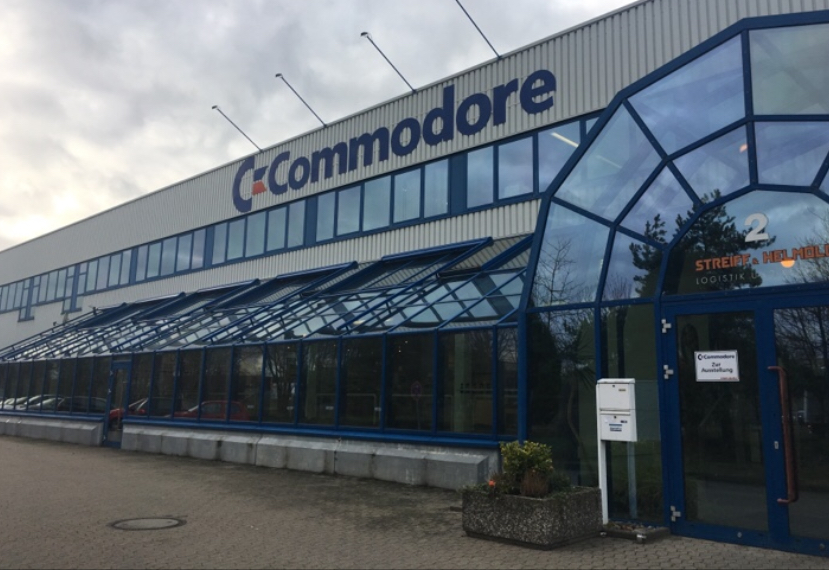
Early products and company growth
Before becoming best known for home computers, Commodore produced industrial and office equipment. In the 1960s and 1970s the company made adding machines and low‑cost electronic calculators and adding machines, which helped it build manufacturing capacity and distribution channels. By acquiring semiconductor and design assets and by pursuing aggressive pricing, Commodore was positioned to bring low‑cost microcomputers to a broad consumer market in the late 1970s and early 1980s.
Key products and technical characteristics
Commodore introduced several influential models. The VIC‑20 (1981) is credited as the first colour microcomputer to sell for under $300, marketed to families and hobbyists. Its successor, the Commodore 64 (1982), combined a MOS 6510 CPU with custom graphics and sound chips and shipped in the tens of millions; it is often cited as the best‑selling single computer model in history. In 1985 Commodore launched the Amiga, a platform noted for advanced multimedia capabilities — multitasking operating system, superior audio, and graphics — that appealed to creators, gamers and broadcasting professionals.
Business trajectory and decline
Commodore's aggressive pricing and vertical integration initially produced strong sales, but by the late 1980s and early 1990s the company faced mounting challenges: rising competition from IBM‑compatible PCs and game consoles, internal management changes, and a fragmented product strategy. Despite technological strengths in some lines, Commodore struggled financially and eventually declared bankruptcy in 1994. The brand and assets changed hands several times thereafter.
Legacy and cultural impact
Commodore's machines left a lasting imprint on computing culture. The affordability of early models helped introduce millions to programming, games, and digital creativity. The Commodore 64's sound chip (SID) and the Amiga's multimedia design influenced computer music, demo‑scene culture, video production, and early desktop multimedia development. Enthusiast communities continue to preserve hardware, develop emulators and produce new software for classic Commodore systems.
Notable facts and distinctions
- The VIC‑20 is remembered as an early low‑cost color home computer that broadened market access.
- The Commodore 64 is frequently described as the most widely sold single computer model; industry estimates commonly cite figures in the tens of millions.
- The Amiga introduced multimedia capabilities that were ahead of many contemporaries and found niches in creative industries.
- Commodore's rise and fall illustrate how rapid technological change, market competition and corporate decisions shape industry leaders' fortunes.
For further reading on technical specifications, product timelines and community projects, consult manufacturer retrospectives and dedicated preservation sites linked from corporate histories and enthusiast pages: company overview, electronics catalog, headquarters history, early calculators, home computing era, personal computer developments, VIC‑20 resources, Commodore 64 archives, Amiga documentation.
Related articles
Author
AlegsaOnline.com Commodore International: pioneer of the home computer era Leandro Alegsa
URL: https://en.alegsaonline.com/art/21986