
Colada morada: Ecuadorian purple beverage and its cultural role
Colada morada is a thick, hot purple Ecuadorian drink made from purple corn, fruits and spices, traditionally served at All Souls’ Day with guaguas de pan and shared in family remembrance.
Overview
Colada morada (literally “strained purple”) is a traditional Ecuadorian beverage commonly prepared and consumed during late October and early November, especially on All Souls’ Day (Día de los Difuntos). It is notable for a deep violet color, a syrupy but drinkable texture, and a warm, aromatic blend of sweet and tart flavors. The drink is typically served hot and shared in family and community settings as part of seasonal observance.
Image gallery
3 Images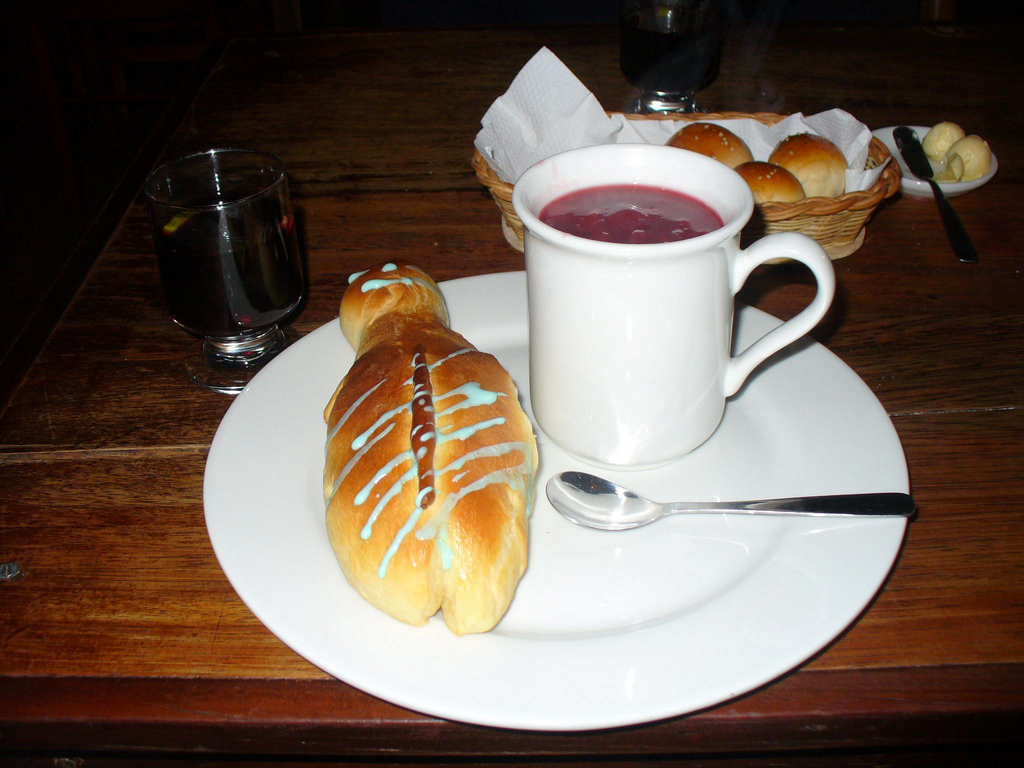


Typical ingredients and characteristics
The characteristic color and body come from purple or black corn and from dark berries. Typical elements include:
- purple or black corn (ground or as flour) used as a base thickener and source of color;
- a mixture of fruits such as blackberries, blueberries, strawberries, naranjilla and babaco, and sometimes pineapple (pineapple);
- sweeteners like panela (unrefined cane sugar) or white cane sugar to balance tartness;
- warm spices such as cinnamon, cloves, allspice and sometimes orange or lemon peel for citrus notes;
- additional thickeners such as corn starch or mashed tubers for a smooth consistency when desired.
Preparation and regional variants
Preparation varies by family and region. Fruit and spice are simmered to extract color and flavor, then the mixture is strained, mashed or blended. Corn flour is gradually incorporated and cooked until the desired thickness is reached. Some recipes leave pieces of fruit for texture; others produce a fully smooth colada. Coastal and Amazonian versions may use different tropical fruits and proportions, while highland recipes emphasize Andean fruits and a denser corn base. Commercial mixes and prepared bottled products are available alongside homemade versions.
Cultural role and symbolism
Colada morada is strongly associated with remembering the dead and with communal rituals. Families traditionally prepare it to take to cemeteries or to serve at home while visiting graves, and it is most commonly eaten with guaguas de pan, small bread figures shaped like infants, which together form a symbolic culinary pairing. The drink exemplifies a blend of pre-Columbian Andean ingredients and techniques with later Catholic seasonal observances, making it a living element of Ecuadorian cultural identity.
Serving, storage and contemporary practice
The drink is normally served hot and in modest portions to accompany bread. Leftovers can be refrigerated and gently reheated; homemade versions are often made in large batches for family gatherings. In recent decades colada morada has been adapted in restaurants, food festivals and by artisan producers, sometimes with novel fruit choices or presentation styles. For further general background on regional food traditions and variants see related resources.
The basic preparation, symbolism and seasonal timing of colada morada remain consistent across Ecuador: it is an edible expression of memory, community and local agricultural resources, enjoyed most visibly during the Day of the Dead season but appreciated year-round by those who favor its distinctive flavor and color.
Related articles
Author
AlegsaOnline.com Colada morada: Ecuadorian purple beverage and its cultural role Leandro Alegsa
URL: https://en.alegsaonline.com/art/21474