
Pineapple (Ananas comosus)
Pineapple, a tropical bromeliad fruit native to the Americas, is valued for its sweet-tart flesh, uses in food and industry, and distinctive botanical traits. It is grown commercially across tropical regions worldwide.
Overview
The pineapple (Ananas comosus) is a tropical fruit and plant in the bromeliad family. The edible portion is formed from many flowers whose ovaries fuse into a single, compound fruit. The plant produces a central rosette of stiff, spiny leaves and a terminal fruit topped by a leafy crown. Common names vary by language, and in many places the fruit is simply called "ananas." European explorers gave it the English name "pineapple" because its exterior resembled a pine cone; this resemblance is noted in historical accounts and modern introductions to the plant's history see note.
Image gallery
10 Images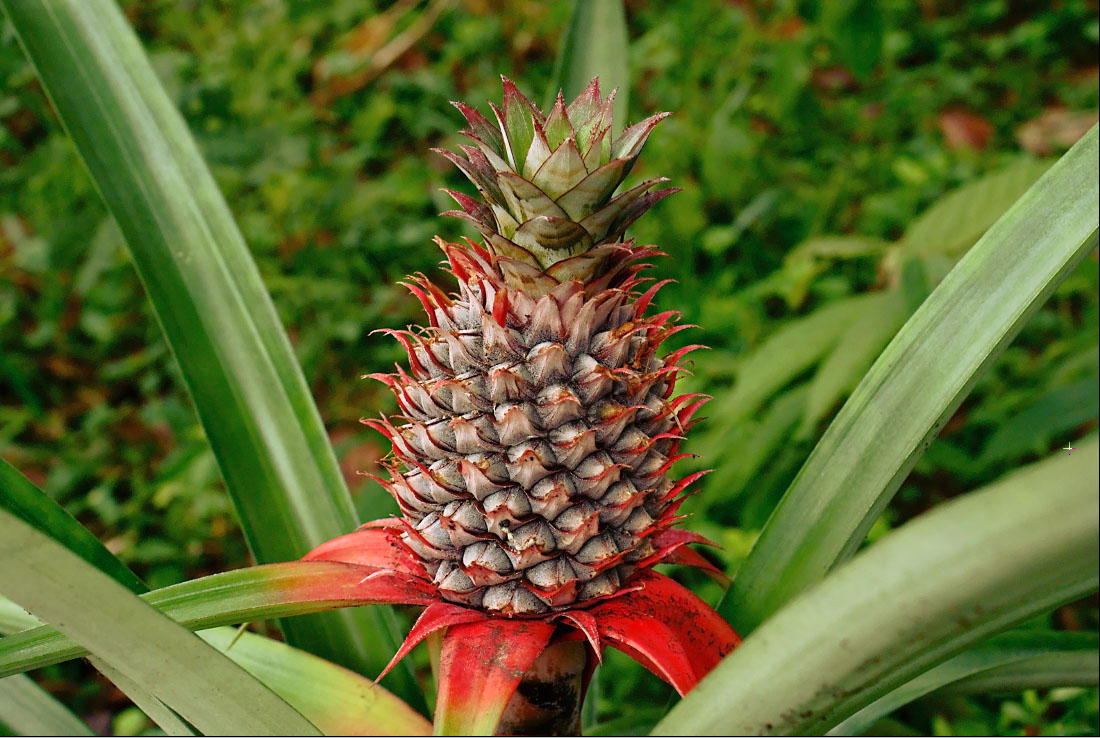


Botany and cultivation
Pineapple plants prefer warm, frost-free climates and are sensitive to low temperatures. They are generally not kept where night temperatures fall below about 10°C. Growth rate and time to fruit depend on variety, soil and climate: under favorable conditions a plant may begin to bear fruit in roughly 18 months, while in cooler or poorer conditions fruiting can take longer. The crop is propagated vegetatively from the crown (the leafy top of a fruit), slips and suckers, which allows growers to reproduce known varieties reliably.
Characteristics and parts
- Fruit type: a multiple (or collective) fruit composed of coalesced berries.
- Crown: leafy top used for propagation.
- Leaves: stiff, sword-like, often edged with small spines.
- Enzyme: contains bromelain, a proteolytic enzyme that can tenderize meat and affect gelatin setting.
History and spread
Pineapple is indigenous to parts of South America and was cultivated and dispersed by indigenous peoples across Central America and the Caribbean well before European contact. After European voyages to the Americas in the late 15th and early 16th centuries, the fruit was carried to Europe and later introduced to Africa, Asia and the Pacific. During the 18th and 19th centuries pineapples became desirable luxury items in Europe, and by the 19th and 20th centuries commercial cultivation and canning expanded pineapple production in tropical regions worldwide.
Uses, cuisine and cultural notes
The fruit is eaten fresh, juiced, canned or cooked into sauces, desserts and savory dishes. Its sweetness and acidity make it versatile in both sweet and savory recipes; it is often paired with meats, used in salsas, and incorporated into tropical beverages. Bromelain, extracted from pineapple stem and fruit, has culinary and medicinal uses such as meat tenderizing and as a supplement, though commercial products vary. Pineapple has also become a cultural symbol in several traditions, including hospitality motifs and culinary debates such as pineapple as a pizza topping.
Practical considerations and distinctions
Pineapples are usually harvested when mature but not fully overripe to survive storage and transport — air freight allows riper fruit to be shipped, while long sea journeys require earlier picking. Many languages use a form of the word "ananas," reflecting the plant's original name in indigenous tongues. Cultivation and trade have shifted geographically over time; today the fruit is a staple crop in many tropical and subtropical regions, and it remains economically and culturally significant where it is grown.
For further reading, consult horticulture guides and regional crop resources.
Questions and answers
Q: What is a pineapple?
A: A pineapple is a fruit native to South America, Central America, and the Caribbean.
Q: How did the pineapple get its name?
A: European explorers gave the fruit its name because they thought it looked similar to a pine cone.
Q: Can a pineapple tolerate cold temperatures?
A: No, a pineapple cannot be kept under 10 degrees Celsius.
Q: How long does it take for a pineapple to grow?
A: It depends on the location and growing conditions, but on average, it takes about two to three years for a pineapple to grow.
Q: Does the temperature affect the growth of a pineapple?
A: Yes, if the temperature is warm, the pineapple will grow faster.
Q: Why must pineapples be picked before ripening when traveling by boat?
A: This is because the trip takes a long time, so the fruit must be picked before it becomes overripe.
Q: What do they call pineapples in most countries?
A: In most countries, they call the pineapple ananas.
Related articles
Author
AlegsaOnline.com Pineapple (Ananas comosus) Leandro Alegsa
URL: https://en.alegsaonline.com/art/76971
Sources
- species.wikimedia.org : Ananas comosus
- theplantlist.org : "The Plant List: A Working List of All Plant Species"
- oxforddictionaries.com : "Pineapple"
- answers.yahoo.com : "How Long Does it Take to Grow a Full Sized Pineapple?"
- 3fatchicks.com : "7 Health Benefits of Eating Pineapples"
- nutrition-and-you.com : "Pineapple Nutrition Facts"
- doityourself.com : "4 Different Varieties of Pineapples"