
Cookie cutter
A cookie cutter is a hand or machine tool used to cut dough into shaped pieces for baking. This article describes types, materials, uses beyond cookies, care, DIY methods, and how cutters differ from related tools.
A cookie cutter is a tool used to cut dough into named or decorative shapes for baking. It produces uniform pieces quickly and with repeatable outlines, enabling decorative cookies and consistent portions. Cutters range from simple one-piece outlines to spring-loaded plungers and industrial dies used in commercial bakeries.
Image gallery
4 Images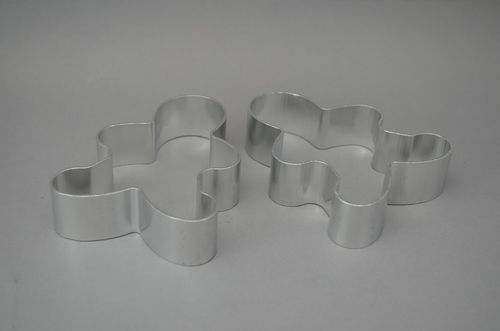


Characteristics and materials
Most cutters present a raised cutting edge and a rim to press the dough. Common materials include stainless steel and tinplate for durability and sharpness, copper for traditional or decorative styles, and food-safe plastics for inexpensive shapes. Thicker cutters are sturdier and easier to handle, while thinner steel shapes give a crisper cut. Some models incorporate a plunger to eject the dough and add an impression or detail.
Types and commercial devices
Home designs are typically handheld outlines or plunger cutters. Specialty tools include multi-cavity molds that cut several identical shapes at once, biscuit or cookie depositors that portion dough, and rotary or die cutters in industrial settings that stamp shapes from sheets of dough. Plunger cutters and embossing tools are common when fine surface detail is required, for example on iced or rolled cookies and fondant.
Uses and techniques
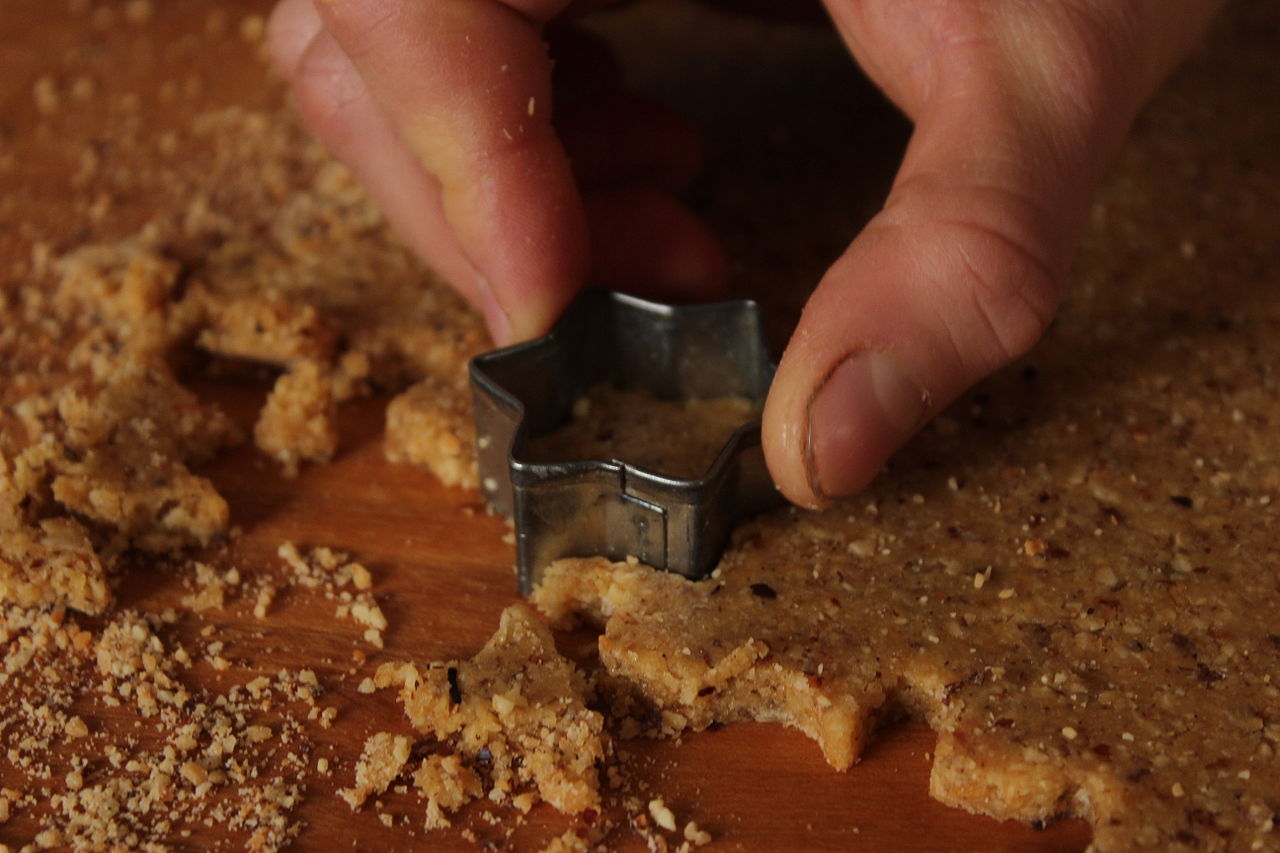
Beyond traditional sweet cookies, cutters are used for biscuits, crackers, fondant decorations, sandwich shapes, and pastry accents. Successful cutting depends on chilled dough, a lightly floured surface, and an even roll to retain shape. Releasing the cut shape can be helped by tapping the cutter, using a plunger, or lifting the excess dough away with a spatula to avoid stretching.
Care and storage
- Hand washing and thorough drying prevent rust on metal cutters; some plastics are top-rack dishwasher-safe but can deform at high heat.
- Store cutters nested or in labeled containers to avoid bending and to keep sets organized.
- For stubborn dough, soak briefly in warm water before cleaning; avoid abrasive pads on plated metals.
Making your own and design
Custom cutters can be made from strips of aluminum or thin stainless steel, by bending and soldering ends, or produced with 3D printing in food-safe filament. Cardboard or stiff paper can serve as temporary templates for shaping. Designers and hobbyists often create seasonal or themed sets, and many small producers offer bespoke shapes for events or branding.
Distinctions from related tools
Cookie cutters emphasize outline and decoration. Biscuit cutters are usually round and thicker to allow better rise during baking; a pastry cutter or blender is a hand tool used to cut fat into flour rather than to form shapes. Dough scrapers and bench knives perform different portioning and cleanup tasks.
Collecting, designing, and adapting cutters remains a popular part of home and professional baking because the tool blends practical portioning with creative presentation.
Related articles
Author
AlegsaOnline.com Cookie cutter Leandro Alegsa
URL: https://en.alegsaonline.com/art/22876
Sources
- businessinsider.com : "Target is now selling a giant cookie cutter that can cut out 24 cookies at once"
- commons.wikimedia.org : Cookie cutters