
Coat of arms of Estonia
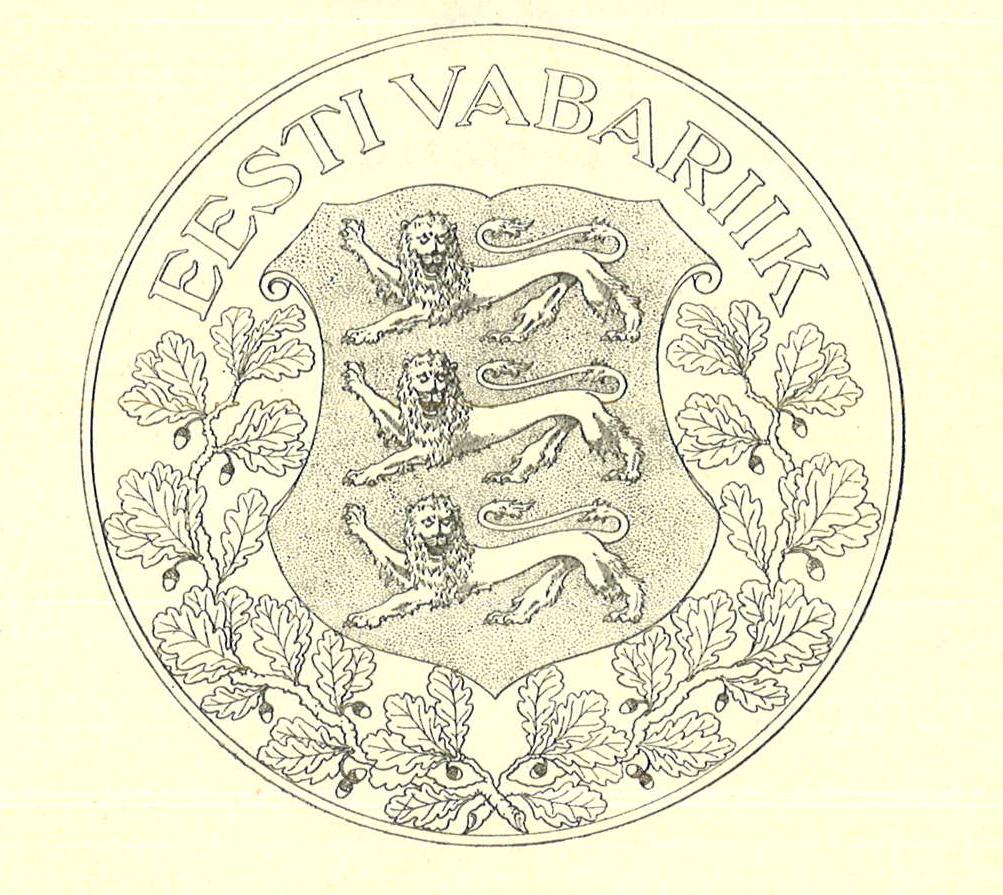
National emblem: a gold shield bearing three blue lions (passant guardant) flanked by oak branches. Medieval origins linked to Danish rule, revived for the modern Republic and used in official contexts.
Overview
The coat of arms of Estonia is the principal national heraldic emblem. Its most recognisable element is a golden shield charged with three slim blue lions in the heraldic posture known as passant guardant. These three felines are commonly referred to in English-language descriptions as "three lions" or, in older heraldic usage, as leopards. A pair of stylised oak branches normally flank the shield, forming the full modern composition used on many official items. The motif is a central symbol of state identity and appears on seals, flags of official institutions, seals and formal regalia. For further general description see three blue lions and the complementary motif of oak branches.
Image gallery
9 Images



Design and heraldic description
In heraldic terms the device is traditionally blazoned in simple language: a gold (or) field bearing three blue (azure) lions passant guardant. The blue colour of the animals and the gold field create a strong contrast suited to heraldic display. The oak branches that commonly flank the shield symbolise strength, endurance and continuity in national usage. A simplified shield without the branches is frequently used where a compact emblem is required, while the full composition with branches is reserved for formal and ceremonial contexts. Official reproductions specify proportions and colours for consistent use across government materials.
History and origins
The symbol has deep roots in the medieval history of the eastern Baltic. The three-lion motif appears in the region from the 13th century onwards and is associated with the period when Danish power extended into northern Estonia. Contemporary accounts and later heraldic tradition link the motif to the arms used by the Danish crown under King Valdemar II, and it was adopted in local seals and civic emblems, notably in the port and Hanseatic centre now called Tallinn. References to use in the 13th century attest to the emblem's long-standing presence in local heraldry.
Modern adoption and continuity
The device was taken up as a national symbol during the period of modern independence that began in 1918 and culminated in international recognition after 1920. Since that time it has served as a formal emblem of the Republic of Estonia. The coat of arms has been subject to legal protection and specification, and it has been restored in use following interruptions during the 20th century. The emblem’s medieval origin stories are therefore combined with decisions made in the modern era to standardise and regulate its appearance.
Legal status and use
As a national emblem the coat of arms is used on state seals, official stationery, diplomatic premises and selected government insignia. Its use is regulated to prevent unauthorised or commercial misuse; authorised institutions follow specified guidelines for colour, size and context. Variants adapted for military, municipal or organisational use may simplify or omit the oak branches while retaining the three-lion shield as the recognisable core.
Comparative and cultural notes
The three-lion motif is not unique to Estonia and appears in various forms elsewhere in Europe, reflecting shared medieval dynastic iconography. Nonetheless the particular combination of blue lions on a golden field with flanking oak motifs is identified with Estonian state symbolism in modern practice. Historic and heraldic literature provides technical descriptions and comparative discussion; readers seeking official reproductions and legal specifications should consult state publications and institutional collections for authorised artwork and guidance.
For general background and archival references consult institutional material and summaries that discuss the emblem’s medieval connections and its role in the formation of the modern Republic of Estonia. Key chronological markers in the emblem’s modern history include the declarations and recognitions around 1918 and 1920, as well as the emblem’s medieval attestations from the 13th century. Early civic use in Tallinn and associations with Danish rulers such as Valdemar II are often cited in standard accounts.
Related articles
Author
AlegsaOnline.com Coat of arms of Estonia Leandro Alegsa
URL: https://en.alegsaonline.com/art/21252