
Coat of arms of Germany
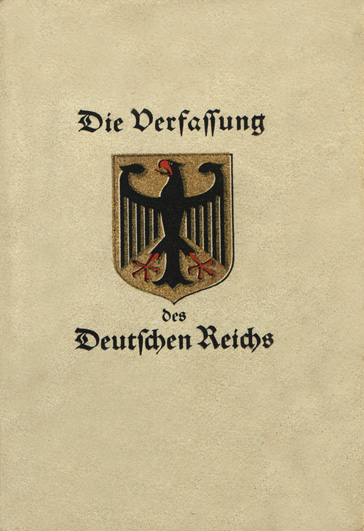
The national emblem of Germany: a black eagle with red beak and claws on a gold shield. Rooted in Roman and medieval imperial imagery, it serves as the Federal Republic's principal state symbol.
Overview
The coat of arms of Germany is the country's official heraldic emblem. In German it is often called Wappen Deutschlands and commonly referred to as the Federal Eagle or Bundesadler. It functions as a formal symbol of Germany, appearing on seals, government publications and buildings. The palette of the arms—black, red and gold—corresponds to the national flag (flag of Germany) and the nation's traditional colours: black, red and gold.
Image gallery
8 Images


Design and symbolism
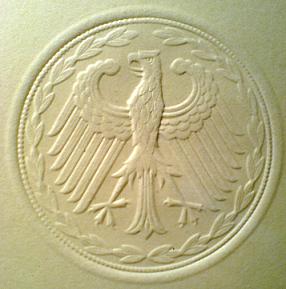
The central motif is a single-headed black eagle shown with wings spread on a golden shield, with its beak and talons typically shown in red. Heraldically this is expressed as an eagle "displayed" on an or (gold) field; in more technical terms it is often blazoned in traditional heraldic language. The eagle has long been a symbol of sovereignty, courage and vigilance; its colours and posture are designed to make it instantly recognizable as the nation’s emblem.
History and development
The eagle motif predates the modern German state. It was used as an imperial emblem by the Roman and medieval rulers and later by the Holy Roman Empire, where both single- and double-headed eagles appeared in different periods. Over centuries the bird became associated with rulership across Central Europe and with Germanic cultural traditions. In more recent times the form and styling of the eagle changed with different regimes: republican administrations simplified it, authoritarian regimes adapted it for propaganda, and after the Second World War the Federal Republic returned to a simplified, official design that avoided the political emblems of the past. The coat of arms is often described as one of the oldest continuous state symbols in Europe and has deep historical roots in religion and imperial iconography (historical context).
Uses and official status
The coat of arms is the principal insignia of the federal state and is used on official documents, governmental stationery, passports, the seals of federal authorities and at diplomatic missions. Variants of the eagle are also found in state institutions and on some public monuments. Individual German states (Länder) use their own distinct coats of arms alongside the federal emblem, and private or municipal arms often draw on similar heraldic traditions.
Notable distinctions and facts
- The Federal Eagle differs from historical double-headed eagles that represented imperial power in earlier eras; the modern bird is single-headed and stylized for clarity.
- Its colours match the national flag’s black, red and gold scheme, which have their own separate history and symbolism.
- The emblem has been simplified for use in reproductions, seals and digital media while retaining its heraldic identity.
For more detailed official descriptions and visual specifications, consult government publications and heraldic references; many authoritative sources explain the proportions, colouring and permitted uses of the Wappen Deutschlands in official contexts.
Related overview • Flag and colours • Black, Red, Gold • Historical notes
Related articles
Author
AlegsaOnline.com Coat of arms of Germany Leandro Alegsa
URL: https://en.alegsaonline.com/art/21254