
Albert Sidney Johnston (1803–1862)
Career soldier who served in the U.S. Army, the Republic of Texas, and the Confederate States; killed in command at the Battle of Shiloh. Overview of life, service, and legacy.
Albert Sidney Johnston was an American military officer whose long career spanned service in the United States Army, the armed forces of the Republic of Texas, and the Confederate States Army. Born in 1803, he graduated from the United States Military Academy and built a reputation as a capable administrator and field commander. His death at the Battle of Shiloh in April 1862 removed one of the Confederacy's most experienced senior officers and has been widely noted as a significant loss for Southern forces during the early Civil War era.
Image gallery
7 Images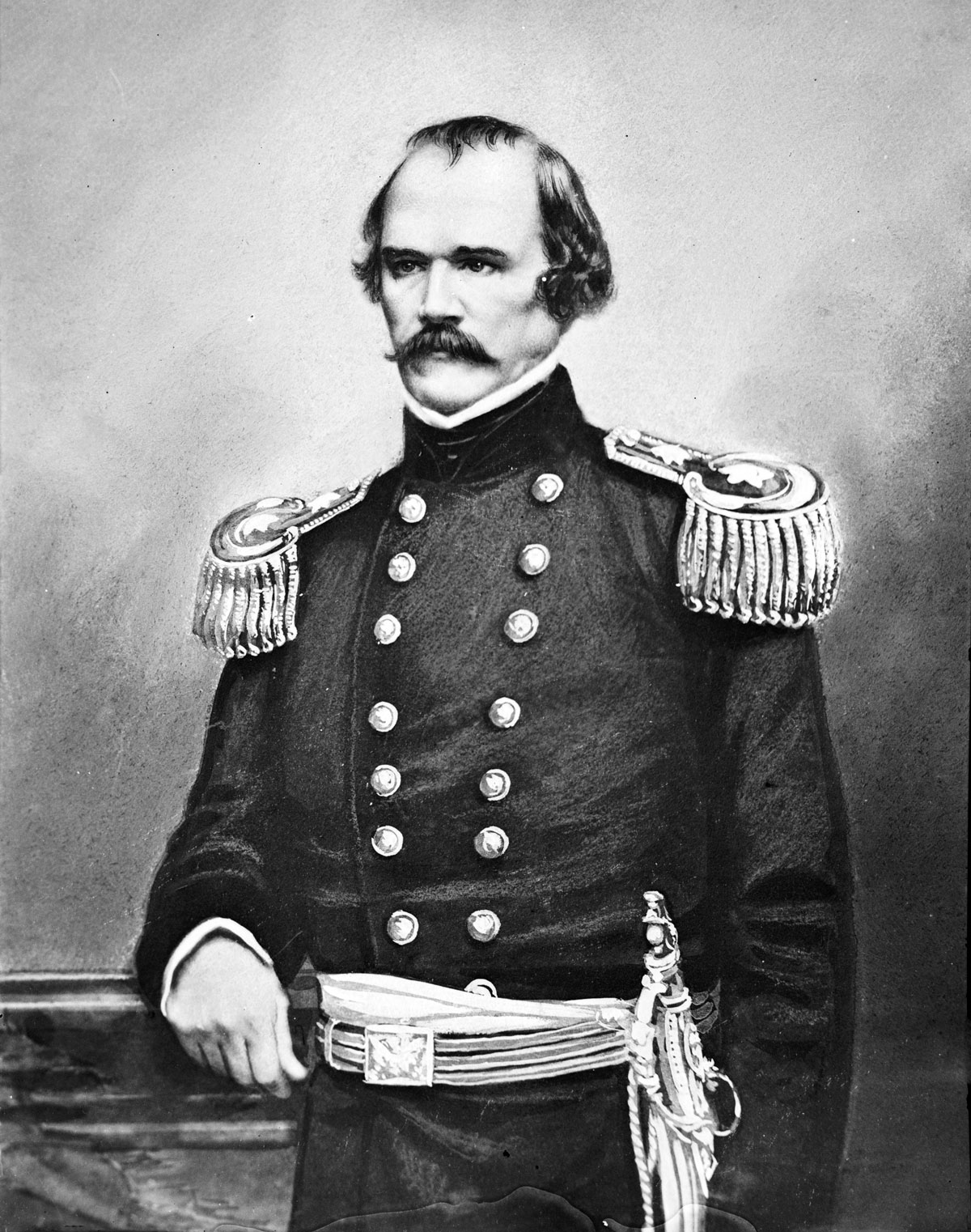


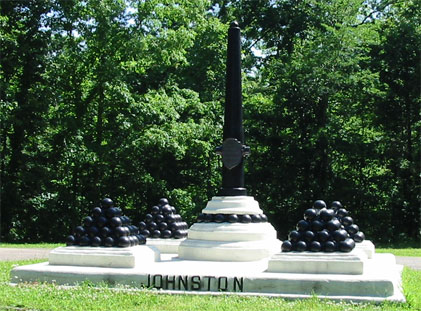
Early life and education
Johnston was born in Washington, Kentucky, on February 2, 1803, into a family with Revolutionary War roots. He entered the United States Military Academy at West Point and graduated in 1826, beginning his career in the U.S. Army. His early service included frontier and garrison duty typical of regular army officers in the antebellum period. Biographical accounts emphasize his classical military schooling at the academy and steady advancement through the officer ranks (West Point).
Service in Texas and return to U.S. arms
After the death of his first wife in 1834, Johnston resigned his U.S. Army commission and moved to the Southwest. He joined the Texan forces during the struggle for independence and subsequently served in the army of the Republic of Texas, holding high command and performing administrative duties for several years. He left active Texas service around 1840 and later returned to Kentucky for a period of civilian life before re-entering U.S. military service when opportunities arose (Texas period) and during the broader Texas conflict (Texas Revolution).
Mexican–American War and later U.S. commands
Johnston rejoined national service in the Mexican–American War, where many officers who later fought on opposite sides in the Civil War gained combat experience. In the decades that followed, he continued in the U.S. Army, receiving frontier and departmental responsibilities. By 1860 he was the senior officer in charge of federal troops in California, commanding a large geographical department and overseeing installations and regional defenses in the Pacific coast region (Mexican–American War) and later (California command).
Civil War: resignation, Confederate command, and Shiloh
When southern states seceded in 1861, Johnston resigned his U.S. commission and accepted a commission in the Confederate Army, motivated by regional loyalties and by the example of peers who left federal service. He was given a senior field command in the Western theater and was responsible for assembling and organizing Confederate forces in Kentucky and Tennessee. After weeks of maneuvering, Johnston confronted Union forces in southwestern Tennessee. On April 6, 1862, during the opening day of the Battle of Shiloh (Pittsburg Landing), he was mortally wounded; he died on the field, an event that Confederate leaders later regarded as a critical blow to their western operations (Confederate service) and (Shiloh).
Reputation and legacy
- Johnston is often remembered as one of the most experienced soldiers to join the Confederacy; contemporaries noted his organizational skills and long service in frontier commands (Kentucky ties).
- Historians debate the operational impact of his loss at Shiloh, but many agree that his death deprived the Confederacy of a senior commander with broad experience in different kinds of warfare.
- His career illustrates the divided loyalties of many antebellum officers who served both the United States and the seceding states in the 1860s (birthplace and early life).
- For further reading on his life, military roles, and the battles in which he took part, consult specialized biographies and military histories Civil War studies and archival collections on Texas or institutional pages about the Republic era.
Johnston's life reflects the complex paths of professional soldiers in nineteenth-century America: training at a national military academy, service on domestic frontiers and in foreign campaigns, political and regional choices in a time of national fracture, and a death that became part of the broader narrative of the American Civil War.
Related articles
Author
AlegsaOnline.com Albert Sidney Johnston (1803–1862) Leandro Alegsa
URL: https://en.alegsaonline.com/art/2107