
Classical (Greco-Roman) mythology
The myths, deities, rituals, and stories of ancient Greece and Rome that shaped literature, art, religion, and cultural identity from the Archaic period through Late Antiquity.
Overview
Classical mythology, commonly called Greco-Roman mythology, comprises the shared body of stories, gods, heroes and cosmological ideas associated with ancient Greece and Rome. These narratives functioned as sacred history, offering explanations for natural phenomena, human behaviour, and social institutions. The term often refers both to the mythic tales themselves and to the connected polytheistic religion and ceremonial life of Classical Antiquity.
Image gallery
3 Images
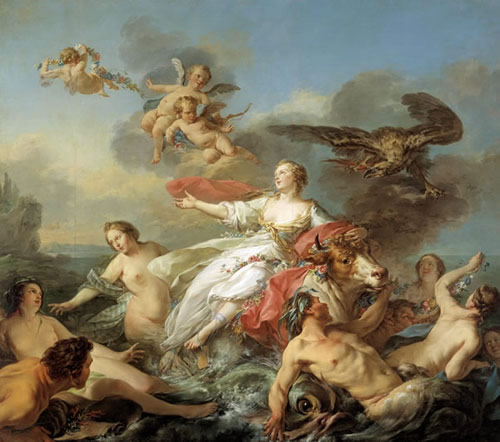

Characteristics and components
Myths included origin stories, heroic epics, genealogies of the gods, and accounts of rituals. Deities were typically anthropomorphic—portrayed with human forms and emotions—and occupied specialized roles such as sky-god, sea-god, or goddess of wisdom. Important components are:
- Major gods and their Roman equivalents, often identified together in later sources.
- Heroic cycles and epic narratives that explain founding myths or moral lessons.
- Cult practices, rites, and local myths tied to particular cities or sanctuaries.
Historical development
The Greek mythic corpus formed over many centuries, recorded in literary works such as the epics and hymns of the Archaic and Classical periods. Roman religion and narrative traditions developed independently but were gradually merged with Greek material. Contacts began early, intensified after Greek colonization of southern Italy and Sicily (Magna Graecia), and produced extensive cultural borrowing and reinterpretation. The blending of traditions became pronounced by the late Republic and early Empire, when Roman writers adapted Greek stories into Latin verse and prose.
Examples and sources
Long-standing literary witnesses include epic and didactic poets, dramatists, and later mythographers who preserved variant versions of tales. These narratives appear in public art, temple décor, and civic ritual as well as in private poetry. Scholarly and artistic engagement with these myths persisted through the Renaissance and continues to influence modern literature, visual arts, and popular culture.
Distinctive features and legacy
Roman reinterpretation often shifted emphasis: gods retained Greek attributes but acquired Roman names and civic functions. Practical ritual and state religion could differ from literary depictions. The study of Greco-Roman mythology examines both the myths themselves and the rituals and practices tied to them, considering variations across regions and periods. For further context see links on mythic traditions, ritual practice and regional history: mythic narratives, religious rituals, cult practices, and regional developments such as Magna Graecia.
Readers seeking primary texts and introductions will find many modern editions and translations useful; academic treatments explore how myths functioned socially, politically, and artistically in antiquity and how they were adapted in later eras.
Related articles
Author
AlegsaOnline.com Classical (Greco-Roman) mythology Leandro Alegsa
URL: https://en.alegsaonline.com/art/20781