
Albert A. Michelson: precision optics, measurement of light, and scientific legacy
Biography and contributions of Albert A. Michelson, the American physicist best known for precision measurements of the speed of light, the Michelson–Morley experiment, and advances in interferometry.
Albert A. Michelson (December 19, 1852 – May 9, 1931) was an influential experimental physicist whose work established modern standards of optical precision. Born in Strzelno in the Prussian province of Posen and raised in California, Michelson became widely known for methods that measured the speed of light with unprecedented accuracy and for inventing and applying interferometric techniques across physics and astronomy.
Image gallery
10 Images

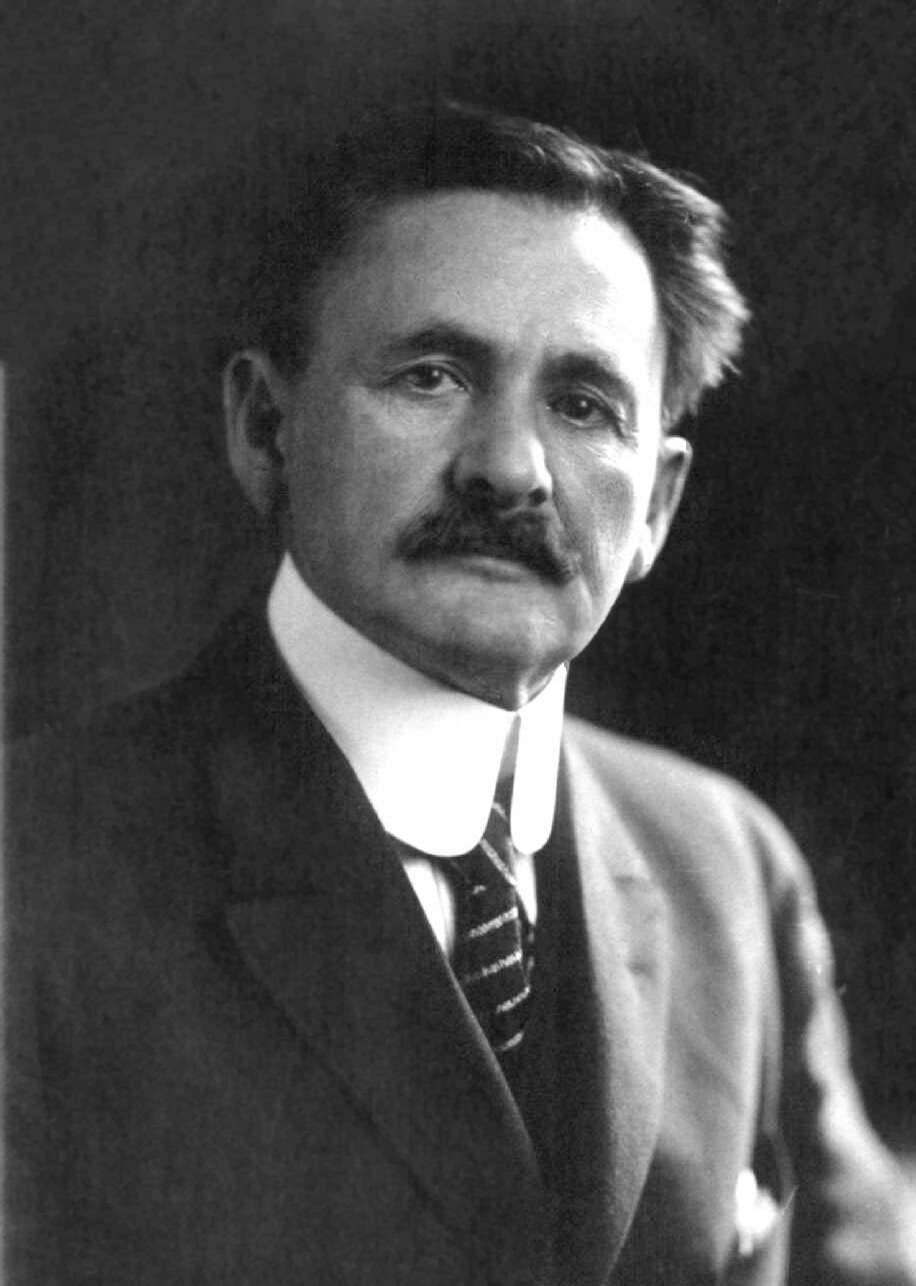


Early life and training
Michelson emigrated with his family to the United States as a child and grew up in the west coast environment of mid-19th century California. He entered the U.S. Naval Academy, where he received formal training in mathematics and physics and later served as a naval officer. His naval background influenced a practical, instrument-focused approach to scientific problems and led him to pursue increasingly precise measurements in optics and metrology.
Measurements and the interferometer
Michelson developed laboratory apparatus that used coherent light interference to detect tiny differences in optical path length. His interferometer — an arrangement that splits and recombines light beams to produce interference fringes — became a central tool for precision measurement. Using variations of interferometric and rotating-mirror methods, Michelson produced highly accurate determinations of the speed of light and set new standards for experimental uncertainty in optical physics.
Michelson–Morley experiment and scientific impact
In 1887 Michelson, working with Edward W. Morley, carried out an experiment designed to detect motion of the Earth through the hypothetical luminiferous aether. The experiment produced a null result — no detectable aether drift — a surprising outcome that challenged classical concepts of absolute rest and contributed to the scientific climate that enabled the development of special relativity. The Michelson–Morley experiment remains one of the most famous null results in physics because of its conceptual consequences.
Later work, recognition, and legacy
Michelson continued to refine interferometric techniques and applied them to astronomical observations, including early measurements of stellar diameters. His commitment to high-precision optical instruments and careful error analysis elevated experimental standards across physics. In 1907 he was awarded the Nobel Prize in Physics, becoming the first American scientist so honored in that field. His name endures in the science of interferometry and in many instruments and institutions that trace their methods to his innovations.
- Key contributions: inventing practical interferometers, high-precision measurements of the speed of light, and the Michelson–Morley experiment.
- Influence: helped shift experimental practices toward greater accuracy and repeatability in optical science.
- Notable distinctions: Nobel Prize in Physics (1907); pioneering applications of interferometry in astronomy and metrology.
Michelson's work exemplifies the role of careful measurement in advancing theoretical change: precise instruments revealed discrepancies with prevailing ideas and opened new directions in theoretical physics. For further reading on his experiments and historical context, consult specialized histories of optics and late 19th‑century physics.
Related articles
Author
AlegsaOnline.com Albert A. Michelson: precision optics, measurement of light, and scientific legacy Leandro Alegsa
URL: https://en.alegsaonline.com/art/2077