
Albert C. Wedemeyer: U.S. Army strategist and commander in China and Asia
Biography of General Albert C. Wedemeyer (1897–1989), his military career, role in World War II planning, leadership in China, and postwar influence on airlift operations and strategy.
Albert Coady Wedemeyer rose from a Midwestern upbringing to become a senior planner and theater commander for the United States during and after World War II. A 1919 graduate of the United States Military Academy at West Point, Wedemeyer spent his career in the U.S. Army shaping strategic priorities, organizing large-scale logistics efforts, and advising Allied and partner governments. He is best known for authoring wartime plans that emphasized defeating Germany first and for commanding American forces in China late in the war.
Image gallery
3 Images

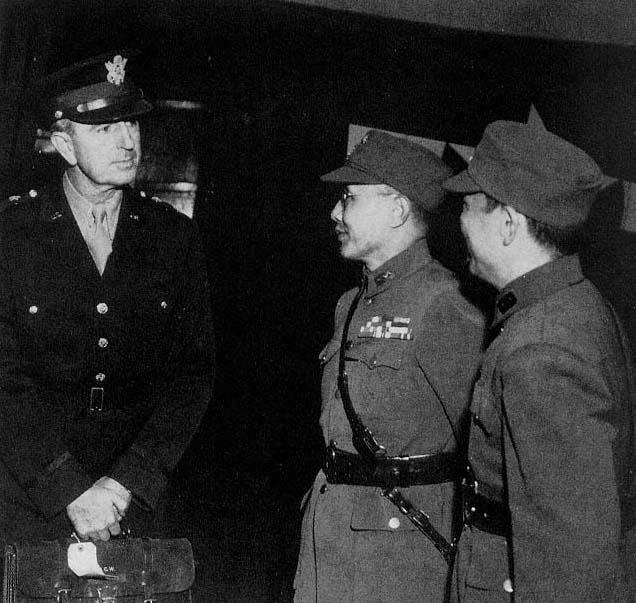
Early life and training
Wedemeyer was born in Omaha, Nebraska on July 9, 1897. After West Point he served in a range of Army assignments that prepared him for high-level staff work. By the time the United States faced global war, he had the professional schooling and staff experience to contribute to the War Department’s planning apparatus. His early career combined education at a premier military academy with practical staff duties that made him a natural choice for planning roles when the United States expanded its armed forces for the World War II effort.
Wartime planning and the Victory Program
In 1941 Wedemeyer was a key planner in the War Plans Division. He was the principal author of the 1941 Victory Program, a blueprint that recommended mobilizing U.S. economic and military resources to defeat the German armies in Europe as the primary objective. The program helped set priorities for production, troop deployments, and the allocation of shipping and materiel. While many officers and politicians contributed to Allied planning, Wedemeyer’s work had a lasting influence on the strategic emphasis commonly described as the Europe-first approach and on how the United States organized forces for operations that would later include the cross-Channel invasion of France.
Service in Southeast Asia and China
In 1943 Wedemeyer served as chief of staff to Lord Mountbatten, commander of the Southeast Asia Command, and in 1944–45 he became chief of staff to General Chiang Kai-shek and commander of U.S. forces in China under Allied authority. In China he confronted complex political-military dynamics: coordinating with Nationalist Chinese forces, managing limited U.S. resources in theatre, and directing support missions that depended on air transport across difficult terrain. He had detailed knowledge of the airlift route over the Himalayas—the so-called "Hump"—which had been kept open to sustain operations in China and to supply air bases for strategic bombing missions.
Logistics, airlift expertise, and postwar roles
Wedemeyer’s experience with theater logistics and air supply made him a valued adviser after the war. As Army Chief of Plans and Operations in 1948 he supported efforts to create an airbridge during the Berlin Crisis, drawing on lessons from the wartime Hump airlift. Leaders such as Lieutenant General William H. Tunner, who had run the Hump airlift, later applied similar techniques to the Berlin Airlift. Wedemeyer retired from active duty in 1951 and received promotion to full general on the retired list in 1954.
Legacy, distinctions and notable facts
- Strategic planning: Wedemeyer’s Victory Program influenced U.S. strategic direction early in World War II and shaped resource allocation for the European campaign against Germany.
- Theater command: As U.S. theater commander in China he managed multinational cooperation and complex logistics in the China–Burma–India region.
- Airlift advocacy: His wartime experience informed postwar support for airbridge operations, including the Berlin effort in 1948–49.
- Allied cooperation: He worked closely with senior Allied leaders and commands, including the Supreme Allied command in Southeast Asia, often operating at the interface between U.S. and Allied staffs.
- Personal: Born in Omaha, Nebraska, Wedemeyer died December 17, 1989. A son served as a U.S. Army officer and later had ties to the CIA.
For readers seeking additional context on related personalities and operations, see links associated with the institutions and figures Wedemeyer worked with: the U.S. Army planning organization (service), the wartime alliance structure (Allied command), senior Allied leaders such as Mountbatten, and logisticians who ran major airlift efforts like Tunner. Further study of China theatre command relationships will reference Chiang Kai-shek and the split of command in the China–Burma–India operations; see summaries of that theater (Chiang Kai-shek, Hump). Contemporary institutional background is available through West Point and mid-20th century U.S. military history sources (USMA, West Point, World War II, Germany). For administrative records and declassified materials consult repositories associated with the U.S. Army and intelligence services (CIA). Additional contextual links include general references to his birthplace (Omaha) and other relevant institutional entries (Army, Allied, Tunner).
Wedemeyer remains a figure of interest to military historians because his career spans doctrinal planning, coalition staff work, and hands-on theater command during an era when logistics and global coordination were decisive to Allied success.
Questions and answers
Q: Where was General Albert Coady Wedemeyer born?
A: General Albert Coady Wedemeyer was born in Omaha, Nebraska on July 9, 1897.
Q: What year did he graduate from the United States Military Academy in West Point?
A: General Albert Coady Wedemeyer graduated from the United States Military Academy in West Point in 1919.
Q: What position did he hold between 1941 and 1943?
A: Between 1941 and 1943, General Albert Coady Wedemeyer served as a staff officer in the war-plans division of the U.S. War Department.
Q: What plan did he help author during World War II?
A: During World War II, General Albert Coady Wedemeyer helped author the 1941 Victory Program which advocated for the defeat of German armies in Europe.
Q: Who was he Chief of Staff to between 1943 and 1946?
A: Between 1943 and 1946, General Albert Coady Wedemeyer was Chief of Staff to Lord Mountbatten, who was the supreme Allied commander of South East Asia Command (SEAC) in Southeast Asian Theatre.
Q: What operation did he have an intimate knowledge of during his time as Commander of U.S China Theatre (USFCT)?
A: As Commander of U.S China Theatre (USFCT), General Albert Coady Wedemeyer had an intimate knowledge of Allied airlift from India over Himalayas into China which supplied both Nationalist Chinese Army and U.S Twentieth Air Force engaged on Operation Matterhorn.
Related articles
Author
AlegsaOnline.com Albert C. Wedemeyer: U.S. Army strategist and commander in China and Asia Leandro Alegsa
URL: https://en.alegsaonline.com/art/2084