
Circumnavigation: history, types, routes and significance
Circumnavigation is the act of traveling all the way around something—most commonly the Earth. This article explains maritime and modern circumnavigations, history, methods, challenges and notable expeditions.
Overview
Circumnavigation originally referred to going around an object or landmass, usually by ship, and today most commonly denotes a voyage that travels completely around the Earth. Early uses emphasized maritime travel, but the term now applies to aerial, space and combined-mode journeys as well. A successful circumnavigation implies returning to a starting point after crossing meridians and covering a continuous global route.
Image gallery
7 Images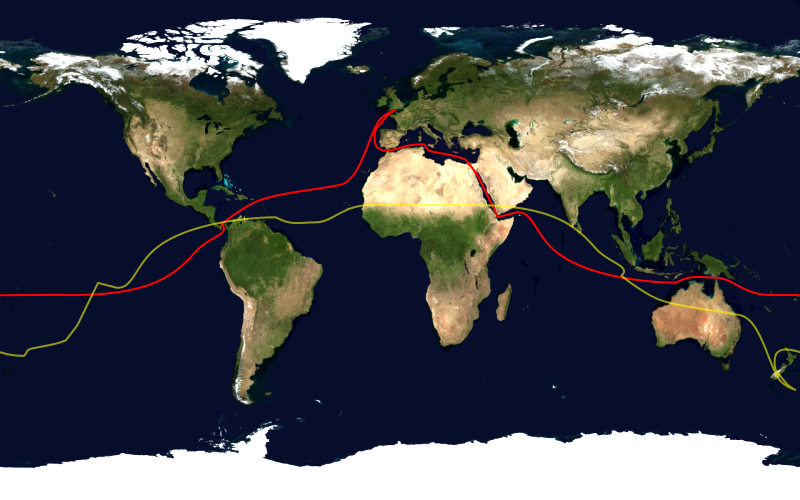


Historical development
Long before precise instruments existed, coastal peoples and explorers undertook extended voyages that skirted continents and islands. The first recorded global circumnavigation of the Earth was the sixteenth-century expedition led from its outset by Fernão de Magalhães (Ferdinand Magellan). Setting out from Spain in 1519 with several ships, the voyage discovered a southern passage—now associated with the Strait of Magellan—and crossed the vast Pacific Ocean. Magellan himself was killed in 1521 on the Philippine island of Mactan, but the expedition continued and was completed under Juan Sebastián Elcano, returning to its port of origin in 1522. That expedition provided practical demonstration of the Earth's roundness and expanded European knowledge of oceanic distances and winds.
Types and notable examples
- Maritime circumnavigation: classical ocean voyages such as the Magellan–Elcano expedition and later sailing expeditions by explorers and trading fleets.
- Exploration and national expeditions: voyages undertaken for discovery, trade and imperial expansion, which mapped coasts and sea lanes.
- Aerial and space circumnavigation: aircraft, balloons and spacecraft have completed global orbits and flights, expanding the definition beyond surface travel.
- Records and special categories: solo, non-stop, assisted or unassisted attempts and races that test endurance, technology and seamanship.
Routes, methods and challenges
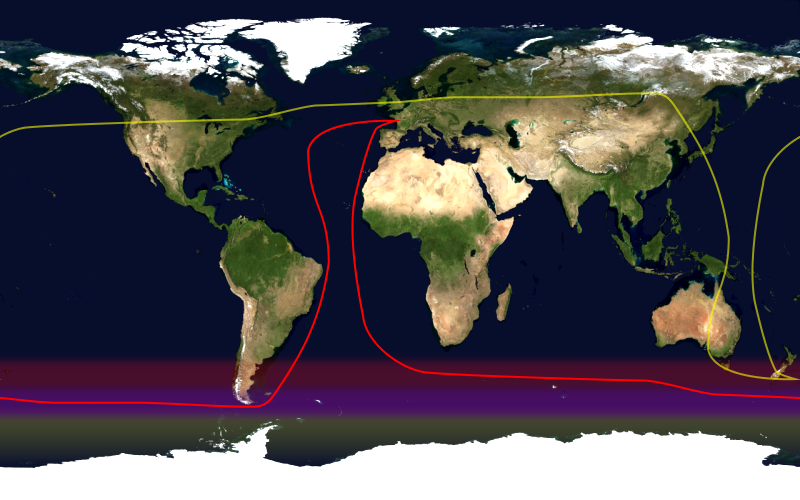
Circumnavigation routes vary by purpose. Mariners followed prevailing winds and currents—such as trade winds and westerlies—while attempting to avoid hazardous shoals and weather systems. Early navigators used celestial navigation, the compass and rudimentary charts; modern circumnavigations rely on GPS, weather forecasting and radio communication. Challenges include provisioning for long passages, maintaining crew health, negotiating political waters, and coping with extreme weather. East–west and west–east passages present distinct meteorological and logistical difficulties.
Legacy and significance
Circumnavigations have had broad cultural, scientific and economic impacts. They contributed to a global understanding of geography, spurred improvements in ship design and navigation technology, and reshaped trade networks and contacts between disparate regions. Individual circumnavigations remain symbols of exploration and technical achievement, inspiring races, records and continuing advances in long-distance transportation.
References and further reading
For introductory resources and deeper historical accounts, see general histories of exploration and dedicated biographies of early voyagers such as Magellan and Elcano. Entries on maritime history and routes offer context on the waterways and passages that shaped early global voyages. More modern perspectives cover aircraft and spaceflight circumnavigations and contemporary record attempts (maritime, global, origin ports, straits, island sites, geographic implications).
Selected links: Maritime circumnavigation overview, Global circumnavigation concepts, Magellan expedition, Spanish ports and embarkation, Historic waterways, Strait named for Magellan, Mactan island, Juan Sebastián Elcano, Evidence for Earth's sphericity.
Related articles
Author
AlegsaOnline.com Circumnavigation: history, types, routes and significance Leandro Alegsa
URL: https://en.alegsaonline.com/art/20465