
Christian Lous Lange: Norwegian historian and internationalist (1869–1938)
Christian Lous Lange was a Norwegian historian, teacher and advocate of internationalism. He wrote a major history of international cooperation and shared the 1921 Nobel Peace Prize for his work.
Christian Lous Lange (17 September 1869 – 11 December 1938) was a Norwegian scholar and public intellectual best known for his lifelong advocacy of international cooperation. Trained as a historian and teacher, Lange combined historical research with political analysis to argue for institutions and practices that could reduce armed conflict and promote arbitration between states.
Image gallery
2 Images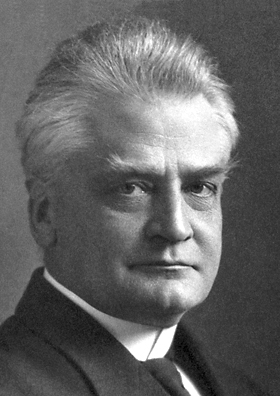

Early life and education
Lange was born in Stavanger, Norway, on 17 September 1869. The son of a military engineer, he completed secondary schooling in 1887 and pursued higher studies in history and modern languages at the University of Oslo. He took the cand. philol. degree in 1893 and spent many years teaching at the secondary level before returning to university studies and completing a doctorate. His academic formation combined philology, historical method, and interest in contemporary political questions.
Career and intellectual work
Described in many accounts as a historian, teacher and political scientist, Lange focused on the historical development of ideas and institutions for managing international affairs. His writing emphasized practical measures—such as arbitration, international law, and permanent forums for dialogue—rather than utopian schemes, and he sought to trace how cooperation had emerged over time in European and global contexts.
Histoire de l'internationalisme and themes
Between the late 1910s and the 1920s Lange published a multi-volume history titled Histoire de l'internationalisme. The project examined the roots and evolution of internationalism: the intellectual currents, legal doctrines, and political efforts that aimed to regulate relations among states and to prevent war. Published in the aftermath of the First World War, the work offered an historical foundation for newly proposed international bodies and legal frameworks.
Nobel Prize and influence
For his scholarship and his public advocacy of international cooperation Lange was awarded the Nobel Peace Prize in 1921, an honor he shared with the Swedish statesman Hjalmar Branting. Commentators at the time noted that Lange’s historical synthesis had helped form part of the intellectual groundwork for the creation of the League of Nations and similar intergovernmental initiatives. He remained an influential voice in debates about how diplomacy, law and institutions could be used to resolve disputes peacefully.
Legacy and notable facts
- Lange’s work bridged academic history and practical politics, showing how past practices informed proposals for future institutions.
- He spent much of his professional life as an educator in Norway, returning periodically to research and writing.
- He died in Oslo on 11 December 1938; his scholarship continued to be cited by students of international law and diplomacy.
The story of Lange’s career illustrates the role historians can play in shaping public policy: by tracing continuities and precedents, they can make arguments for reform grounded in experience rather than rhetoric. For readers who wish to explore his life and writings further, biographies and collected essays offer fuller accounts of his contributions to the internationalist movement.
For additional context on internationalism and the interwar efforts to build institutions of peace, consult introductory sources and modern histories that discuss the League, diplomacy, and the intellectual currents of the period.
More on his work and thought | Birthplace and early years | Norwegian background | University studies | Later life in Oslo | Connection to the League of Nations | Shared Nobel laureate: Hjalmar Branting
Related articles
Author
AlegsaOnline.com Christian Lous Lange: Norwegian historian and internationalist (1869–1938) Leandro Alegsa
URL: https://en.alegsaonline.com/art/20093
Sources
- nobelprize.org : Christian Lange – Biography