
Childlessness: causes, types, social effects and responses
An overview of childlessness: definitions, voluntary and involuntary types, common causes, social and demographic implications, and responses such as assisted reproduction and adoption.
Childlessness denotes the state of not having any children. It can be a temporary or permanent situation and is experienced by individuals and couples for many different reasons. For a simple definition see this reference. The phenomenon has become more visible in many parts of the world since the late 20th century as family patterns and social roles changed.
Image gallery
1 Image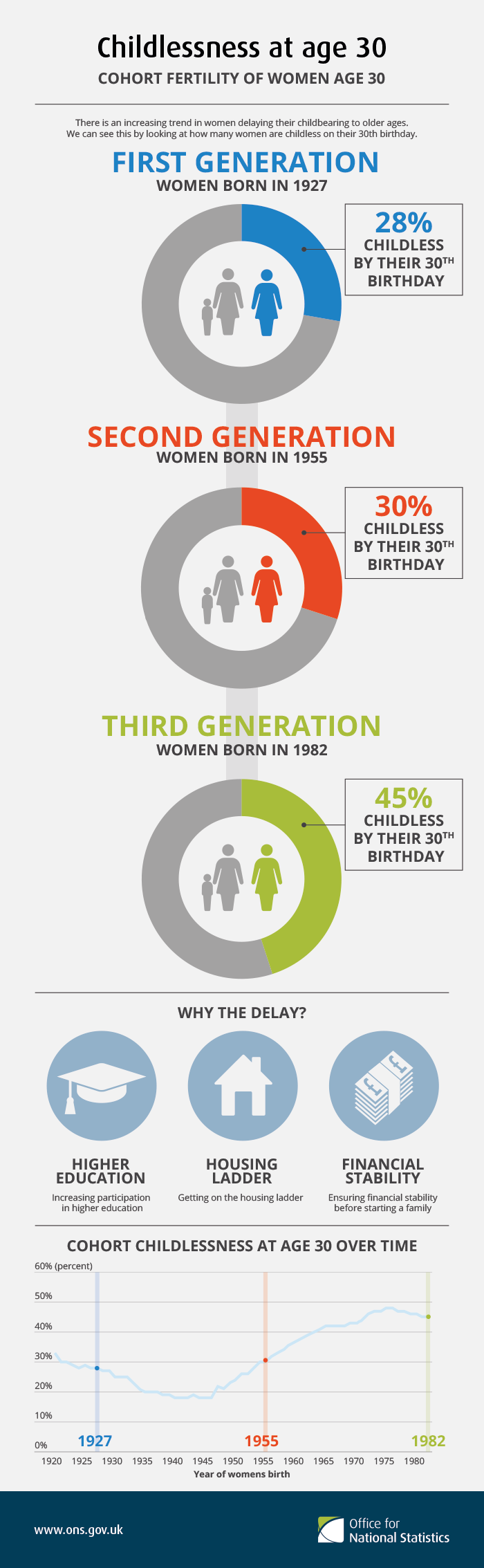
Types and common causes
Broadly, childlessness is classified as voluntary or involuntary. Voluntary childlessness, often described as being childfree, occurs when people deliberately choose not to parent. Motivations include career priorities, financial considerations, personal freedom, environmental concerns, health or lifestyle preferences, or celibacy and lack of partnered sexual relations (sexual intercourse and related choices).
Involuntary childlessness arises when people want children but cannot have them. Typical causes are biological infertility, age-related fertility decline, medical conditions or treatments, the absence of a partner, infertility for same-sex couples where legal or practical barriers limit family formation, and social or economic obstacles that make parenting unfeasible.
Social and demographic implications
Childlessness affects individual life courses and broader demographics. At the societal level, higher rates of childlessness interact with lower fertility and aging populations, shaping labor markets, pension systems and public policy debates. Social attitudes vary: in some cultures childlessness attracts stigma, while in others it is increasingly accepted as an ordinary life choice.
Responses and options
People who wish to overcome involuntary childlessness may pursue medical treatments such as assisted reproductive technologies (e.g., in vitro fertilization), gamete donation, or surrogacy where legal. Adoption and fostering are additional family-building routes. Public policy responses include access to fertility care, parental leave, childcare supports and measures aimed at reducing economic barriers to parenthood.
Distinctions and notable facts
- Childless describes the state of not having children; childfree usually emphasizes a positive choice not to parent.
- Rates and reasons for childlessness differ by country, cohort and socioeconomic group.
- Debates about childlessness touch on reproductive rights, gender roles, environmental ethics and social planning.
Understanding childlessness requires attention to personal narratives, medical possibilities and social structures. For general information and definitions see definition resources and discussions of the childfree movement at relevant overviews. For topics related to sexuality and partnership contexts, see materials referenced at related sources.
Questions and answers
Q: What is childlessness?
A: Childlessness is not having a child.
Q: Is there an increase in childless people since the 1970s?
A: Yes, there are more childless people since the 1970s.
Q: What are the two kinds of childlessness?
A: The two kinds of childlessness are voluntary and involuntary.
Q: What is voluntary childlessness?
A: Voluntary childlessness is when people choose to not have children.
Q: What are some reasons for voluntary childlessness?
A: Some reasons for voluntary childlessness include celibacy (not having sexual intercourse), not wanting to have a child, not having enough money to take care of a child, and being too old to have a child.
Q: What is involuntary childlessness?
A: Involuntary childlessness is when people cannot have children even though they want to.
Q: What are some reasons for involuntary childlessness?
A: Some reasons for involuntary childlessness include infertility or medical conditions that prevent conception.
Related articles
Author
AlegsaOnline.com Childlessness: causes, types, social effects and responses Leandro Alegsa
URL: https://en.alegsaonline.com/art/19663
Sources
- content.time.com : "Having it All without Having Children"