
Chicago Portage: the water gap linking the Great Lakes and the Mississippi watershed
Natural lowland crossing through the Valparaiso Moraine that connected the Great Lakes and Mississippi watersheds, shaping travel, trade, and the founding of Chicago.
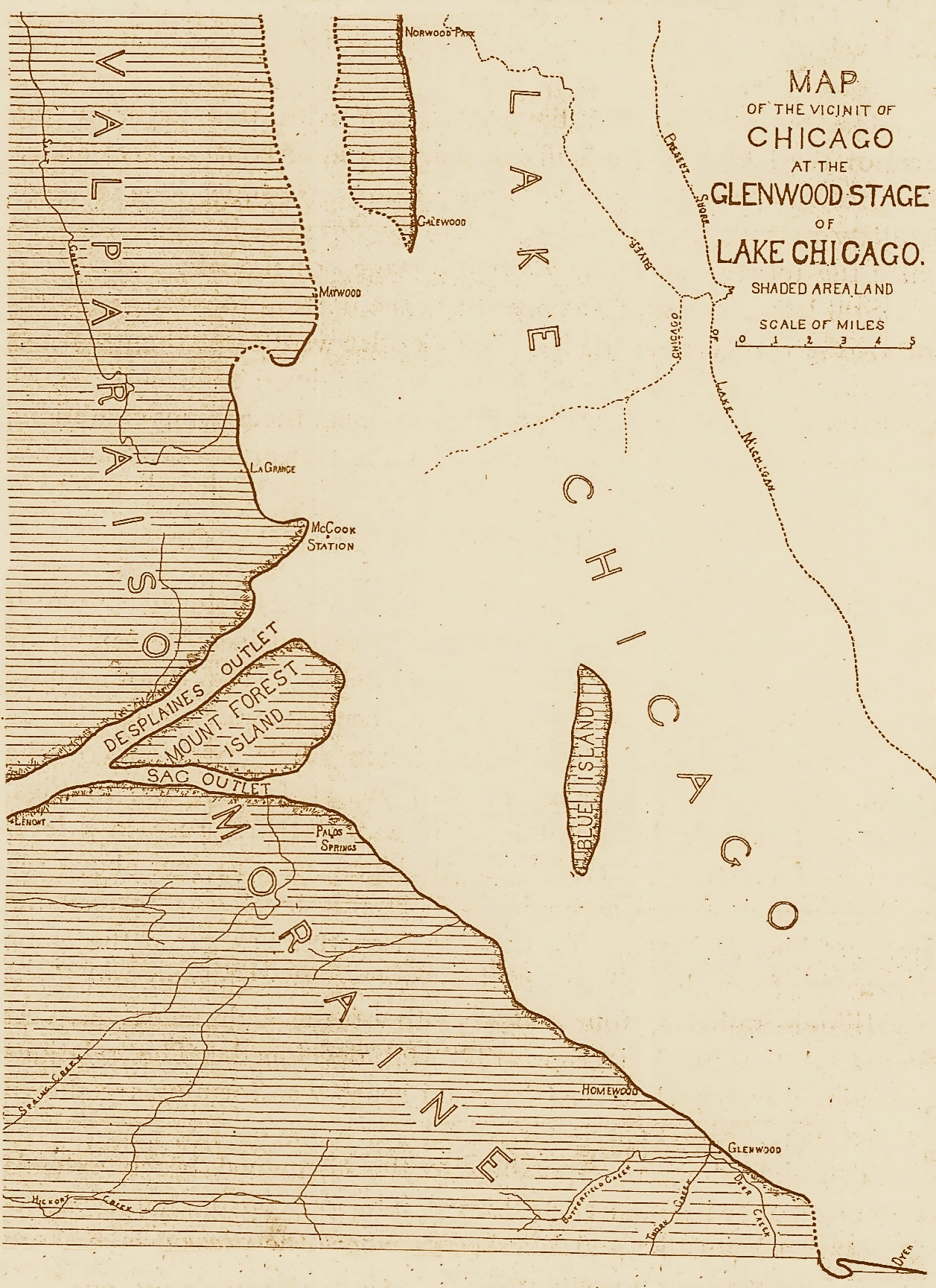
The Chicago Portage is a low, historically navigable gap across the Valparaiso Moraine that provided a short overland connection between the basin of the Great Lakes and that of the Mississippi River. For centuries it offered the easiest route to move people, canoes, and goods between two continental drainage systems and thus became a pivotal node in North American inland travel and trade.
Image gallery
10 Images




Geography and features
The portage crosses what is known as the Saint Lawrence River Divide. Its saddle point lies within what is now the modern city of Chicago. The physical passage included short stretches of stream, marsh, and a carry over firm ground. Seasonal water levels and winds sometimes made portions passable by canoe and at other times required a short land portage.
Historical importance
Indigenous peoples used the route long before European arrival; it later guided French explorers, fur traders, and settlers as they linked interior waterways to the Great Lakes and the Atlantic. Control of the portage influenced patterns of settlement and commerce and was a major reason for the emergence of Chicago as a transportation and trading center.
Development and engineering
As settlement intensified, the natural advantage of the portage inspired canals and other works to create reliable water connections. Urban and civil engineering projects in the 19th century altered local rivers and drainage to support navigation, public health, and industrial growth, transforming the original landscape of marshes and streams.
Uses and legacy
Beyond its role in travel and trade, the Chicago Portage has symbolic and civic resonance. The history of waterways that meet at Chicago is reflected in municipal symbols: the city's flag, for example, features stripes and stars that allude to its waterborne heritage and landmark events symbolized on the flag. The portage remains a subject of historical study and local interpretation.
Key points
- Natural lowland crossing linking two major drainage systems.
- Used by Indigenous peoples and later European explorers and traders.
- Instrumental to the founding and growth of Chicago as a transport hub.
- Led to canals and engineering projects that reshaped regional waterways.
Related articles
Author
AlegsaOnline.com Chicago Portage: the water gap linking the Great Lakes and the Mississippi watershed Leandro Alegsa
URL: https://en.alegsaonline.com/art/19520
Sources
- chicagoportage.org : "The Chicago Portage National Historic Site"
- chipublib.org : "Chicago Facts: Municipal Flag"