
Chhatrapati Shivaji Terminus (CST) — historic Mumbai railway station
A 19th-century railway terminus in Mumbai, India, combining Victorian Gothic and Indian architectural styles; a UNESCO World Heritage Site and major hub for suburban and long-distance trains.
Overview
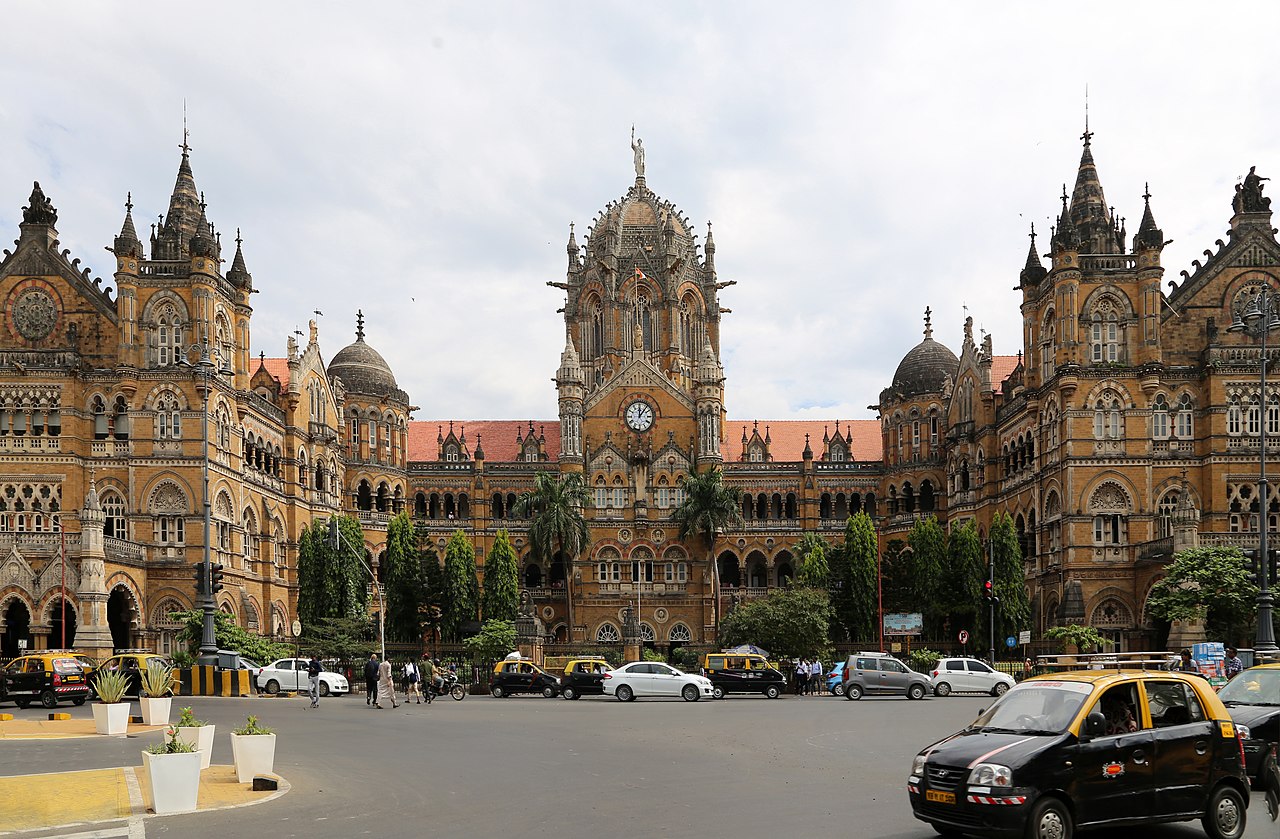
Chhatrapati Shivaji Terminus is a landmark railway station in the heart of Mumbai, India. Known for its grand Victorian Gothic architecture fused with traditional Indian elements, the station has been a principal transport hub for both suburban commuter services and long-distance trains. Historically called Victoria Terminus (VT), it is commonly abbreviated as CST and in its most recent official usage as CSMT.
Image gallery
10 Images




Architecture and design
The station building was designed by the British architect Frederick William Stevens and completed in the late 19th century. It features a high central dome, turrets, pointed arches, and detailed stone carving that reflect a blend of European Gothic Revival and indigenous motifs. Decorative ironwork, stained-glass windows and carved figurative sculpture add to its visual richness, making the structure both a functioning transport facility and an example of civic architecture from the colonial era.
History and naming
Originally opened during the British colonial period, the terminus grew around the Bori Bunder area to serve the expanding city and rail network. The station has been associated with several names: it was widely known as Victoria Terminus during the 19th and 20th centuries, later officially renamed to honor the Maratha leader Chhatrapati Shivaji. Over time the official name has evolved, but many locals and rail users still refer to it by its historical abbreviations.
Operations and significance
Functioning as one of the busiest railway stations in the country, the terminus handles a mix of suburban commuter trains that connect the city and its suburbs, as well as long-distance express services. Its platforms, concourses and approach roads are perpetually active, reflecting Mumbai's role as a major economic and population center. The station is important not only for transport but also as a cultural and civic landmark.
Conservation and recognition
Because of its architectural merit and historical value, the station complex has been internationally recognized. It is listed by UNESCO as a World Heritage Site, a designation that highlights its global significance and the need for conservation of its fabric and setting. Preservation and careful restoration work have aimed to retain original materials and decorative features while upgrading systems to meet modern transportation needs.
Notable features and visitor notes
- Striking central dome and ornate stone façades visible from nearby thoroughfares.
- Active interchange between suburban rail services and long-distance platforms.
- Guided walks, architectural tours and public interest in the building make it a frequent stop for visitors exploring the city's heritage.
As both a daily gateway for millions of passengers and a protected heritage monument, Chhatrapati Shivaji Terminus exemplifies how a working transport facility can also serve as an enduring piece of urban history and architectural achievement.
Questions and answers
Q: What is Chhatrapati Shivaji Terminus railway station?
A: Chhatrapati Shivaji Terminus railway station is a historic railway station located in Mumbai, India, and is a UNESCO World Heritage Site.
Q: What is the former name of Chhatrapati Shivaji Terminus railway station?
A: The former name of Chhatrapati Shivaji Terminus railway station was Victoria Terminus.
Q: What are the short-forms used for Chhatrapati Shivaji Terminus railway station?
A: The short-forms used for Chhatrapati Shivaji Terminus railway station are VT, as a short-form for Victoria Terminus, and CST, as a short-form for Chhatrapati Shivaji Terminus.
Q: Who designed Chhatrapati Shivaji Terminus railway station?
A: Chhatrapati Shivaji Terminus railway station was designed by Frederick William Stevens and was built in 1887.
Q: Where is Chhatrapati Shivaji Terminus railway station located?
A: Chhatrapati Shivaji Terminus railway station is located in the Bori Bunder area of Mumbai, India.
Q: Is Chhatrapati Shivaji Terminus railway station busy?
A: Yes, Chhatrapati Shivaji Terminus railway station is the busiest railway station in India, and there are always a lot of people at the station.
Q: What types of trains come to Chhatrapati Shivaji Terminus railway station?
A: Short-distance trains and long-distance trains come to Chhatrapati Shivaji Terminus railway station.
Related articles
Author
AlegsaOnline.com Chhatrapati Shivaji Terminus (CST) — historic Mumbai railway station Leandro Alegsa
URL: https://en.alegsaonline.com/art/19460
Sources
- books.google.com : Encyclopaedia of India, Pakistan and Bangladesh
- books.google.com : Tourist Destinations in India
- books.google.com : The cloister's pale: a biography of the University of Mumbai
- rediff.com : "India's impressive railway stations"