
Checkpoint Charlie — Cold War crossing and Berlin landmark
Checkpoint Charlie was the best-known crossing point between West and East Berlin during the Cold War, a focal point for diplomatic incidents and now a commemorated historic site and museum.
Overview
Checkpoint Charlie was the informal name for the primary Allied checkpoint between West Berlin and East Berlin during the Cold War. It served as one of the limited border crossings where passport and identity checks were performed for people and vehicles moving between the sectors established after World War II. The checkpoint became an international symbol of Cold War tensions and of the division of Germany into Western occupied sectors and the Soviet zone; it therefore figures prominently in popular memory of the period. For background on the broader occupation zones, see Western occupied sectors of Germany and Berlin.
Image gallery
10 Images


Location and structure
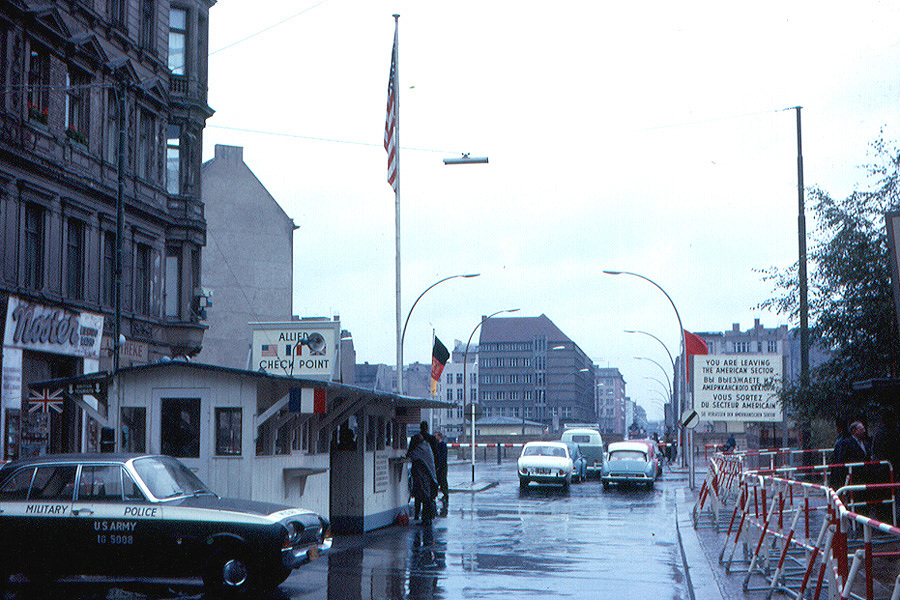
Checkpoint Charlie was located on Friedrichstraße in central Berlin, where traffic could move between the American sector of West Berlin and the Soviet sector of East Berlin. It was one point among three principal transit checkpoints connecting West Germany and West Berlin with the Soviet zone. These three were commonly known as Alpha, Bravo and Charlie:
- Checkpoint Alpha — at Helmstedt, on the western end of the main autobahn route into West Berlin.
- Checkpoint Bravo — at Dreilinden, located at the West Berlin end of the autobahn.
- Checkpoint Charlie — on Friedrichstraße, the best-known crossing for foreigners and Allied personnel.
The overland route used the main autobahn system, a key transport artery often described simply as the autobahn, which connected West Germany with the isolated enclave of West Berlin.
History and notable incidents
Checkpoint Charlie came into prominence after the construction of the Berlin Wall in 1961, when it became one of the few legal crossing points between the sectors. Because it was the main crossing open to non-German foreign nationals and allied officials, it was the setting for several tense stand-offs. The most widely remembered incident involved a confrontation between United States and Soviet tanks in October 1961, which lasted for a short period and highlighted how close the city came to direct military conflict.
At the checkpoint, guards examined passports and travel papers; signage in multiple languages warned travelers such as the well-known English notice that informed visitors when they were leaving the American sector. Over the years the checkpoint's physical facilities changed, and after German reunification it ceased to function as a border crossing.
Legacy, museum and tourism
After the fall of the Berlin Wall in 1989 and German reunification, the original guardhouse was removed, and the site became a place of memory. A reconstruction of the guard booth and a display of replica signs now mark the location, and the nearby Mauermuseum documents escapes, Cold War history and everyday life under division. The area around the former crossing attracts many visitors interested in 20th-century history and the story of the Berlin Wall.
Distinctions and broader importance
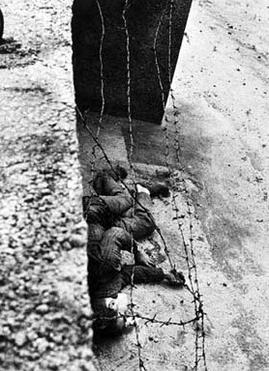
Checkpoint Charlie is often invoked as shorthand for the German division and the Cold War standoff in Europe. Its fame derives partly from its role as a diplomatic and media focal point and partly from the dramatic incidents that occurred there. Today it functions as an educational site and a reminder of the risks of geopolitical confrontation, while also illustrating the human consequences of border regimes and ideological divisions.
Note: For more detailed archival materials and maps, consult specialized collections and historical exhibitions accessible through official repositories and museum sites.
Related articles
Author
AlegsaOnline.com Checkpoint Charlie — Cold War crossing and Berlin landmark Leandro Alegsa
URL: https://en.alegsaonline.com/art/19093