
Autobahn: Germany's controlled-access highway system
Overview of the German Autobahn network: design, rules, history, speed policies, safety issues, junction types and cultural importance.
Overview
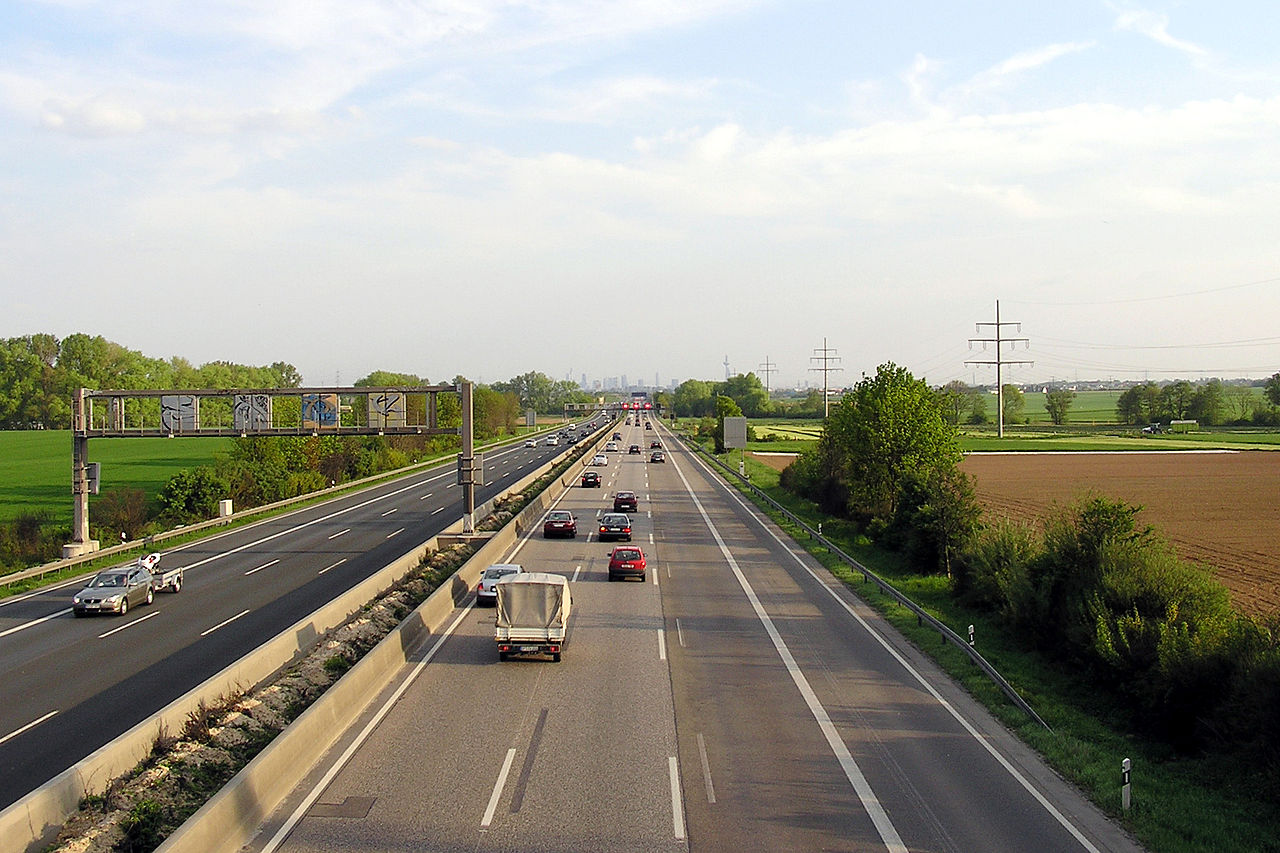
The term autobahn refers to Germany’s nationwide system of controlled-access highways designed for fast, long-distance travel. Characterized by grade-separated junctions and multiple lanes in each direction, autobahns link cities, industrial regions and border crossings. They are widely known abroad for long stretches where no general maximum speed is posted, although drivers must still adapt speed to weather, traffic and road conditions.
Image gallery
10 Images




Design and common characteristics
Typical autobahn sections have at least two traffic lanes per direction separated by a central barrier. Many stretches add a third or more lanes, together with a paved hard shoulder for emergencies. Roadside features include periodic rest areas, service stations and numbered junctions. Emergency telephones are installed at regular intervals to contact patrol and rescue services.
Traffic rules emphasize the right-hand rule: drivers keep to the right lane unless overtaking. Passing is normally performed on the left, and stopping or reversing on the carriageway is prohibited. Road signage and overhead gantries allow for static and variable speed limits, lane controls and warnings about hazards ahead.
History and development
The idea of high-speed, limited-access roads in Germany developed in the early 20th century and took shape in the interwar years. After periods of expansion and rebuilding, especially following World War II, the network grew into one of the densest motorway systems in Europe. Investment since the late 20th century has focused on safety upgrades, noise mitigation, and environmental measures such as noise barriers and improved runoff control.
Speed rules, advisory limits and safety
Unlike many countries, Germany does not impose a blanket national speed limit on all autobahns. Instead, many stretches have no posted maximum, while other sections use fixed or variable limits for safety, congestion or environmental reasons. A widely publicized advisory speed (Richtgeschwindigkeit) of 130 km/h is recommended; exceeding it may affect legal responsibility in a collision if the speed was a contributing factor.
Safety comparisons between unrestricted and limited sections have been the subject of study and public debate. Some traffic-safety analyses report higher fatality rates on unrestricted stretches and estimate that a general speed limit could reduce the number of fatalities annually. These findings are often cited in discussions about national policy and traffic law enforcement.
Junctions, tolls and operational details
Interchanges between motorways have specific German names: a three-way junction can be called a Dreieck while a four-way crossing is often a Kreuz; connections to ordinary roads are called Anschlussstelle. Junctions are usually numbered sequentially to aid navigation. Passenger cars generally use the autobahn toll-free, while heavy goods vehicles are subject to distance-based toll systems. Emergency infrastructure and patrol services are an integral part of operations.
Importance, controversies and driving culture
Autobahns are important for commerce, commuting and tourism, offering rapid links across regions. They also draw controversy: debates focus on road safety, environmental impact, noise and greenhouse-gas emissions, and whether to introduce a uniform speed limit. For drivers, the network demands respectful lane discipline, attentiveness to variable signs and readiness to adapt to changing conditions.
Further reading and official sources
- General information on motorway design
- Overview of German road infrastructure
- Lane configuration and safety guidance
- Distance and speed reference material
- Conversion and measurement notes
- Analyses and media reporting on speed and safety
- Emergency services and roadside assistance resources
- Information on tolls and heavy vehicle charges
- Historical and legal background documents
Questions and answers
Q: What is the Autobahn?
A: The Autobahn is the controlled-access highway system in Germany.
Q: What makes the Autobahn famous?
A: The Autobahn is famous because in many parts of the roads, there are no speed limits and drivers can drive as fast as they want to.
Q: How many lanes does an Autobahn have in each direction?
A: An Autobahn has at least two lanes in each direction, with a barrier between the directions.
Q: What is the recommended speed limit on the Autobahn?
A: The recommended speed limit on the Autobahn is 130 km/h.
Q: Are drivers allowed to drive faster than 130 km/h on the Autobahn?
A: Drivers are allowed to drive faster than 130 km/h on the Autobahn as long as the track conditions allow.
Q: How many deaths occur on sections of the Autobahn without speed limits compared to those with a limit?
A: On average, there are 25% more deaths on sections of the Autobahn without speed limits compared to those with a limit.
Q: Is driving on the Autobahn free for all vehicles?
A: Driving on the Autobahn is free for cars, but trucks (12.5 tons and above) have to pay a toll of about €0.12 per kilometre.
Related articles
Author
AlegsaOnline.com Autobahn: Germany's controlled-access highway system Leandro Alegsa
URL: https://en.alegsaonline.com/art/7591