
Charites (the Three Graces)
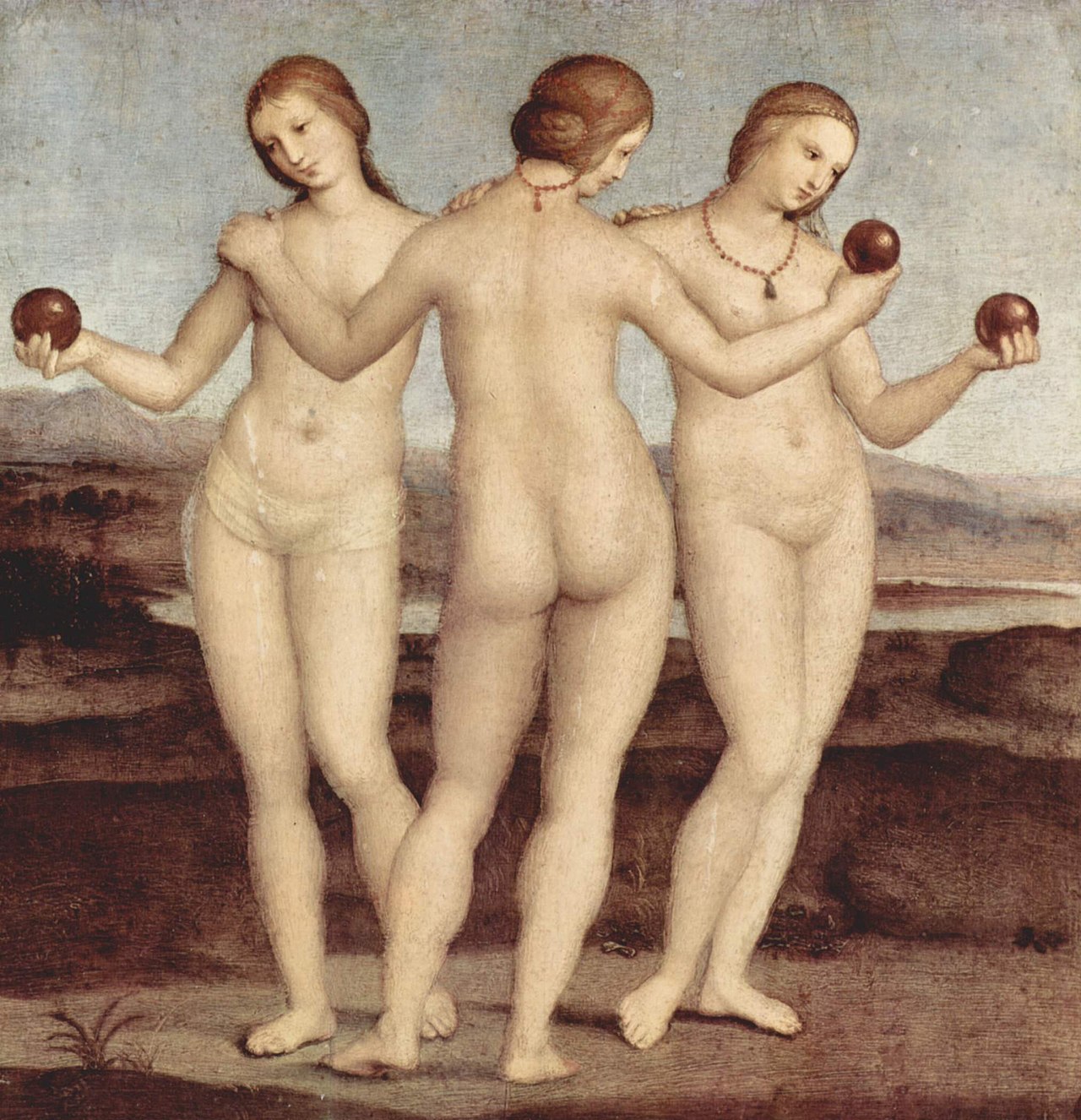
The Charites, or Three Graces, are minor goddesses of charm, beauty and festivity in Greek myth, often depicted dancing together; they influenced ancient cult practice and Western art from antiquity to the modern era.
Overview
The Charites, known in Greek as Χάριτες, are a group of goddesses associated with charm, beauty, joy and social grace in Greek mythology. Traditionally portrayed as three sisters, they embody pleasures that smooth social life: attractiveness, goodwill and the pleasing manners that make celebrations and civic occasions agreeable.
Image gallery
10 Images




Names and attributes
Classical sources commonly give three names and brief character epithets. They are:
- Euphrosyne — often rendered as "mirth" or "light-heartedness";
- Thalia — literally "the blooming or flowering one," associated with festivity and abundance;
- Aglaia — meaning "splendor" or "brightness," linked to radiance and beauty.
These personifications were not only poetic figures but also functional presences at rites, banquets and artistic programs celebrating harmony and well-being.
Origins and worship
In many literary traditions the Charites are described as daughters of Zeus and the Oceanid Eurynome; they are often attendants of Aphrodite. The Roman equivalent was the Gratiae, or Graces. Local cults differed: some communities honored them with shrines, votive offerings and festival dances. Boeotian centers such as Orchomenus are frequently linked to their cult, but references appear across the Greek world.
Iconography and artistic legacy
The Charites became a standard motif in visual art. Ancient vase-painting, reliefs and statuary often show them as three young women, usually linked in a dance or embracing in a circle. This image persisted through Roman mosaics and into later European art: Renaissance painters and Neoclassical sculptors revived the theme, producing famous treatments of the three figures in compositions that emphasize poise, flowing drapery or tasteful nudity. Art-historical discussions frequently point to their role in expressing ideals of proportion, beauty and social harmony in decorative programs and public monuments. Examples of sculptural and mosaic representations are common in museum collections and archaeological reports (sculpture, mosaic).
Role, variations and distinctions
Ancient writers and local traditions sometimes vary the number, names or genealogy of the Charites. In some myths they merge or overlap with other groups of minor goddesses—such as the Horae or attendant figures of specific gods—so their precise identity can depend on context. Unlike the Muses, whose domain is artistic inspiration, the Charites are more narrowly concerned with social charm, festivity and the agreeable appearance of things.
Though minor in the hierarchy of Greek deities, the Charites had an outsized cultural presence as embodiments of an ideal social ease. Their image has endured as a visual shorthand for beauty, congeniality and the pleasures of civilized life.
Related articles
Author
AlegsaOnline.com Charites (the Three Graces) Leandro Alegsa
URL: https://en.alegsaonline.com/art/18669