
Chaff (radar countermeasure)
Chaff is a radar countermeasure consisting of small metallic or metallized fibers released by aircraft or ships to produce false radar echoes and protect against detection or radar-guided weapons.
Overview
Chaff is a defensive countermeasure used to confuse or saturate radar detection. Deployed from aircraft, ships, or ground platforms, it forms a cloud of small, highly reflective elements that produce false targets or clutter on radar screens. The tactic reduces the chance that a particular platform will be identified or targeted by radar-guided weapons. Its first operational uses date to World War II, after which chaff became a standard element of airborne and naval self-protection.
Image gallery
6 Images


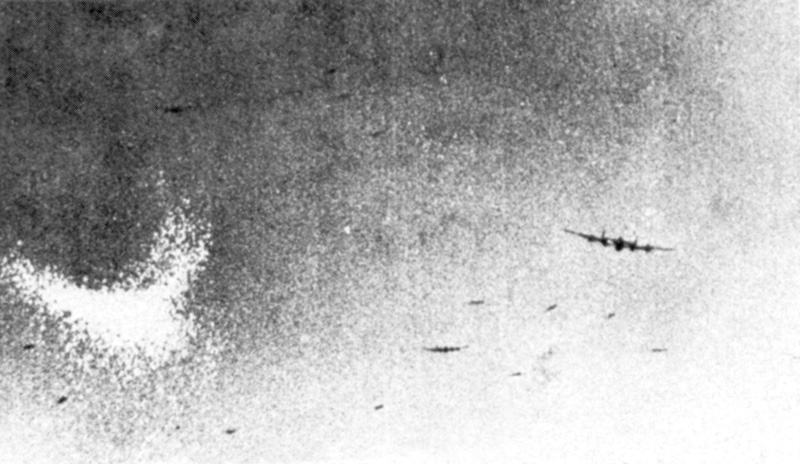

Composition and deployment
The material used for chaff varies, but common forms include thin aluminium strips, metallized glass fibers, or metallized plastic film. The length and thickness of each element are chosen so individual pieces resonate with specific radar wavelengths and act as simple dipole reflectors. Chaff can be dispensed from cartridges, shotgun-like rockets, or automated dispensers built into aircraft and ships, creating a volume of scatterers that drifts with the wind.
- Materials: metallized fibres or strips designed to reflect radio waves.
- Platforms: launched from aircraft or ships as well as ground systems.
- Methods: cartridges, rockets, or timed dispensers for controlled clouds.
How it works and tactical use
Radar systems detect objects by sending pulses and listening for echoes; a cloud of many small reflectors produces numerous returns that can mask or mimic the echo of the protected platform. For radar-guided missiles, the result can be loss of lock or guidance toward the chaff cloud rather than the intended target. Chaff is commonly used in combination with electronic warfare techniques and with infrared countermeasures (flares), though flares serve to defeat heat-seeking systems while chaff targets radar systems.
History, limitations and countermeasures
First developed and fielded in large scale during World War II, chaff (sometimes called "window" in early British usage) evolved from simple strips to tailored materials and release patterns. Modern radars use techniques such as Doppler filtering, monopulse angle tracking, and high-resolution imaging to distinguish moving platforms from passive chaff. As a result, chaff remains valuable but is typically part of a layered defence that includes electronic jamming and tactics to exploit angles, velocity, and timing.
Operational considerations include the transient nature of the effect, meteorological influences on dispersal, and environmental concerns: released chaff becomes debris that can litter maritime or terrestrial areas and interfere with training or navigation. Military doctrine therefore controls when and where chaff is used, and systems are designed to optimize effectiveness while limiting unwanted consequences. For additional context about military employment and platforms, see military publications.
Chaff remains a straightforward, low-cost countermeasure that exploits fundamental properties of radio-wave reflection. While technological advances in radar have reduced some of its effectiveness, chaff still plays a practical role in protecting assets from radar detection and weapon guidance in modern operations.
Further reading and technical summaries are available from specialized defence references and technical manuals that explain material sizing, radar cross-section effects, and integrated countermeasure procedures; general resources may be found via platform-specific or materials-focused sources.
For broader background on radar operation and countermeasures, consult introductory material on signal reflection and electromagnetic scattering in electronic warfare literature.
Related articles
Author
AlegsaOnline.com Chaff (radar countermeasure) Leandro Alegsa
URL: https://en.alegsaonline.com/art/18312