
Chamber (firearms)
The chamber is the part of a firearm that receives and holds a cartridge for firing. This article explains its function, components, variations across actions, history, safety issues, and common terminology.
Overview
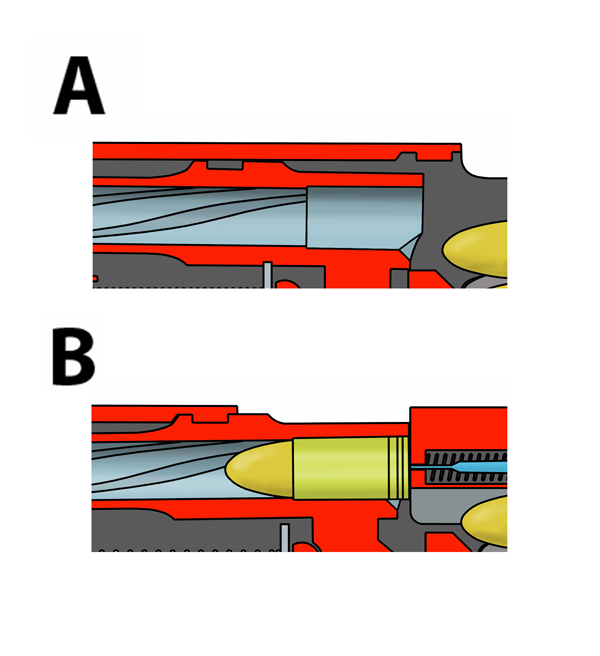
The chamber is the portion of a firearm into which a single cartridge is placed and from which it is discharged. In breech-loading firearms the chamber sits immediately behind and aligned with the barrel, forming the rearward part of the bore that contains the cartridge at the moment of firing. The verb "to chamber" means to load a cartridge into this space. Proper chambering is essential for correct headspace, alignment, and safe pressure containment when a round is fired.
Image gallery
7 Images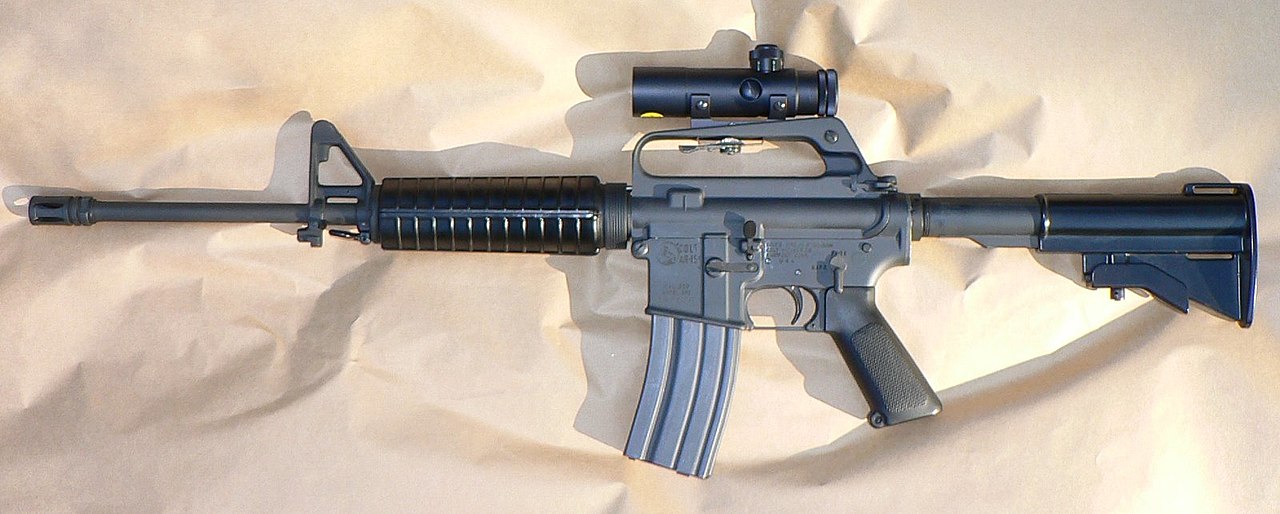


Structure and key features
A chamber is more than a simple hollow; it includes surfaces and dimensions that interact with the cartridge case. Important features often discussed by gunsmiths and ammunition designers include:
- Headspace – the distance that controls where the cartridge rests relative to the bolt face or breech.
- Throat or leade – a short tapered section between the chamber and rifling that guides the bullet into the bore.
- Chamber mouth and rim clearance – the opening geometry that affects feeding and extraction.
- Material strength and finish – which influence wear, sealing, and resistance to pressure.
Operation across action types
Different firearm actions present the chamber in distinctive ways. Most rifles and pistols have a single fixed chamber into which rounds are fed from a magazine or manually. Revolvers contain multiple chambers in a rotating cylinder, each holding one cartridge; classic designs commonly have six chambers, hence the nickname "six-shooter." Loading and firing cycles in semi-automatic and bolt-action designs also involve chambering, extraction, and ejection steps that must align precisely with the chamber geometry.
History and development
The modern chamber evolved with the adoption of self-contained metallic cartridges and breech-loading mechanisms in the 19th century. Before that, chambers were part of muzzleloading barrels or separate chambers in early repeating firearms. The standardized metallic cartridge made chambers simpler to produce and safer to seal pressures, which in turn allowed higher velocities and more reliable repeat-fire mechanisms.
Uses, examples and safety considerations
Correct chambering affects accuracy, reliability and safety. Misaligned or incorrect cartridges (wrong caliber for the chamber) can cause malfunctions or catastrophic failure. Common issues tied to chambers include failure-to-feed, failure-to-extract, stuck cases, and chamber fouling. Shooters and armorers inspect chambers for wear, corrosion or debris and use appropriate headspacing gauges and cleaning procedures. The phrase "chambered for" denotes the specific cartridge the firearm is designed to accept.
Notable distinctions and terminology
When discussing chambers it is useful to distinguish between the chamber itself and related components: the barrel bore, the cartridge chambering, and the feeding system. In a revolver the rotating cylinder contains multiple chambers and functions differently from the single-chamber designs of most pistols and rifles. Manufacturers specify chamber dimensions and allowable tolerances for each caliber to ensure safe operation. For further technical details on cartridges, barrels, cylinders and related safety practices, consult dedicated sources or manuals from reputable organizations.
More on cartridges • Barrel anatomy • Revolver basics • Cylinder design
Questions and answers
Q: What is the chamber in a firearm?
A: The chamber is the part of a firearm into which the cartridge is loaded and fired from.
Q: Where is the chamber located in a breech-loading weapon?
A: In a breech-loading weapon, the chamber is directly behind and in line with the barrel.
Q: How many chambers does a revolver typically have?
A: A revolver typically has multiple chambers contained in a revolving cylinder, with the typical number being 6.
Q: What is the nickname for a revolver with 6 chambers?
A: The nickname for a revolver with 6 chambers is Six Shooter.
Q: Do rifles and pistols usually have multiple chambers?
A: No, most rifles and pistols have a single chamber.
Q: What does it mean to chamber a round?
A: To chamber a round means to load a cartridge into the chamber.
Q: Is the cartridge fired from the chamber?
A: Yes, the cartridge is fired from the chamber in a firearm.
Related articles
Author
AlegsaOnline.com Chamber (firearms) Leandro Alegsa
URL: https://en.alegsaonline.com/art/18409
Sources
- hunting.about.com : "Definition of Gun or Firearms Chamber"
- tncourts.gov : "Firearms Definitions"
- memidex.com : "six-shooter"
- nycitylens.com : "What Is a Gun? A Primer"
- thetruthaboutguns.com : "Keep Your Finger Off The Trigger Until You Shoot"
- motherjones.com : "A Non-Gun-Owner's Guide to Guns"
- level1firearms.com : "Semi-Automatic Pistol Components and Operations"
- journal-news.com : "Assault weapon vs. assault rifle: What is the difference?"
- merriam-webster.com : "assault rifle"