
Chatham House (Royal Institute of International Affairs)
Chatham House is a London-based independent policy institute studying international affairs, publishing research, convening debates under the Chatham House Rule, and advising governments and organisations globally.
Overview
Chatham House, formally the Royal Institute of International Affairs, is a London-based think tank and independent policy institute. Founded in 1920 after the First World War, it operates as a non-profit, non-governmental organisation with a mission to analyse and promote understanding of major global issues and current affairs. Its work brings together academics, diplomats, business leaders and civil society to produce non-partisan research intended to inform policy decisions and public debate. The institute is widely recognised for convening off-the-record discussions and for its long-term contribution to international affairs scholarship. Non-governmental organisation international issues
Image gallery
9 Images


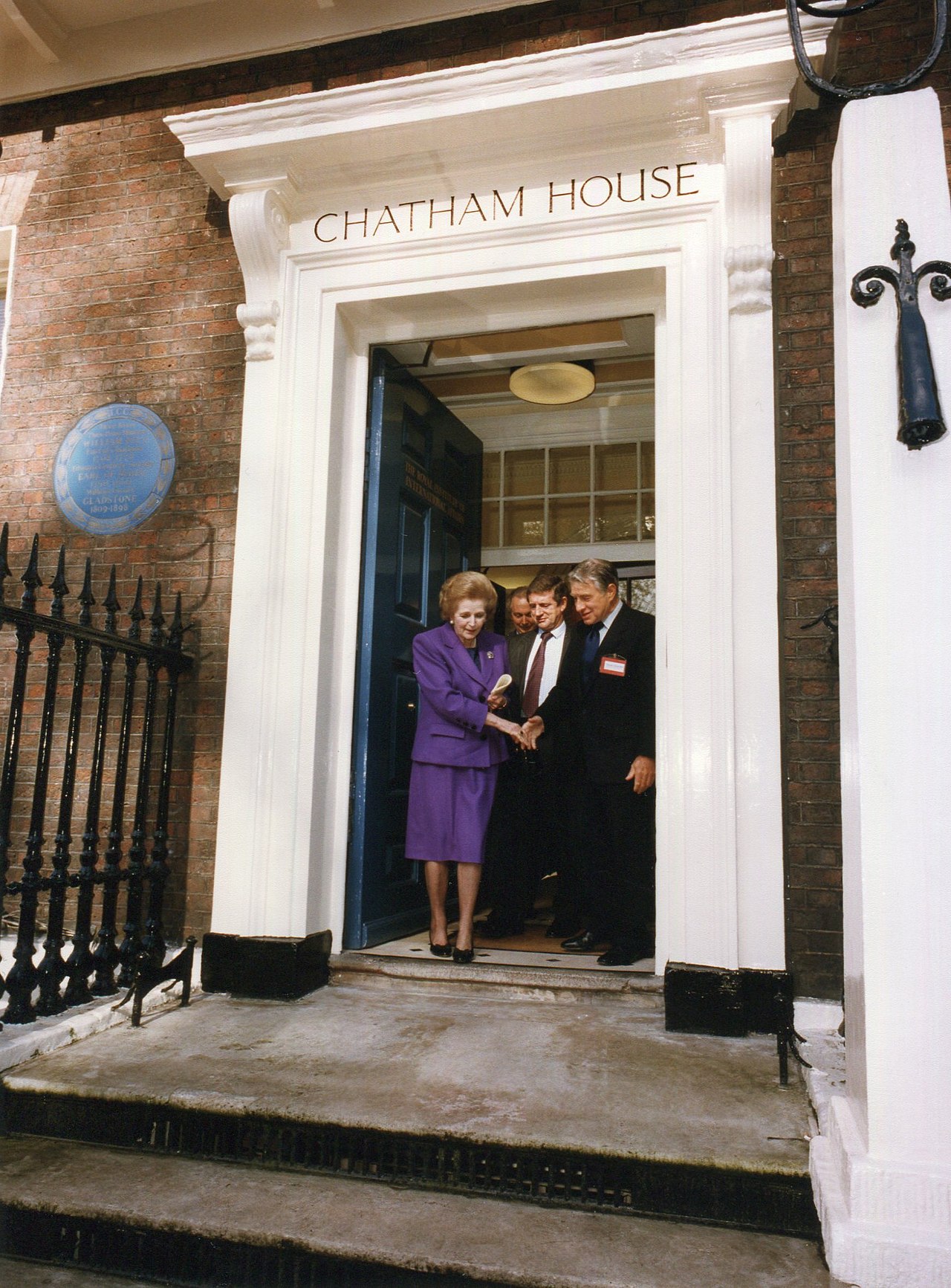


History and premises
The institute takes its popular name from the historic Georgian house it occupies in St James's Square in central London. The Grade I listed building, with deep connections to British political history, was once associated with figures such as William Pitt and has lent the institute both its name and an enduring symbolic presence in public life. Over the decades Chatham House expanded its staff and programmes, developing specialist regional teams and thematic research units that address security, economics, the environment and governance.
Activities and research areas
Chatham House conducts independent research, publishes analysis and briefs, runs training and short courses, and organises public seminars and international conferences. Its publications include policy papers, reports and a long-standing scholarly journal that addresses contemporary foreign policy questions. Research themes commonly include:
- Security and conflict prevention, crisis analysis and international law
- International political economy, trade and development
- Energy, climate change and environmental policy
- Regional studies covering Europe, Africa, Asia, the Americas and the Middle East
- Technology, digital governance and transnational risks
Programmes are designed both to advance scholarly understanding and to offer practical recommendations for governments, international organisations and the private sector. Outputs are distributed to policymakers, the media and the public, and events are often used to test ideas and foster dialogue among experts.
The Chatham House Rule
One of the institute's most widely recognised contributions is the Chatham House Rule. This convention is used at many meetings to encourage openness: participants may use the information received but should not reveal the identity or affiliation of speakers or other participants. The rule is intended to allow candid exchange of views without attribution, and it has been adopted by governments, corporations and research organisations worldwide as a mechanism to facilitate frank discussion.
Governance, people and funding
Chatham House is governed by a council and led by senior directors overseeing research programmes and operations. Funding comes from a mix of membership contributions, philanthropic donations, project grants and fees for commissioned work; the institute publishes information about major donors and adheres to policies intended to protect research independence. Over the years it has attracted senior public figures to leadership roles: notable officers and presidents have included Sir John Major, whose public service background reflects its cross-party links, as well as other prominent figures such as Lord Ashdown and Baroness Scotland. The institute emphasises non-partisanship while engaging with a broad range of stakeholders. former UK Prime Minister
Influence, rankings and public profile
Chatham House is often listed among the world's leading foreign policy research institutes and has featured prominently in global think-tank rankings. In some recent analyses it has been ranked very highly, often compared with major institutions such as the Brookings Institution in the United States. Such rankings reflect its reputation for convening high-level debates, the visibility of its publications and its global network of partners. Brookings Institution think tank
Publications, training and outreach
The institute publishes policy briefs, longer research reports and a scholarly journal that address pressing questions in international affairs. It also offers training programmes, fellowships and pathways for early-career researchers and practitioners to build expertise. Outreach includes media engagement, public events and digital resources designed to reach diverse audiences and to broaden the conversation beyond traditional diplomatic and academic circles.
Criticism and responses
Like many influential research organisations, Chatham House has faced scrutiny over transparency of funding and the exclusivity of some of its convenings. Critics argue that elite, off-the-record forums can limit broader public scrutiny. The institute has responded by publishing information on funding policies, expanding open events and seeking to balance confidential dialogue with public accountability. It continues to refine governance and disclosure practices in line with evolving expectations for independent research bodies.
Legacy and contemporary role
Chatham House remains a prominent venue for scholarship and policy discussion on global affairs. Its longstanding rule for confidential discussion, extensive research output, and networks of former officials and academics contribute to its ongoing role as a bridge between ideas and policy. Interested readers can consult institute materials and event records to explore specific reports, programmes and initiatives in more detail. William Pitt international issues
Questions and answers
Q: What is Chatham House?
A: Chatham House is a London-based think tank that analyses and promotes the understanding of major international issues and current affairs.
Q: Is Chatham House a non-profit organization?
A: Yes, Chatham House is a non-profit, non-governmental organization.
Q: What is Chatham House known for?
A: Chatham House is known for being one of the world's leading organizations in analysing and promoting the understanding of major international issues and current affairs.
Q: Where does Chatham House take its name from?
A: Chatham House takes its name from its premises, a Grade I listed 18th-century house in St. James's Square that was once occupied by three British prime ministers, including William Pitt, 1st Earl of Chatham.
Q: What is Chatham House's ranking in the world's most influential think tanks?
A: In a recent report, Chatham House is ranked the second most influential think tank in the world after the Brookings Institution, and the world's most influential non-US think tank.
Q: Who are some of the distinguished presidents of Chatham House?
A: Distinguished presidents of Chatham House include Sir John Major, former UK Prime Minister, Lord Ashdown (1941-2018), former EU Special Representative in Bosnia and Herzegovina and former leader of the Liberal Democrats, and Baroness Scotland, the former Attorney General.
Q: What recognition has Chatham House received from Foreign Policy magazine?
A: In 2009, Chatham House was named the top non-US think tank by Foreign Policy magazine.
Related articles
Author
AlegsaOnline.com Chatham House (Royal Institute of International Affairs) Leandro Alegsa
URL: https://en.alegsaonline.com/art/18985
Sources
- euractiv.com : Think-tanks going global, survey finds
- gotothinktank.com : 2012 Global go-to think tanks ranking released
- foreignpolicy.com : "Foreign Policy: The Think Tank Index"
- chathamhouse.org : Patrons, Presidents, Council, and Directors
- authorities.loc.gov : "Library of Congress authority file"
- americanchronicle.com : "Scholarly or sophistry? A take on Chatham House's "Ethiopia and Eritrea: allergic to persuasion""
- chathamhouse.org : Chatham House Membership