
Cockroach (Blattodea): biology, ecology, and relations with humans
Overview of cockroaches: classification, appearance, life cycle, ecological roles, common pest species, health impacts and basic control approaches.
Overview
The cockroach is a widely distributed insect of the suborder Blattaria within the order Blattodea. Cockroaches are an ancient and diverse group: there are roughly 4,000 species described worldwide, but only a small fraction regularly live in or around human buildings. About thirty species are known to invade homes, and four species are commonly recognized as major household pests.
Image gallery
10 Images



Physical characteristics and life cycle
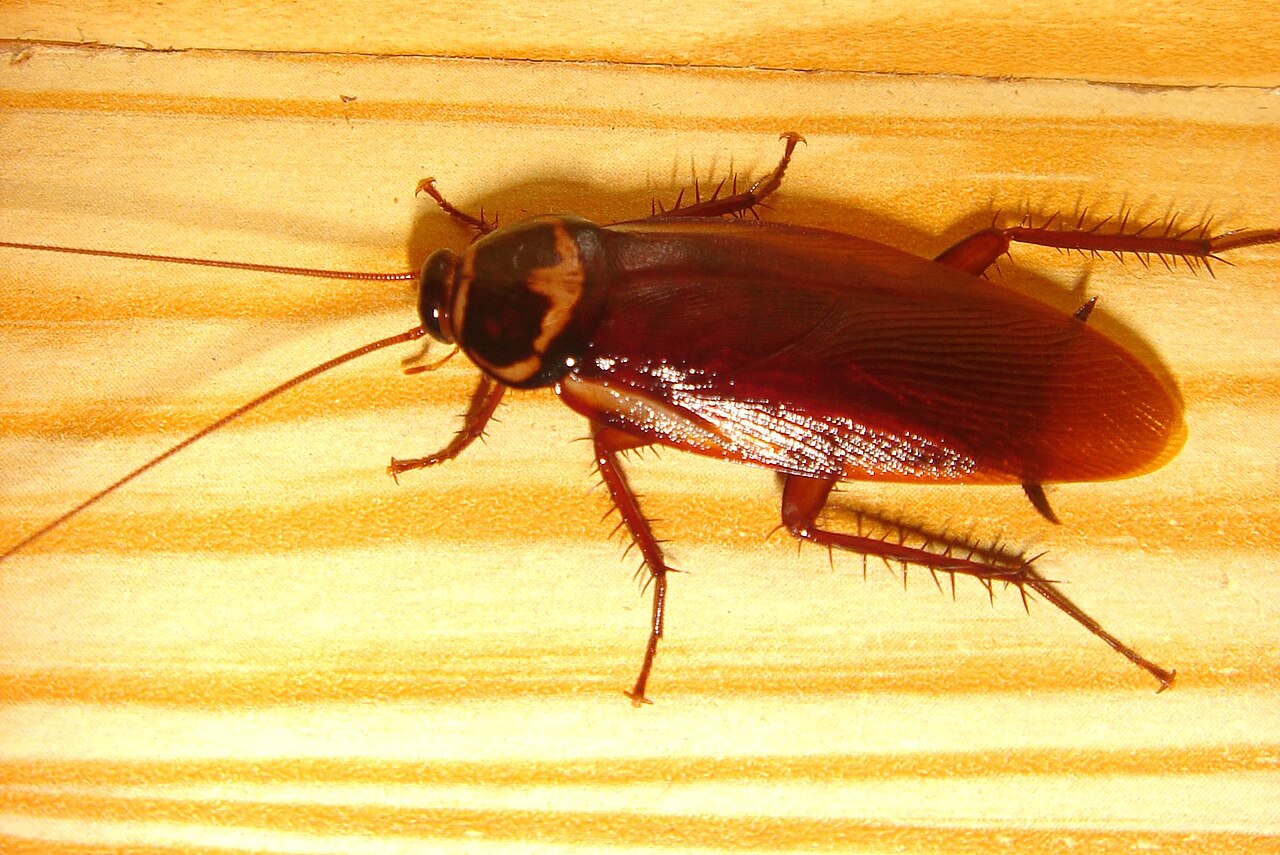
Cockroaches typically have flattened, oval bodies, long antennae, and legs adapted for rapid running. Size and color vary by species; some have wings and can glide or fly short distances, while others are flightless. Reproduction involves eggs often enclosed in a protective case called an ootheca; many species undergo gradual metamorphosis, with nymphs resembling miniature adults.
Ecology and behavior
Most cockroaches are nocturnal scavengers that feed on a wide range of organic material, helping to break down decaying plant and animal matter in natural ecosystems. They occupy varied habitats from forests and grasslands to caves and human dwellings. Their ability to exploit diverse food sources and shelter contributes to their resilience and wide distribution.
Human interactions: pests and benefits
In human environments some species become synanthropic, thriving in buildings where food and warmth are available. Infestations can cause distress, contaminate food, and trigger allergic reactions in sensitive people. Cockroaches are also studied in research (behavior, neurobiology, allergy) and can play useful roles outdoors as decomposers.
Common pest species and control
- Typical household pest species include the German cockroach, American cockroach, Oriental cockroach, and the brown-banded cockroach.
- Control emphasizes sanitation, exclusion, monitoring, and targeted use of baits or insecticides rather than indiscriminate spraying.
Notable facts
Cockroaches have existed for hundreds of millions of years and display behavioral and physiological adaptations that make them successful survivors. While the popular image emphasizes their nuisance value, their ecological role as recyclers of organic material is important in many ecosystems. Effective management in homes relies on integrated approaches and professional guidance when infestations persist.
Questions and answers
Q: What is a cockroach?
A: The cockroach is an insect belonging to the suborder Blattaria of the order Blattodea.
Q: How many species of cockroaches are there?
A: There are approximately 4,000 species of cockroaches.
Q: How many species of cockroaches invade human homes?
A: About 30 species of cockroaches invade human homes.
Q: What percentage of all cockroach species invade human homes?
A: Less than 1% of all cockroach species invade human homes.
Q: How many species of cockroaches are pests?
A: Four species of cockroaches are considered pests.
Q: What is the order that the cockroach belongs to?
A: The cockroach belongs to the order Blattodea.
Q: What is the suborder that the cockroach belongs to?
A: The cockroach belongs to the suborder Blattaria.
Related articles
Author
AlegsaOnline.com Cockroach (Blattodea): biology, ecology, and relations with humans Leandro Alegsa
URL: https://en.alegsaonline.com/art/21338
Sources
- news.bbc.co.uk : "Termites are 'social cockroaches'"
- nhm.ac.uk : "Termites are cockroaches after all - Natural History Museum"
- doi.org : 10.1046/j.1365-3113.2000.00128.x
- abc.net.au : "News in Science - Mega cockroach - 08/11/2001"
- pbs.org : "NATURE. Critter Guide. Cockroach. | PBS"
- scientificamerican.com : "Fact or Fiction?: A Cockroach Can Live without Its Head: Scientific American"
- commons.wikimedia.org : Blattodea