
Tutankhamun: the Boy King of Egypt's Eighteenth Dynasty
Tutankhamun, a young pharaoh of Egypt's 18th Dynasty, reversed Akhenaten's reforms, restored Amun's cult, and became world-famous after Howard Carter discovered his nearly intact tomb in 1922.
Overview
Tutankhamun (often written Tutankhaten or Tutankhamen) was an Egyptian pharaoh of the New Kingdom's Eighteenth Dynasty. Ascending the throne as a child, he reigned for roughly nine years during the late 14th century BCE and died while still a teenager. Although his political importance during life was modest, his intact burial and richly furnished tomb made him one of the best known ancient Egyptian rulers in modern times.
Image gallery
10 Images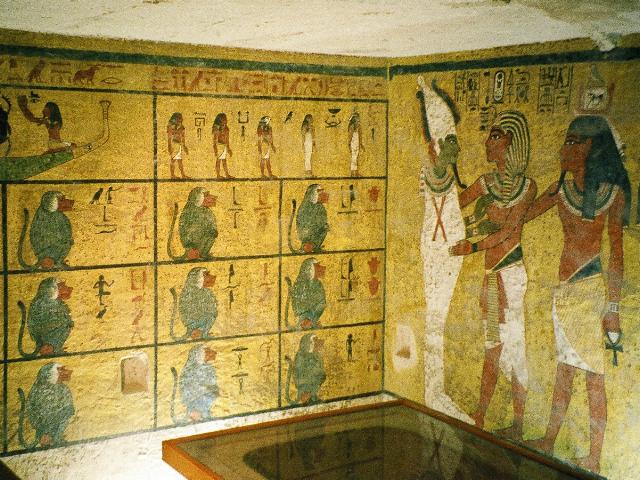


Family background and origins
Tutankhamun is usually identified as the son of Akhenaten. His mother is not securely named in contemporary records; modern genetic and archaeological studies suggest she may have been a close relative of Akhenaten. He married Ankhesenamun, who was probably a daughter of Queen Nefertiti. The royal family relations are complex and remain the subject of ongoing research, partly because the Amarna period (Akhenaten's reign) disrupted many traditional records.
Reign and religious policy
Tutankhamun began life as Tutankhaten, a name that reflected the worship of the solar disc Aten promoted by his probable father. Early in his reign he adopted the name Tutankhamun, signaling a political and religious restoration that returned prominence to the traditional god Amun. Priestly privileges were restored, the cult of Amun revived, and the royal court moved away from Akhenaten's new capital toward Thebes (Thebes), reversing many Amarna reforms. Because he was young and ruled for a short time, much of the formal power likely rested with senior officials and priests.
Tomb, discovery, and the modern spotlight
Tutankhamun was buried in a modest royal tomb in the Valley of the Kings (designated KV62). In 1922 the British archaeologist Howard Carter located the largely intact burial chamber, and the cache of funerary goods — notably the gold funerary mask, shrines, chariots, jewelry and ritual items — captured worldwide attention. The discovery transformed public interest in Egyptology and generated debates about conservation, antiquities ownership and the ethics of excavation.
Death, remains, and debates
The precise cause of Tutankhamun's early death remains uncertain. Examined by modern imaging and genetic testing, his mummy shows signs that have been variously interpreted as injury, infection or disease; hypotheses have included trauma from a fracture, infection, and malaria among other possibilities. Scholars caution that the forensic record is fragmentary and conclusions are tentative. Popular legends of a "curse" associated with the tomb's opening have no scientific support and are regarded as sensationalism rather than evidence; references to this idea persist in popular culture (curse).
Legacy and significance
Though Tutankhamun did not accomplish major state-building, his tomb's discovery has had lasting impact: the finds provided unparalleled material culture for study of royal burial practices, craftsmanship and religious symbolism of the late Eighteenth Dynasty. Museums and exhibitions that toured the world introduced millions to ancient Egyptian art and burial rites and helped shape modern perceptions of pharaonic civilization.
Notable facts
- The tomb KV62 contained thousands of objects, many intended to serve the king in the afterlife.
- Tutankhamun's change of name from Tutankhaten to Tutankhamun reflected a return to traditional religion.
- His burial mask, made of gold and inlaid stones, is an iconic symbol of ancient Egypt's artistry.
- Modern analyses, including CT scans and DNA studies, have informed but not fully resolved questions about his family and cause of death.
For an introduction to the key topics around his life, reign, and the discovery of his tomb, consult resources on the pharaonic office, the Eighteenth Dynasty and the Amarna restoration period. Further reading and museum catalogues offer detailed treatment of the tomb assemblage and ongoing scholarly debates.
Pharaoh | Eighteenth Dynasty | Akhenaten | Nefertiti | Aten | Amun | Thebes | curse
Questions and answers
Q: Who was Tutankhamun?
A: Tutankhamun was an Egyptian Pharaoh of the 18th dynasty during the New Kingdom.
Q: When did Tutankhamun reign?
A: Tutankhamun reigned from when he was nine years old (1334 BC) to when he died (1323 BC).
Q: Who were Tutankhamun's parents?
A: Tutankhamun was the son of Akhenaten and one of Akhenaten's sisters, or perhaps one of his cousins, Kiya.
Q: Why is Tutankhamun known as The Boy King?
A: Tutankhamun ruled for 9 years and died very young, at 19, so he is known as The Boy King.
Q: Who was Tutankhamun married to?
A: Tutankhamun was married to his half-sister Ankhesenamun, daughter of Queen Nefertiti, his stepmother.
Q: What changes did Tutankhamun make during his reign?
A: In his third year of his reign, Tutankhamun reversed several changes made during his father's reign. He ended the worship of the god Aten and restored the god Amun to supremacy. The ban on the cult of Amun was lifted and traditional privileges were restored to its priesthood. The capital was moved back to Thebes and the city of Akhetaten abandoned. This is when he changed his name to Tutankhamun, "Living image of Amun", reinforcing the restoration of Amun.
Q: What happened when Howard Carter found Tutankhamun's tomb?
A: In 1922, Howard Carter found Tutankhamun's tomb. Tutankhamen was believed to carry a curse. Actually, the archaeologists who visited his tomb died from natural causes.
Related articles
Author
AlegsaOnline.com Tutankhamun: the Boy King of Egypt's Eighteenth Dynasty Leandro Alegsa
URL: https://en.alegsaonline.com/art/102170
Sources
- commons.wikimedia.org : Tutankhamun
- jama.jamanetwork.com : "Ancestry and Pathology in King Tutankhamun's Family"
- news.harvard.edu : "A different take on Tut"
- abcnews.go.com : "How King Tut died revealed in new study"
- ncbi.nlm.nih.gov : ncbi.nlm.nih.gov/pubmed/20159872.1
- bbc.co.uk : BBC News: Egypt unveils renovated Tutankhamun gallery