
Caxito — provincial capital and transport hub in Bengo Province, Angola
Caxito is a town and commune in northern Angola that serves as the administrative capital of Bengo Province and a regional center for transport, markets and government services.
Caxito is a town and commune in northern Angola that functions as the administrative capital of Bengo Province. It serves as a local government center and market town for the surrounding rural districts. The settlement is officially classified both as a town and as a commune, reflecting Angola's system of municipal and communal administration; see the town entry Caxito town and the communal profile Caxito commune for administrative details.
Image gallery
3 Images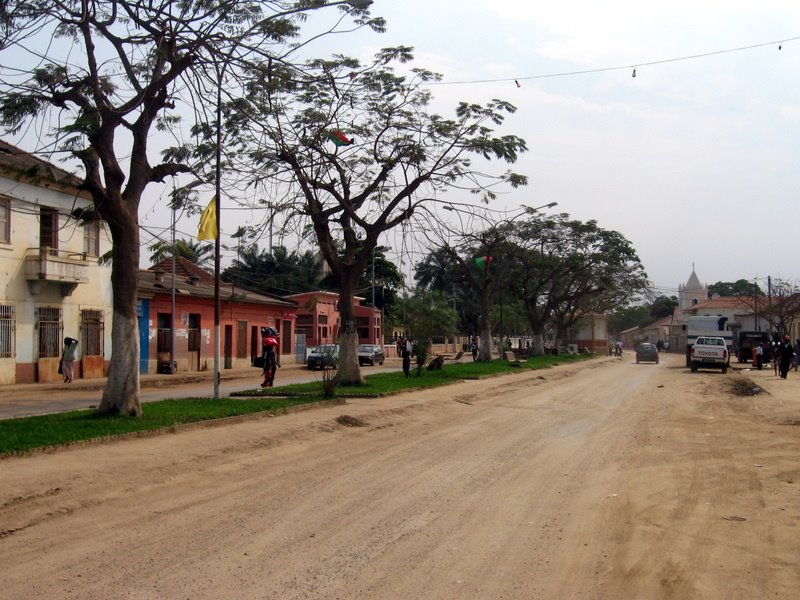


Location and environment
Caxito lies on the coastal plain north of the national capital and is positioned within a landscape of savanna and low plateaus. The area experiences a tropical wet-and-dry pattern, with a rainy season followed by a drier period; this climate supports mixed agriculture and regional food markets. Its proximity to the capital region shapes economic ties and commuting patterns.
History and population
The town developed during the colonial period as an administrative and trading center and later consolidated its role after independence. The surrounding countryside is traditionally inhabited by Ambundu (Mbundu) communities and other local groups. Like many Angolan towns, Caxito has been affected by twentieth-century upheavals and by post-war reconstruction, which altered demographic and economic patterns.
Economy and services
Caxito functions as a service and market hub: government offices, schools, health facilities and agricultural trade form the backbone of the urban economy. Small-scale commerce and processing of agricultural produce supply local demand, while regional links to larger cities bring goods and investment into the town.
Transport and connections
The northern line of Angolan Railways passes through Caxito, making it a node on national rail services and facilitating freight and passenger movement. Roads connect the town with surrounding municipalities and with the greater Luanda metropolitan area, reinforcing its importance as a transport interchange and logistics point.
Notable facts and role
As the capital of Bengo Province, Caxito houses provincial administration and provides a concentration of services that support rural districts. Its combination of administrative functions, transport links and market activity make it a focal point for regional development and planning efforts.
- Administrative capital of Bengo Province
- Serves as a regional market and service center
- Served by the northern line of Angolan Railways
Tags
Related articles
Author
AlegsaOnline.com Caxito — provincial capital and transport hub in Bengo Province, Angola Leandro Alegsa
URL: https://en.alegsaonline.com/art/17749
Sources
- info-angola.ao : Info Angola: Comunas