
Cattle Drives in the United States
Long-distance movement of cattle by mounted crews across the American West, prominent in the late 19th century for reaching railheads and markets; shaped ranching, cowboy culture, and frontier settlement.
Overview
Cattle drives were organized movements of herds from grazing areas to markets or railheads. Riders on horseback guided thousands of animals across open country to reach transportation, grazing, or wintering grounds. The work was led by mounted crews commonly called cowboys and relied on hardy horses and cattle adapted to long travel, often cattle breeds like the Texas longhorn.
Drives typically covered long distances and could last for weeks or months. In many well-known routes the herds were taken from Texas northward to railheads in Kansas and other states, where animals were shipped to eastern markets.
Image gallery
10 Images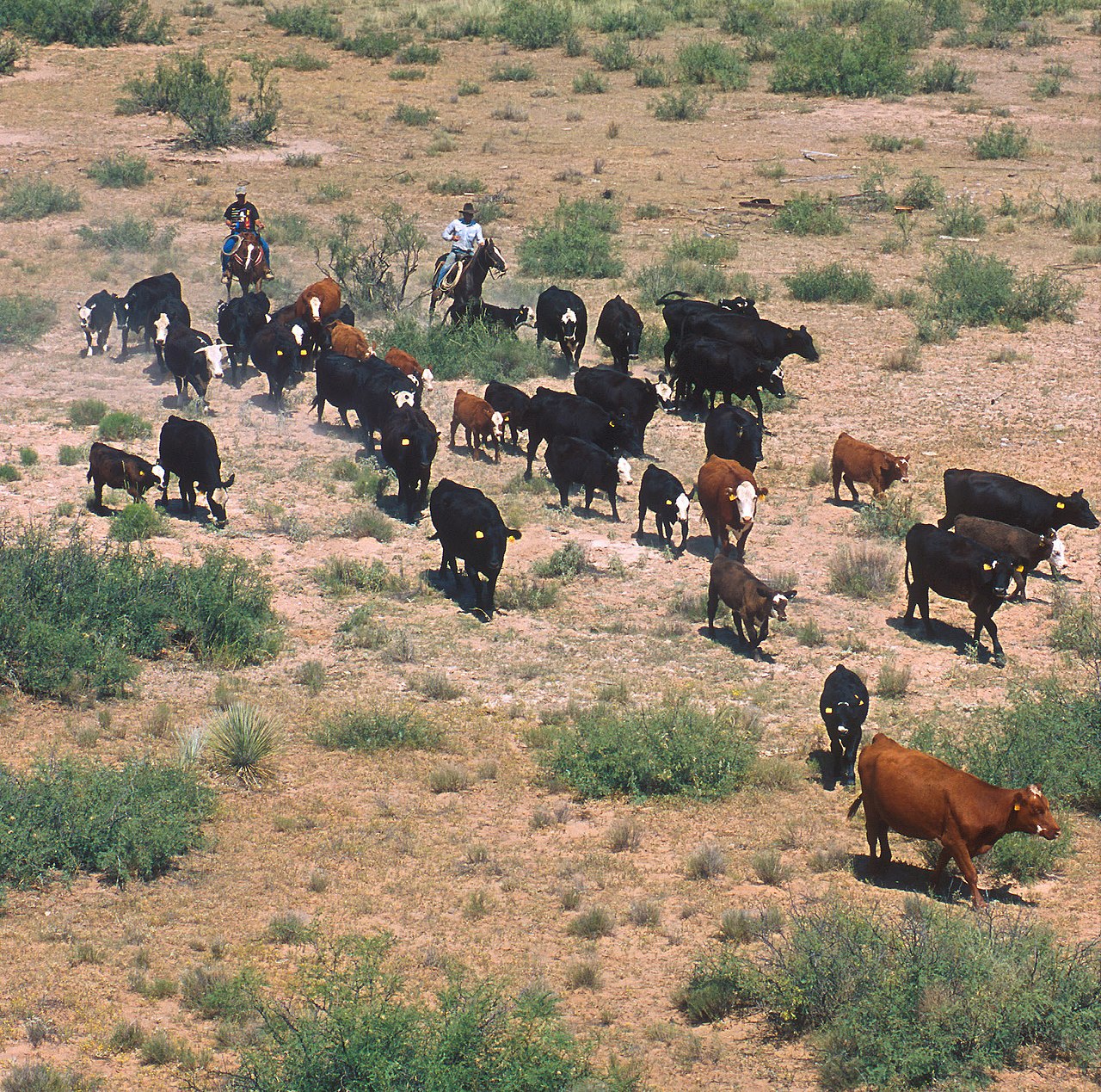





Characteristics and crew
A drive was organized and hierarchical: a trail boss planned the route and schedule, experienced riders handled the herd and kept it together, and a cook maintained the camp. Typical tasks included setting a daily pace, watering and grazing the herd, and maintaining control to prevent stampedes.
- Roles: trail boss, wranglers, scouts, cook.
- Equipment: saddles, lassos, bedrolls, and simple camp gear.
- Hazards: weather, river crossings, predators, rustlers, and disease.
History and decline
Cattle drives expanded after the American Civil War when demand and accessible markets grew. Famous trails—such as the Chisholm Trail and the Goodnight–Loving route—became conduits for moving large numbers of cattle. The era waned as railroads reached further south, public lands were fenced with barbed wire, and ranching became more localized, reducing the need for long drives.
Importance and legacy
Cattle drives shaped settlement patterns, the economy of the Plains, and popular images of the American West. Their practical techniques and the social role of mounted workers influenced livestock management elsewhere. The drives are remembered in literature, song, and film, where the figure of the cowboy and the long trail remain enduring symbols of frontier life.
For further reading on livestock, riders, and routes see resources linked here: cattle, cowboys, horses, Texas, Kansas.
Related articles
Author
AlegsaOnline.com Cattle Drives in the United States Leandro Alegsa
URL: https://en.alegsaonline.com/art/17660