
Carriage (horse-drawn passenger vehicle)
A carriage is a horse-drawn passenger vehicle, usually four-wheeled and suspended, used for personal transport, status display and ceremonial duties until early motorization.
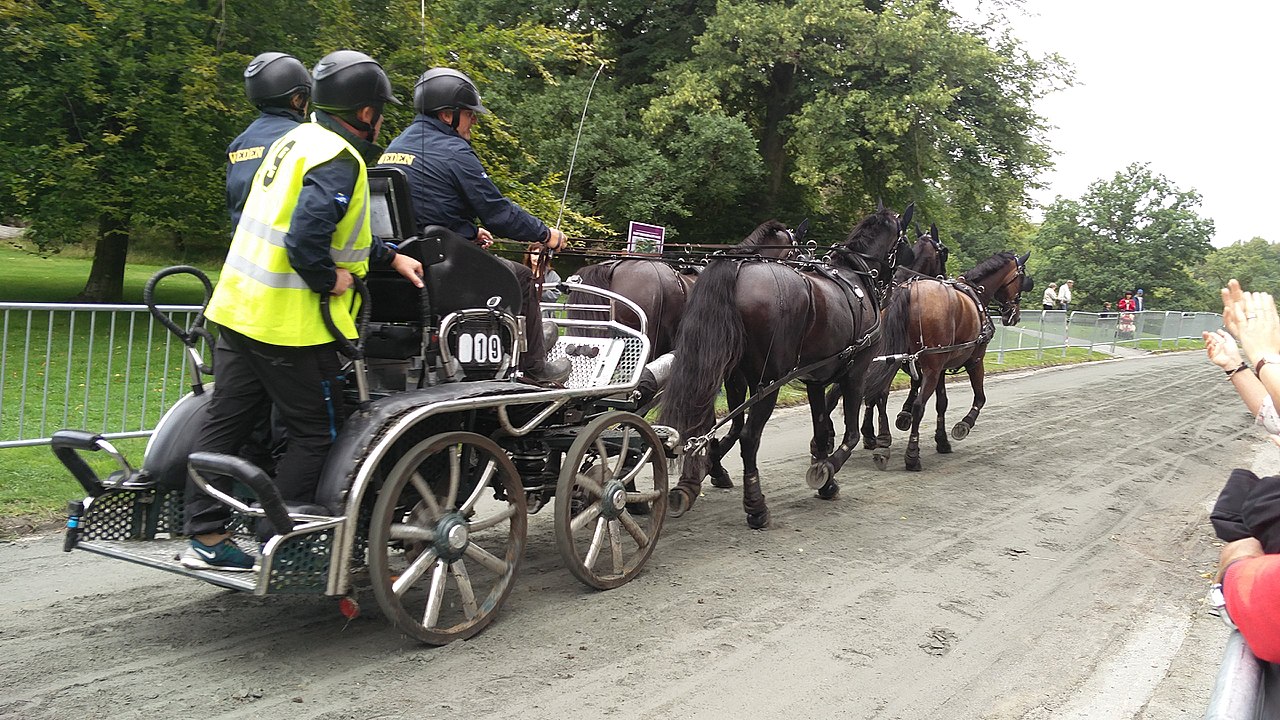
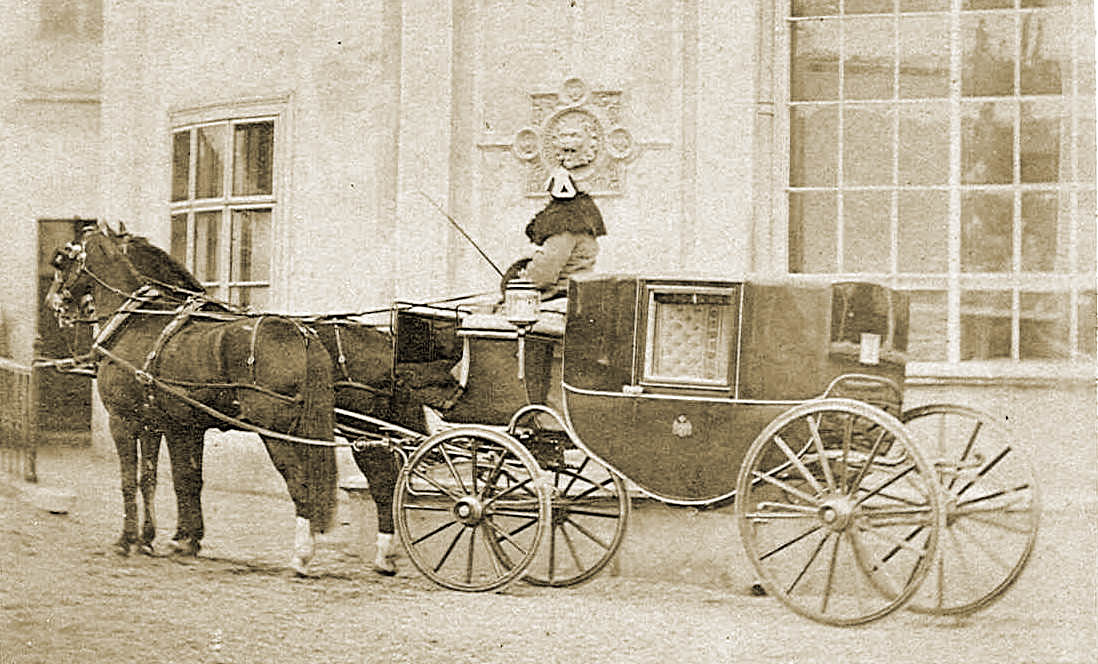
A carriage is a passenger vehicle designed to be drawn by animals, most commonly horses. Built to carry people rather than heavy goods, a carriage developed as a distinct category from simpler conveyances such as the cart or the utilitarian wagon. Carriages range from simple, practical designs to highly decorated vehicles intended to display wealth and social rank.
Image gallery
10 Images





Characteristics and components
Typical features include an enclosed or partially open body mounted on a chassis, axles with two or four wheels, and suspension to smooth the ride. Early suspension systems used leather straps or thoroughbraces and later adopted springs; modern descriptions often use the general term suspension. The body contains passenger seating and often a raised coachman's seat; construction required skills such as coachbuilding, wheelwright work and blacksmithing. Materials ranged from timber and iron to leather and decorative metalwork.
Common types
- Coach: Large, often enclosed and used for long-distance travel or formal occasions.
- Phaeton: Lightweight, owner-driven and sporty, with minimal weather protection.
- Landau: A four-wheeled carriage with folding hoods for open or closed travel, popular for ceremonial use.
- Victoria: Low-sided, graceful vehicle intended for short urban trips.
- Hansom cab: Compact two-person carriage frequently used as an urban hire vehicle or taxi.
Designs balanced speed, comfort, capacity and social signalling; terminology and forms varied by region and period.
History and development
Carriages evolved from simple two- and four-wheeled carts into specialized passenger conveyances between the late medieval period and the 19th century. Improvements in road surfaces, wheel and axle design, and suspension enabled longer and smoother journeys. As production techniques advanced, carriage building became a skilled trade; named types often reflect fashions, social needs and technological change in particular eras.
Uses, social role and legacy
Beyond ordinary travel, carriages functioned as visible status symbols for aristocracy, merchants and civic officials and served public roles as stagecoaches and urban cabs. They remain present today in wedding processions, tourist rides and state ceremonies and are preserved in museums and private collections. Enthusiast communities maintain examples and practice traditional driving and harnessing skills.
Carriages were pulled by teams of animals, most commonly horses, selected for temperament, speed or strength according to the vehicle's purpose. The era of wide carriage use declined with the arrival of motor vehicles, but carriage technology influenced early automobile bodywork, coachbuilding practices and road infrastructure. For comparative information on related vehicles, see entries on cart and wagon.
Related articles
Author
AlegsaOnline.com Carriage (horse-drawn passenger vehicle) Leandro Alegsa
URL: https://en.alegsaonline.com/art/17245
Sources
- royal.gov.uk : "Carriages"