
Carbon paper: history, composition, uses, and practical notes
Carbon paper is a coated sheet used to create pressure-made copies. Once common for forms, receipts and typewritten duplicates, it has particular composition, limits and modern alternatives.
Overview
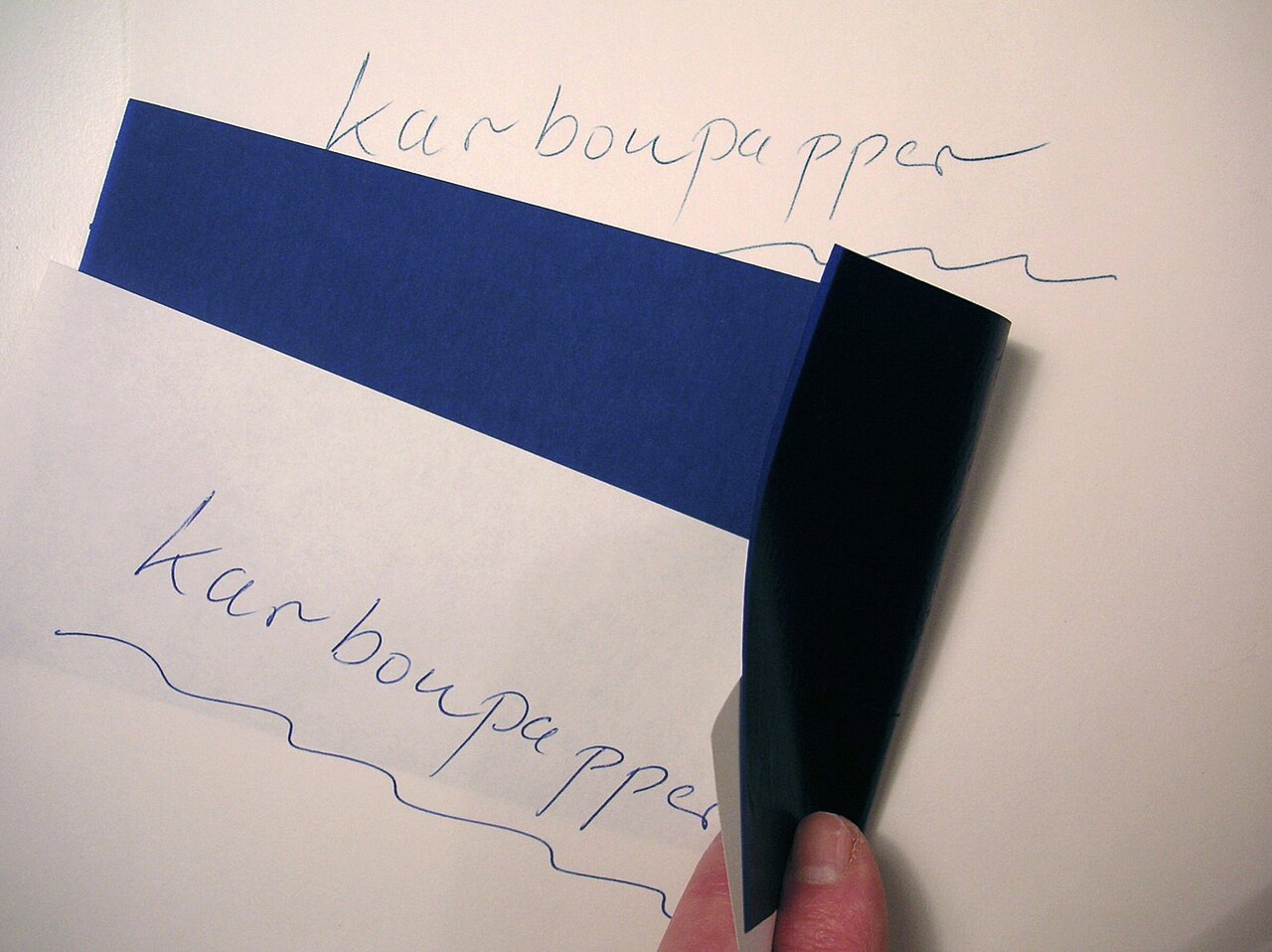
Carbon paper is a thin sheet coated on one side with a layer of pigmented or oily transfer medium. When placed between two or more sheets of ordinary paper, pressure from writing or typing causes the coating to deposit a mirror image of the top sheet onto the page beneath, producing a carbon copy. Because the process depends on localized pressure, the method produces clear reproductions of handwriting, typewriter characters, and other impressions without electrical power or chemical processing.
Image gallery
2 Images
Composition and how it works
The coated face typically contains a mixture of pigment or dye blended with a binder such as wax, oil, or resin. The binder keeps the powdery pigment in place until pressure ruptures the bond and transfers a portion of the coating to the receiving sheet. Practical use relies on correct orientation: the coated side of the carbon paper must face the sheet to be marked. For a concise technical note, see a technical description.
Typical uses and examples
Historically and practically, carbon paper has been used for:
- Creating duplicate receipts, invoices and business records;
- Producing multiple copies from a single typing pass on mechanical typewriters;
- Tracing and transferring images in art and craftwork;
- Temporary transfer methods for tattoos and pattern work.
Instructions for use are straightforward: place the carbon sheet coated-side down between the top form and the copy, align edges, then apply firm pressure by writing, typing, or striking the surface. See a practical guide at usage notes.
History and development
Carbon paper emerged in the 19th century as a simple mechanical means to reproduce documents before photocopying and digital scanning. It became widespread with the adoption of typewriters and multipart business forms. Over time, new technologies—photocopiers, inkjet and laser printing, and digital records—reduced routine reliance on carbon paper, but the material remained useful where immediate, inexpensive duplicates were needed.
Limitations, alternatives and conservation
The method is limited by physics: only a few copies can usually be made at once because pressure diminishes through successive layers, typically producing reliable duplicates for about three to five copies. Carbon paper can smudge, leave residue on hands or adjacent documents, and its marks may fade with exposure. For many business applications it has been superseded by carbonless copy paper (which uses microencapsulated dyes) and electronic duplication. For comparisons and archival advice, consult conservation notes and alternative methods.
Notable fact: despite reduced commercial use, carbon paper continues to be favored in some low-tech settings and by artists for its simplicity and direct tactile control.
Related articles
Author
AlegsaOnline.com Carbon paper: history, composition, uses, and practical notes Leandro Alegsa
URL: https://en.alegsaonline.com/art/16887