
Carbide & Carbon Building — Chicago Art Deco landmark
1929 Art Deco skyscraper at 230 N. Michigan Avenue in Chicago. Designed by Burnham Brothers for Union Carbide, 37 floors, gold‑capped top, designated a Chicago Landmark in 1996.
Overview
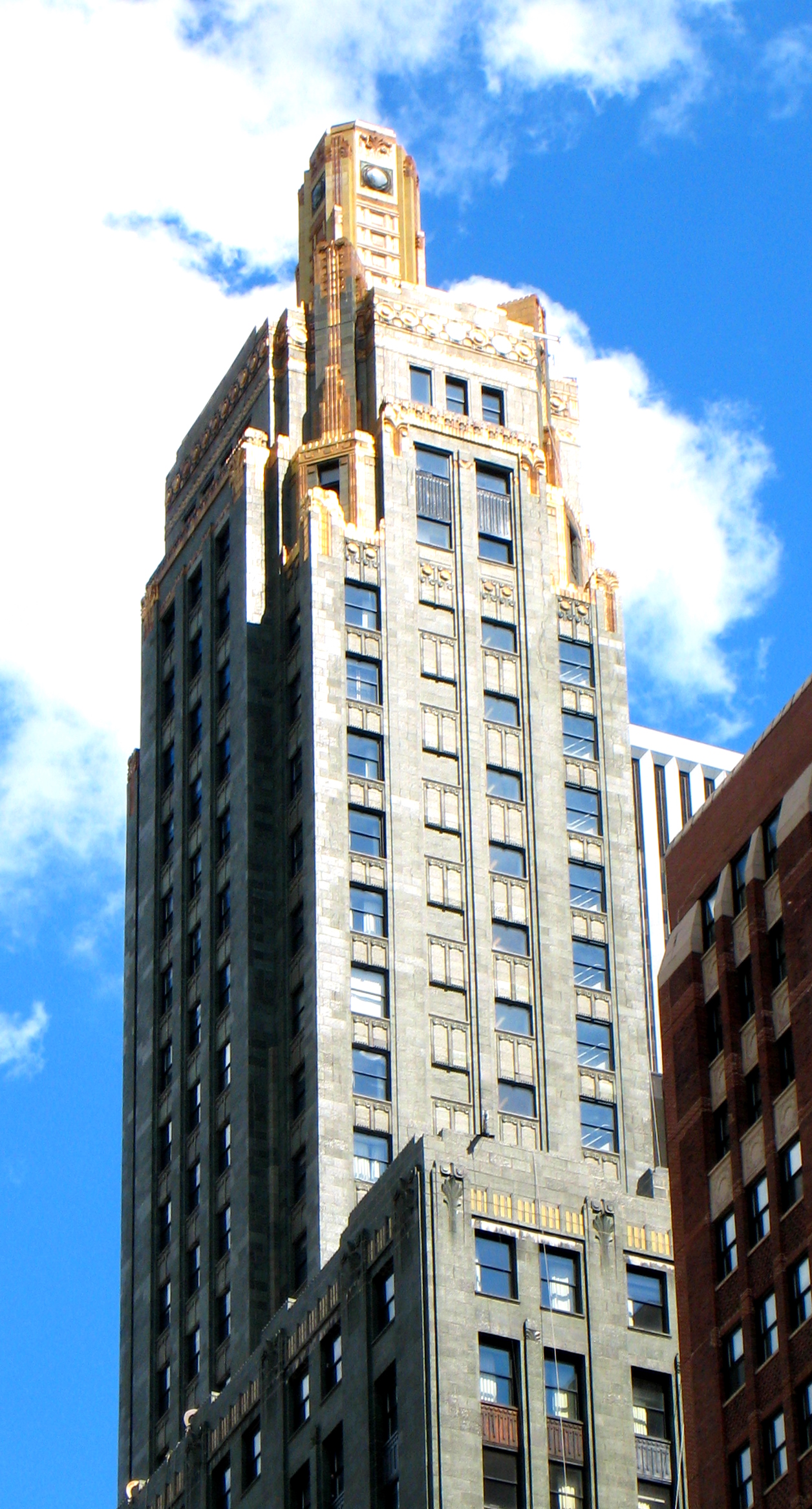
The Carbide & Carbon Building stands at 230 N. Michigan Avenue in Chicago’s near‑north commercial district. Completed in 1929, the tower is widely regarded as one of the city’s most distinctive Art Deco high‑rises, notable for its dark, richly glazed facade and a highly visible gilded cap that crowns the skyline. At 37 stories and roughly 503 feet tall, it illustrates the late‑1920s interest in vertical emphasis, ornament and corporate image-making during a period of rapid downtown growth.
Image gallery
10 Images




Design and materials
Designed by the firm known as Burnham Brothers, the building reflects the aesthetic vocabulary of Art Deco architecture: strong vertical piers, setback massing, stylized geometric ornament and contrasting materials. The facade combines dark green and black glazed terra cotta with bronze and other metal accents at points of entry and window surrounds. The uppermost portion is finished in a gold‑colored surface that reads from a distance as a single luminous cap; this gilded effect has long been part of the building’s visual identity and is often described in casual accounts as a gold leaf finish (gold).
Architectural lineage
The Burnham Brothers office continued the commercial architectural practice associated with the Burnham name and its ties to the earlier Chicago school of planning and urban design. While the firm did not consist of the elder Daniel Burnham as designer, its work drew on a legacy of monumental civic and commercial architecture associated with the Burnham family and the wider tradition of city making in Chicago; the firm’s connection to Daniel Burnham is frequently noted in histories of the period.
History and use
Originally developed to house the regional offices of Union Carbide and related enterprises, the Carbide & Carbon Building was part of the late‑1920s wave of corporate towers erected before the Depression. Over the decades the interior has been altered to accommodate new commercial tenants and functions. In the early 21st century the building underwent adaptive reuse and renovation for hotel and hospitality purposes, an approach that preserved many exterior features while changing interior circulation and floor use to meet contemporary needs.
Stories and symbolism
The distinctive top of the tower has inspired popular anecdotes about intent and symbolism. A long‑circulating story interprets the gilded cap as resembling a champagne bottle or a wine glass, an ironic talisman against the era of Prohibition; this anecdote is best understood as urban lore rather than documented design intent. In architectural terms the cap functions as a visual terminus that contrasts with the darker shaft and signals the corporate prestige of its original owners.
Significance and recognition
Because of its distinctive combination of materials, ornament and form, the building was recognized for its architectural and historic significance when it was designated a Chicago Landmark on May 9, 1996. It remains an important element of the Michigan Avenue streetscape and a frequent subject in studies of Chicago’s pre‑war skyline and commercial architecture.
Quick facts
- Address: 230 N. Michigan Avenue
- Architectural style: Art Deco
- Designer: Burnham Brothers (firm related to the Burnham architectural legacy)
- Completed: 1929
- Height and floors: 503 ft; 37 floors — a downtown skyscraper of the prewar era
- Original tenant: Union Carbide
- Designation: Chicago Landmark (May 9, 1996)
- Signature detail: gilded cap often described as gold and associated with popular stories about Prohibition
As an object of architectural study and a visible component of the Magnificent Mile corridor, the Carbide & Carbon Building continues to draw interest from historians, architects and visitors who seek examples of how ornament, corporate branding and urban visibility were combined in early 20th‑century commercial architecture.
Related articles
Author
AlegsaOnline.com Carbide & Carbon Building — Chicago Art Deco landmark Leandro Alegsa
URL: https://en.alegsaonline.com/art/16864