
Catherine Palace — the Russian imperial residence at Tsarskoye Selo (Pushkin)
Baroque palace near Saint Petersburg, built for the Russian imperial family; known for its gilded facade, rich interiors and the Amber Room. Heavily damaged in WWII and later the focus of extensive restoration.
Overview
The Catherine Palace is a grand former residence of the Russian imperial family located in the town now called Pushkin, to the south of Saint Petersburg. Originally developed from a modest royal estate in the early 18th century, the site became a major imperial summer residence and a setting for court ceremonies, entertainments and state occasions. The palace complex, its parks and related monuments are part of the cultural heritage associated with imperial Russia and are presented to the public as a museum and historic site.
Image gallery
10 Images




Architecture and principal rooms
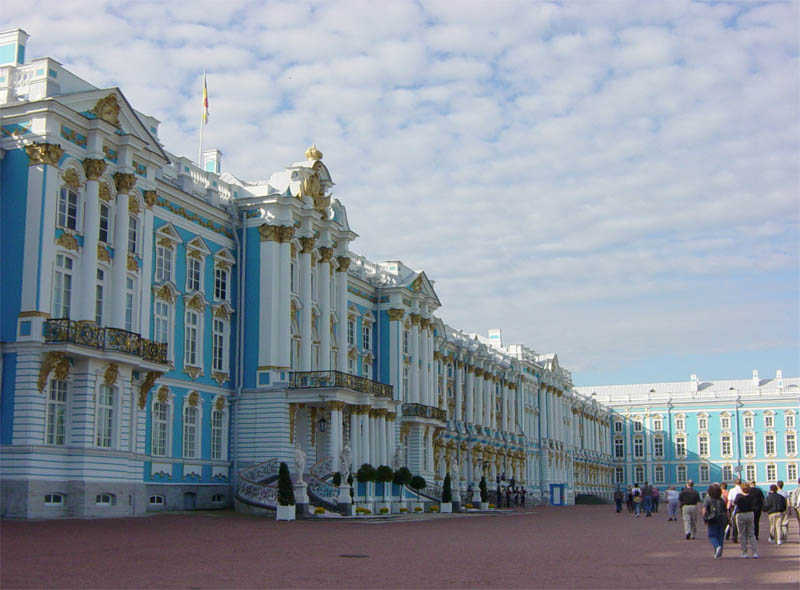
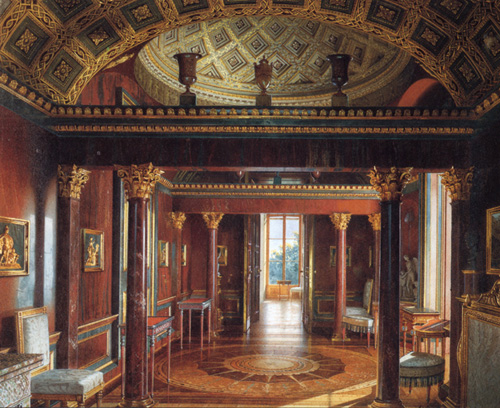
The palace is widely admired for its exuberant Baroque exterior—characterised by a long blue-and-white facade richly trimmed with gilded ornament—and for sumptuous interiors that reflect successive phases of imperial taste. The mid-18th-century transformation under the patronage of Empress Elizabeth is commonly associated with the work of the architect Bartolomeo Rastrelli, whose designs emphasised grandeur and ornament. Interiors include an imposing sequence of state rooms and ballrooms, richly decorated with gilding, mirrors, painted ceilings and period furnishings.
- The Amber Room, a decorative ensemble made of amber panels, gold leaf and mirrors, is the palace's most famous ensemble; it was removed and lost during the Second World War and later reconstructed and returned to public view.
- Large ceremonial halls and drawing rooms that illustrate imperial ceremonial and domestic life.
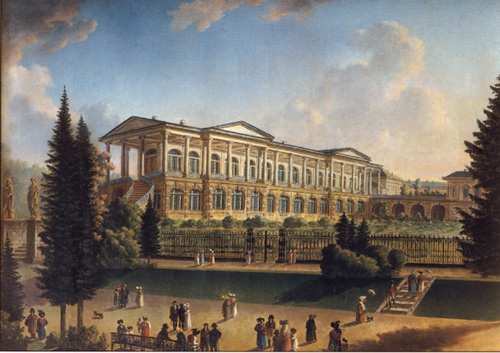
- Later neoclassical additions and interiors by architects such as Charles Cameron, who introduced more restrained forms in parts of the complex.
History and development
The estate originated as a suburban royal retreat and was repeatedly rebuilt and enlarged by successive rulers. What began as a modest residence for Catherine I grew during the 18th century into the monumental palace associated with imperial splendour. The surrounding settlement was historically known as Tsarskoye Selo; after the 1917 revolution the Bolsheviks renamed it Detskoye Selo and, in the 20th century, it was given the name Pushkin in honour of the poet Alexander Pushkin. The palace's changing names and uses reflect the broader political and cultural shifts in Russian history.
War damage and restoration
During the German occupation in the Second World War the Catherine Palace suffered severe damage: many interiors were looted, and decorative ensembles including the original Amber Room disappeared. After the war, Soviet authorities undertook a long and careful program of conservation and restoration that continued for decades. The Amber Room was the subject of international attention and reconstruction efforts; a modern reconstruction was completed and installed in the palace in the early 21st century, allowing visitors to appreciate a faithful interpretation of the former interior.
Gardens, grounds and public use
The palace is set within an extensive landscaped park that combines formal parterres, avenues, ponds and elements of English landscape gardening. The grounds contain follies, pavilions and galleries that were part of the designed experience of the estate. Today the palace and park operate as a museum complex: they host exhibitions, guided tours, cultural events and educational programmes. Practical visitor information, opening hours and current exhibitions are maintained by regional cultural authorities and official museum services; for planning a visit consult an official museum entry such as museum site or a municipal information page at local guides.
Significance
The Catherine Palace is an important example of Russian imperial architecture and decorative art. It illustrates the tastes and ambitions of 18th- and 19th-century rulers, the work of prominent architects and craftsmen, and the challenges of cultural preservation after wartime loss. As a major historic site near Saint Petersburg, it attracts international visitors and scholars interested in imperial history, architecture and restoration practice.
Questions and answers
Q: What is the Catherine Palace?
A: The Catherine Palace is a Russian residence of the Imperial family.
Q: Where is the Catherine Palace located?
A: The Catherine Palace is located in the town of Pushkin, Saint Petersburg.
Q: What was the town called where the Catherine Palace is located?
A: The town was called Tsarskoye Selo, which means Tsar's village in English.
Q: What happened to the town's name in 1918?
A: In 1918, the Bolsheviks changed the town's name to Detskoye Selo.
Q: Why was the town's name changed in 1937?
A: The town was renamed to Pushkin in 1937 to honor Alexander Pushkin.
Q: Who was Alexander Pushkin?
A: Alexander Pushkin was a famous Russian poet, playwright, and novelist.
Q: When was the Catherine Palace built?
A: The Catherine Palace was built in 1717.
Tags
Related articles
Author
AlegsaOnline.com Catherine Palace — the Russian imperial residence at Tsarskoye Selo (Pushkin) Leandro Alegsa
URL: https://en.alegsaonline.com/art/17628