
Capoeira: Afro‑Brazilian martial art, dance, music and cultural practice
Capoeira is an Afro‑Brazilian system combining martial movements, music and dance. It originated among enslaved Africans and indigenous people in colonial Brazil and evolved into a global cultural practice.
Overview
Capoeira is a hybrid cultural practice that blends martial technique, rhythmic movement, acrobatics and live music. Originating in colonial Brazil, it developed among enslaved Africans and their descendants as a means of self‑defense, social bonding and cultural expression. Today it is taught worldwide both as a combat art and as a performance or exercise discipline.
Image gallery
10 Images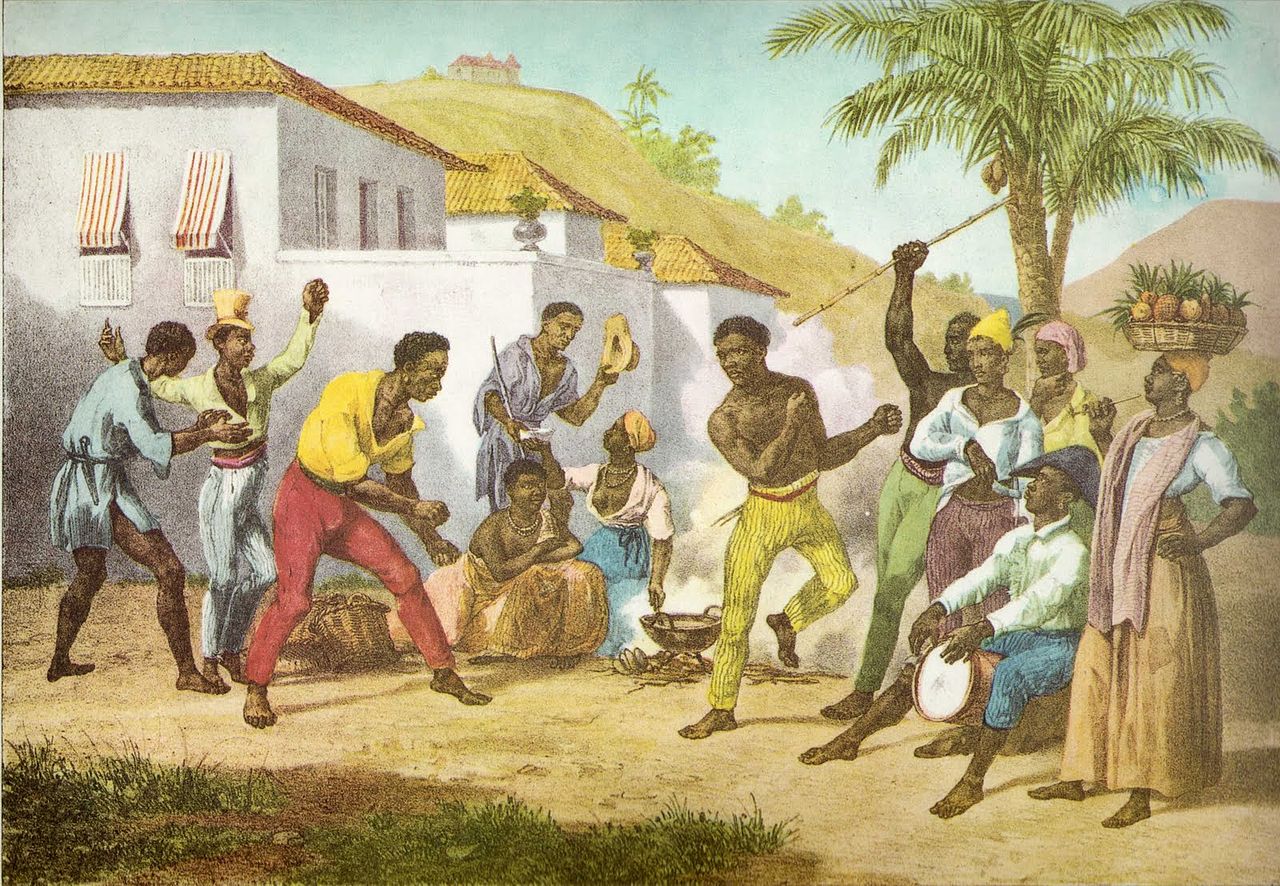





Origins and historical development
The roots of capoeira lie in the contact between African traditions, indigenous Brazilian practices and the circumstances of slavery and colonial society from the early colonial period onward. Practitioners adapted dances, musical forms and fighting techniques into a distinctive practice that could be disguised as play. For much of its early history capoeira was stigmatized and at times repressed; laws and policing made public practice difficult until the 20th century, when it began to gain wider social acceptance and to be incorporated into national culture.
Key characteristics
Capoeira is recognizable by its continuous swaying base step (the ginga), fluid evasions, high and low kicks, sweeps and acrobatic flourishes. Music and song are central: a berimbau (single‑string bow instrument) sets the rhythm and style of the game, with drums, pandeiro and clapping supporting call‑and‑response singing. The interaction between two players in the circle (roda) emphasizes timing, rhythm, rhythmical feints and spontaneous creativity rather than fixed sequences.
Styles, training and pedagogy
Multiple lineages and schools exist. Two broad stylistic poles often discussed are a slower, strategic form that emphasizes tradition and ritual, and a faster, more athletic version that highlights acrobatics and rapid attacks. Training typically includes drills, partner work, music instruction, and learning songs and instruments. Senior teachers or masters (often called mestres) preserve repertoires, rituals and teaching methods within their communities.
Uses, social role and contemporary importance
Capoeira serves many functions: it is a method of self‑defense, a form of physical training, a vehicle for cultural transmission, and a performance art. It plays a role in identity formation among Afro‑Brazilian communities and has spread internationally as both a sport and an artistic practice. It has attracted attention from scholars of anthropology, music and performance studies and has been recognized on international cultural inventories for its value as a living tradition.
Notable facts and distinctions
- Capoeira combines combat and play; the roda is both a contest and a ritual space.
- Music governs tempo and style: different rhythms invite different kinds of movement.
- It exists alongside other Brazilian forms such as samba and samba‑de‑roda but is distinct in its martial emphasis.
- For further reading and resources see introductory pages on Capoeira history and practice.
As a living tradition, capoeira continues to adapt: teachers worldwide maintain links to roots in Brazil while also responding to new social contexts, sporting frameworks and artistic collaborations.
Tags
Related articles
Author
AlegsaOnline.com Capoeira: Afro‑Brazilian martial art, dance, music and cultural practice Leandro Alegsa
URL: https://en.alegsaonline.com/art/16779
Sources
- guiadoestudante.abril.com.br : "Gangues do Rio: Capoeira era reprimida no Brasil (in Portuguese)"
- brasil.gov.br : "A abolição (in Portuguese)"
- pt.wikisource.org : "Código penal brasileiro - proibição da Capoeira – 1890 (in Portuguese)"
- capoeirabrasil.org : capoeirabrasil.org/